To my magnificient Reader,
Niccolò Machiavelli had spent fourteen years inside the Florentine machine: negotiating with princes, observing armies, building a militia and learning that political virtue is rarely rewarded on the day it is needed. When the regime changed, none of this saved him. He was dismissed from office, placed under suspicion and pushed out of the political world he had served so completely.
This is how power treats yesterday’s servants when yesterday has lost.
But dismissal was only the beginning of his misfortune. In 1513, Machiavelli was wrongly accused of involvement in an anti-Medici conspiracy. He was arrested, imprisoned and tortured with the strappado before eventually being released under a general amnesty. The man who had once negotiated with kings was now being treated as a criminal by the government he had helped defend. Stanford Encyclopedia of Philosophy
After his release, Machiavelli withdrew to his family property at Sant’Andrea in Percussina. His new life was an insult to everything he had been. Instead of diplomatic missions, there were farm duties. Instead of audiences with princes, there were neighbours, taverns, card games and the petty concerns of rural life.
Yet he did not surrender his identity simply because Florence had withdrawn its recognition.
Each evening, after spending the day in ordinary clothes covered with dust and dirt, Machiavelli entered his study and dressed himself in the robes of a courtier. He performed a private restoration of his own. Then, dressed as if he were still entering a palace, he opened his books and entered what he called the ancient courts of long-dead rulers. There he questioned them about their actions, their victories and their mistakes and allowed them to answer him through history & legacy. Machiavelli’s letter to Francesco Vettori, 1513
“When evening has come, I return to my house and go into my study. At the door I take off my clothes of the day, covered with mud and mire, and I put on my regal and courtly garments; and decently reclothed, I enter the ancient courts of ancient men, where, received by them lovingly, I feed on the food that alone is mine and that I was born for. There I am not ashamed to speak with them and to ask them the reasons for their actions; and they, in their humanity, answer me. And for four hours I feel no boredom, I forget every trouble, I do not fear poverty, death does not frighten me. I give myself entirely over to them.”
— Niccolò Machiavelli, letter to Francesco Vettori, 10 December 1513
The Medici had removed him from office. They had not removed his memory, his education or his understanding of power. In exile, Machiavelli finally possessed what political life had never given him: uninterrupted time to think.
The result was not retirement. It was Il Principe.
Written in late 1513, the book gathered the lessons of his diplomatic career into a compact manual for acquiring, securing and defending political power. It was also, at least in part, an attempt to make himself useful to the rulers who had discarded him. Machiavelli could no longer command a government, so he offered the government a mind it could not easily replace.
The strategy did not immediately restore him. His political rehabilitation remained incomplete. But he continued writing: the Discourses on Livy, The Art of War, plays, poems and historical works. In 1520, the Medici even commissioned him to write a history of Florence. Office had been taken from him, but influence began to return through another entrance. Stanford Encyclopedia of Philosophy
That is the part most people miss. Machiavelli did not simply fall from power & disappear. He adapted to exclusion, converted humiliation into study and turned political failure into a body of work that outlived every ruler who had tried to silence him.
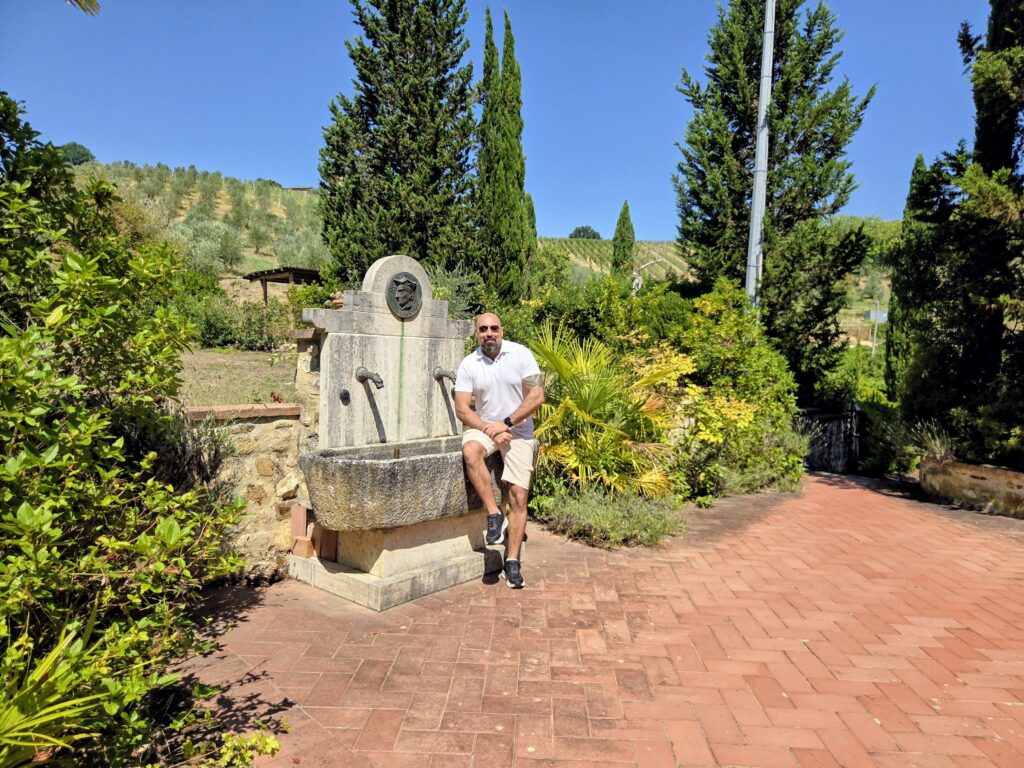
In 2025 & 2026 I visited the very same place where he was exiled and wrote the prince. A comprehensive travel log will be released in the following weeks.
On 1 September 2026, Modern Machiavelli returns after 10 Years of Absence.
We are relaunching as a multi-expert platform for Power, Politics, Ancient Philosophy and Modern Strategy.
With new authors, stronger research, comprehensive sourcing, updated classic articles & original strategic frameworks.
There will be new interactive and expert features, including the Court of Seven. There will be arguments between traditions, historical cases examined properly and articles rebuilt whenever better evidence demands it. The old work will not be placed in a glass cabinet and guarded by sentiment. What survives scrutiny will be strengthened. What does not will be replaced.
100% human-led, 0% automated AI slop
The web already contains enough faceless “Slop Bots”, promted by brown hands from muddy huts, producing confident nonsense at industrial speed.
Every serious article here – whether written by me, a guest author or one of our experts – will require human judgement, genuine expertise, proven sources and the editorial hand of a modern Machiavelli.
On 1 September 1512, the Medici restored their power. On 1 September 2026, we restore Modern Machiavelli.