
To my magnificient Reader,
Welcome my magnificent reader, this post analyzes the meaning of “Use Selective Honesty and Generosity to Disarm your Victim”. What follows is an in-depth summary with approximately 2700 words.

One sincere and honest move will cover over dozens of dishonest ones. Open-hearted gestures of honesty and generosity bring down the guard of even the most suspicious people. Once your selective honesty opens a hole in their armor, you can deceive and manipulate them at will. A timely gift—a Trojan horse—will serve the same purpose.
Contents of Law #12
Part 1: Video Summary
Part 2: Examples & Applications
Part 3: Negative Example
Part 4: Spirit of the Law
Part 5: Most Important Learnings
Video Summary
Examples & Applications
#1
Pavlov’s Dog is the origin of classic conditioning. I believe this to be common knowledge, but depending on the desolate state of your countries education system, I am going to paste the Wikipedia description.
In his initial experiments, Pavlov presented a stimulus and then gave the dog food; after a few repetitions, the dogs started to salivate in response to the stimulus. Pavlov called the stimulus the conditioned (or conditional) stimulus (CS) because its effects depend on its association with food.
Here is a picture to better visualize the process:

You want to condition people, just like Pavlov conditioned his dogs. Use the carrot and stick method, or as the German saying goes: use sugar-bread and a bullwhip. An idiom which I prefer.
Whenever someone does something which is to your liking, reward them with something tangible or praise, attention or affection.
Timing is crucial when it comes to giving rewards. Never reward people for every little thing they do for you, or they will become resistant to your praise at best, or start believing that they deserve more and are better than they actually are. Remember:
A benefit given 3 times in a row ceases to be a benefit but becomes an obligation instead.
Example #2
Jordan Belfort, the Wolf of wall street. Known for his book, movie and for being a ruthless conman. This life lies faaaar behind him, according to himself, and he now leads a cleansed, God fearing, law abiding life. If you watch his sales seminar “Straight Line Persuasion” you will hear him speak about morals every third sentence.
The interesting part: People eat up his story about being a changed, cleansed, pure individual with only good in mind.
Human beings love a story of redemption. They are also inclined to believe a lie when it is repeated often enough. Do you honestly believe that Jordan Belfort has a) changed or b) feels even a slight remorse? There can be only one answer to this question, and it is no. People still believe him.
Negative Example
FIFA. They believe that it is as easy to use selective honesty and generosity to disarm your victim, as it is to buy a FIFA representative’s vote. That everything will be forgiven and forgotten if you just put up an honest act once. Like Robert Greene puts it: „One sincere and honest move will cover over dozens of dishonest ones“. True in some cases, untrue in most.
A little context for those who don’t share my passion for football:
The FIFA is the corporational equivalent to Greece when it comes to corruption. Blatter opened his hands whenever possible, grabbed whatever he could and sold the World Cup to Germany in 2006 and Qatar in 2022 (probably every other world cup as well). Qatar… A Muslim shithole with 0 human rights or rights for anything for that matter, but deep pockets. Not only will the World Cup take place in a country with close ties to radical Islamists, supposedly supporting IS; no, they also had the glorious idea to change the date of the World Cup, because Qatar is a country unfit to host any summer event, because of the heat. Well, fit enough to host the biggest sporting event worldwide, because they bribed FIFA representatives.
A few months ago people started investigating and surprise, surprise, it turned out that Qatar indeed bought the votes. Blatter being guilty of corruption and suspended for 90 days. A week ago a new president was elected. Gianni Infantino. A person who promised the blue out of the sky, saying that he is going to clean house. The FIFA thought that installing a puppet, a former lover boy of Blatter, is going to calm people down. Little did they know, that many a person is aware of Infantino’s and Blatter’s relation and that they are the same devil.
FIFA has lost all of its credibility and failed to practice proper damage control. If you have lost all credibility, you need to promise a huge change and also show the people that you indeed did your best to change. Something the FIFA got dead wrong.
The Spirit of Use Selective Honesty and Generosity to Disarm your Victim
Give before you take
“Use selective honesty and generosity to disarm your victim” may also mean to give before you take. To make yourself useful to someone before asking for their help.
This is the golden rule for networking with people in business, but also to some degree in politics. Seek to provide value to people before asking for favours. Unless your position is much superior to your opposite’s. In such a case you may feel free to disregard this suggestion and ask/take before you give.
By no means the recommendation is to be Mother Theresa, unless you want people to take advantage of you. You don’t want to be the provider of free welfare for people who don’t deserve it.
No, the real underlying reason is that it is easier to conceal your intentions if you provide value first. Disguise your intention of taking by giving. The modus operandi of human beings is to happily accept the free lunch, without second questioning it, missing the real intention behind the gracious act of providing a “free” favour.
The Law of Reciprocation (made popular by Robert Cialdini’s – Influence) aligns with this law per excellence. What is the law of
Reciprocation
Despite being by far the ugliest word in the English language, it translates to the following: If the Modern Prince actively seeks out to help people, he is likely to serendipity stumble upon favours received.
In Robert Cialdini’s words:
“The implication is you have to go first. Give something: give information, give free samples, give a positive experience to people and they will want to give you something in return.”
Examples on how this law may be applied:
- Introducing him to others
- Offering business
- Giving advice & insider information
- Sycophant praise
- Free Coffee in Shops
- Thank you notes/mails
- Free Samples
- Unannounced Bonus
How do politicians and business people often do business? They go to a fancy restaurant and discuss business over a three week dry aged T-bone steak. It is often expected that you get treated to a meal and saving on business diners is a terrible idea. Even if you don’t receive reciprocational bonus points, at least you didn’t anger your counterpart.
It should be noted at that point, that in some circles inviting someone to a fancy restaurant, exceeding a distinct amount (300€ in my case) could be considered corrupt behaviour. Also, if you are in the field of lobbying, you will often have to note down who you meet and what you discus with them. Not 100% relevant to the reader of this text though, since if you are in that field, you should already know it.
During First Impressions
- It is best to use selective honesty and generosity to disarm your victim as early as possible. A first impression is formed within seconds and has a lasting impact on the relationship between people. While a first impression is not set in stone, it takes a lot of effort to change the opinion of a person who has had a negative first impression of you.
- Human beings hate being wrong. They hate having a first impression that turns out wrong. Hence, they actively work (ergo rationalize) towards the status quo. If your first meeting is positive, this can be immensely helpful while a negative one can be crippling.
- People form their opinion based on mainly observational factors and your reputation. Body language, eyes, tonality, handshake, smile, clothing style, beauty. Upon these things and others, you will be judged and need to make sure to leave a lasting impression in every single one.
- Have a confident body language. Be calm, take up a lot of space.
- Hold eye contact at least 70% of the time. Look at the right eye, then the left eye. When trying to seduce, also look at their lips. Your eyes can reveal your thoughts, convince yourself that you really like the opposite person (or that you absolutely want to become intimate), and it will reflect in your gaze.
- Your voice should be calm, a little louder than average, deep, concise and demanding authority. It is possible to change your voice to the better and coaching is advisable if you sound like a smurf.
- The Handshake needs to be firm. Make it as strong or stronger than your opposite’s handshake, but never utilize a “death grip”. When trying to muscle someone, you slightly turn your hand to the left, to have the literal upper hand. Holding it longer than the norm is acceptable, just don’t overdo it. Give it a pump or multiple pumps depending on your cultural background. I love shaking hands with Germans and Britons, but I feel molested after doing the same with an Italian or American. Adapt to the environment.
- Don’t come out smile blazing but look at someone, wait 1-2 seconds, form a “real” smile (squint your eyes, lower your eyebrows a little) but again take your time when forming it. It should take around 1 – 1,5 seconds for your smile to reach its zenith. If you don’t squint your eyes or flash your smile as fast as lightning, you are sure to come across as insincere.
- Dress to Kill. Always be 10% better dressed than everyone else. Better to be overdressed than underdressed. You can get rid of a tie/blazer in case of everyone wearing t-shirts, but you can’t do the same if you are the one who is underdressed.
- Make sure to smell and look your best. Nothing more needs to be said.
- Presence & Interest in the other person. A Modern Prince never lets his mind wander while talking to someone else. He is in the presence, actively takes part in the conversation and keeps eye contact. He doesn’t look around like a chased animal trying to escape.
These are the eight laws of making a great first impression. Follow them and you will receive much more positive feedback from your peers. You might also try to convey various beneficial traits in your first impression, which you want to be connected to. A good one would be generosity. If you have the first impression of being a generous person, others are much more likely to do you favours, because “you would do the same”.
Practice makes perfect
Yes, we have heard this truism over and over again, but there is a good reason for it. You need to acquire theory, practise alone, and then gather experience in the real world applying your new found skills. In the field, you want to calibrate your success with the new technique and adjust accordingly. Use Selective Honesty and Generosity to Disarm your Victim, philosophize about the meaning and ingrain it into your thinking, unless you want to come off as incongruent.
If you strike people as being insincere, you are off to a terrible start. A Modern Machiavelli needs to be convincing and charming at all times. Crushing doubts in his ulterior motives with confidence and (false) honesty.
I told you above how the perfect smile looks like. You are equipped with the theory. Now it is time to practice your new smile in the mirror. During the next social occasion, you are going to use the smile and gauge the response. If it is fully positive, continue what you are doing. If you notice that something is off, you want to adjust the course of action. Being able to analyse situations is of the utmost importance, and unfortunately, can not be learned through books.
When you get caught faking honesty, generosity or emotions, and word gets out, it can have gloomy consequences for your reputation. Warren Buffett made a great quote about the case at hand:
It takes 20 years to build a reputation and five minutes to ruin it. – Warren Buffett
Gain Trust by Revealing
Trust is important, because if you are trusted, you will be let into the inner circle. There are a couple of traits vastly useful for the goal of becoming a trusted friend/advisor:
Reputation, Confidence, Competence, Enthusiasm, Charisma, Trust in the other person
Reputation speaks for itself. If you have the reputation of being honest or the reputation of being the best surgeon for leg amputations or whatever; the cards are shuffled in your favour. People will trust you merely based on your status and the respect that comes along with it.
The Elements of Trust are:
- Confidence, Competence & Enthusiasm
- Charisma
- Reputation
- Liking + Trusting your vis-á-vis
If you want to be trusted, first offer your trust. Reveal a little secret, give them a task involving a little responsibility.
Never reveal anything that can be held against you. Sometimes you can offer classified information if your counterpart stands no chance of proving it in court, but caution is always advised. Carefully pick the cards you choose to play.
Keep Law 3 & 4 in mind: Conceal your Intentions and Always say less than necessary. Never reveal everything or you are certain to lose your aura of mystery and respect. Violating these laws will also make your peers despise you and grant you a reputation for gossiping. Something that needs to be avoided at all costs.
Before surrendering information, you always need to ask yourself the following question:
Do I benefit at least slightly by sharing that information, is it mutually beneficial to both me and my vis-á-vis?
Don’t over-share useless information or you run the risk to burden others with it. Nobody cares about your problems except for your mother. Keep them to yourselves.
Defend yourself with selective honesty
Trickle truth is a perfect use of this law. When people discovered that you are lying, you come up with an incomplete confession. If you want to see this in effect, the best example can be found observing a cheating woman who has been caught. Trickle truth is the modus operandi for all women, thus, they have an advantage.
The Modern Machiavelli needs to master the art of trickle truth, where having dirty sex with someone becomes “merely a kiss on the cheek”. A synonym for it would be “damage control”. Take a minor hit in order to dodge a big hook.
If you are a known cheat, free of the suspicion of telling the truth, you can utilize this for your own gain. In such a case, you could tell your opponents exactly what you are going to do. Never once would they think that the truth is the truth forsooth. Honesty as well as insincere honesty is a great tool to deceive people.
Most Important Learnings
- Train people like Pavlov trained his dog
- A benefit given 3 times in a row ceases to be a benefit but becomes an obligation instead
- The appearance of Honesty is the best Policy. Both for Defence & Offence.
- Reveal what doesn’t matter, conceal what does matter
- Never reveal much, but when you do, make it seem like a big deal
- Use trickle truth to minimize the damage to your reputation
I hope you enjoyed reading my interpretation of Law #12 – Use Selective Honesty and Generosity to Disarm your Victim. If you have more examples of the possible applications or questions of any kind or wish to share your thoughts and experiences, please feel free to do so.
Grab the book here and support the author if you don’t already own it.
If you want to read more summaries, go to the main 48 Laws of Power post and choose your favoured law. If you are looking for book suggestions, find out what Machiavelli would have read.
Go ahead and share it with your friends & on social media. Until next time, fellow Machiavellians.
Court of Seven
What ancient philosophers would say about modern strategy.
Niccolò MachiavelliPower, statecraft, political survival, virtù and fortuna

A prince who cannot make his honesty appear spontaneous is a prince who will soon be outmanoeuvred. The art is not in being good but in being seen to be good at the precise moment when it serves your purpose. One generous act, well timed, can undo a dozen suspicions that took months to build. The crowd remembers the gift, not the calculation behind it. Yet do not mistake this for softness. The same hand that offers the gift must be ready to strike. If you reward the same behaviour three times, you create an expectation, not a debt. Vary your favours as a general varies his formations. Let them never know when the next reward will come, or whether it will come at all. That uncertainty keeps them eager and obedient.
Strategic counsel
- Time your generosity to coincide with a specific need, never at random.
- Reward inconsistently to keep subordinates dependent on your favour.
- Let the appearance of sincerity be your shield, never your creed.
- A gift given too often becomes an obligation, not a weapon.
- Always retain the power to withdraw what you have given.
Robert CialdiniPersuasion, reciprocity, authority, scarcity and social proof

The principle of reciprocation is the most reliable lever in the human psyche. Give something first, even something small, and the other person feels a powerful, often unconscious, need to return the gesture. This is not about bribery; it is about triggering a deep-seated rule of social exchange. A free sample, a piece of advice, a sincere compliment—each creates a debt that can be called in later. But the timing must be precise. If you give too much, too often, the rule flips: the recipient begins to feel entitled, not indebted. The key is to make the initial gift feel personal and unexpected. That surprise element amplifies the sense of obligation. And when you finally ask for something in return, frame it as a natural continuation of the relationship you have already established.
Strategic counsel
- Always give something of perceived value before you ask for anything.
- Make the initial gift feel personal and unexpected to maximise its impact.
- Avoid over-giving; frequent rewards create entitlement, not obligation.
- Frame your request as a natural extension of the existing exchange.
- Use small, symbolic gifts to open doors that larger demands cannot.
Editorial note: Robert Cialdini did not make this statement. It is an AI-generated interpretation based on documented public writings, speeches, interviews and ideas.
Edward BernaysPropaganda, public relations, mass persuasion and engineered consent
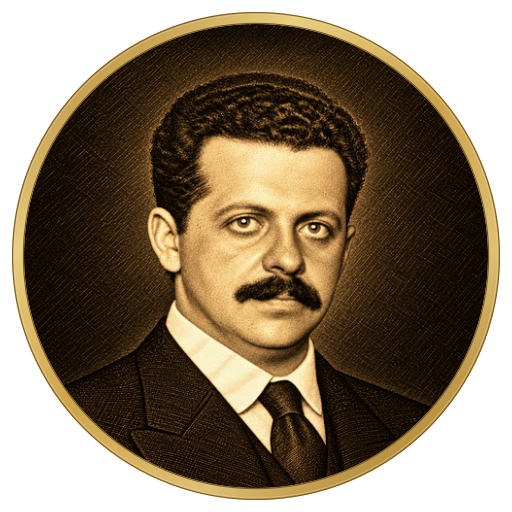
The public does not want to be told what to think; it wants to feel that it has arrived at the conclusion itself. Selective honesty is the engineer's tool for creating that illusion. By revealing a carefully chosen truth, you satisfy the crowd's hunger for transparency while steering its judgment exactly where you need it to go. The revealed fact becomes the anchor for the entire narrative. This is not deception in the crude sense. It is the management of the collective mind. When you give a gift or confess a minor fault, you are not disarming an individual; you are conditioning a group. The crowd remembers the gesture, not the context. And once that emotional association is fixed, you can introduce far larger ideas without resistance. The Trojan horse is not the gift itself, but the trust it manufactures.
Strategic counsel
- Use a disclosed truth to anchor the public's entire perception of an issue.
- Condition the group, not just the individual, through symbolic gestures.
- Let the crowd believe it has discovered your honesty on its own.
- A minor confession can inoculate you against larger accusations.
- Engineer trust as a resource, not as a personal virtue.
Francesco GuicciardiniPolitical realism, interests, particular circumstances and opportunism

General rules are dangerous because particular circumstances always break them. The principle of disarming through honesty works beautifully when your counterpart is vain, insecure, or hungry for validation. It fails when you face a man who has seen every trick and whose suspicion is his only defence. You must read the person, not the law. I have seen too many men ruin themselves by applying a maxim without considering the time, the place, and the disposition of the other party. A gift that delights one man will insult another. A confession that charms one listener will confirm the worst fears of a second. The wise man does not ask 'Is this strategy sound?' but rather 'Is this strategy sound for this particular man, at this particular moment?'
Strategic counsel
- Adapt the strategy to the specific character of your counterpart.
- Never apply a general rule without weighing the particular circumstances.
- A gift that pleases one person may deeply offend another.
- Know when your target's suspicion makes honesty a liability.
- Judge the moment as carefully as you judge the method.
Thomas HobbesSovereignty, fear, deterrence, authority and social order

Men are driven by fear of death and the desire for power. A gesture of honesty or generosity appears to suspend the state of war between individuals. It signals that you are not an immediate threat, that you are willing to cooperate. This is why the gift works: it offers a temporary truce, a moment of predictable peace in the otherwise restless competition for advantage. But do not mistake the truce for the peace. The recipient's trust is merely a calculation that your honesty serves his interest. The moment that calculation changes, the trust vanishes. Your selective honesty is a covenant without a sword. It binds only as long as both parties believe it is profitable. Therefore, never rely on gratitude alone. Always retain the power to enforce the terms of the relationship.
Strategic counsel
- Use generosity to signal a temporary suspension of competition.
- Never mistake a tactical truce for a permanent peace.
- Trust is a calculation of mutual benefit, not a moral bond.
- Always retain the power to enforce the terms of any agreement.
- Gratitude without fear is a weak foundation for any relationship.
Gustave Le BonCrowd psychology, mass behaviour and emotional contagion

The crowd does not reason; it feels. A single act of apparent generosity can electrify a group, creating an emotional contagion that overrides every rational doubt. The gift is not evaluated for its intrinsic value but for the sentiment it evokes. Once that sentiment takes hold, the crowd becomes suggestible, ready to follow the leader who provided the emotional release. This is why the timing of the gesture is everything. The crowd's attention is short and its memory is shorter. The generosity must be dramatic, visible, and immediate. A quiet, private gift has no effect on the collective mind. But a public act of giving, performed with ceremony and confidence, can transform suspicion into devotion in a single stroke. The crowd does not ask 'Why?' It asks 'How did that feel?'
Strategic counsel
- Make your generosity dramatic and public to trigger emotional contagion.
- The crowd's memory is short; repeat the gesture at key moments.
- Do not expect the crowd to analyse your motives; appeal to sentiment.
- A single visible act can override a dozen rational suspicions.
- Use ceremony and confidence to amplify the emotional impact of the gift.
Baltasar GraciánDiscretion, reputation, social intelligence and strategic concealment

To reveal a truth is to spend a portion of your mystery. Spend it wisely, and only when the return is greater than the cost. The art lies in making the revealed truth seem like a rare concession, a glimpse behind the curtain that you grant to no one else. That illusion of privileged access is what disarms the other person, not the information itself. Never let your honesty become a habit. If you are always open, your openness loses its power. Reserve your candour for the moments that matter most. Let your reputation for discretion be so well established that when you do speak freely, the listener feels honoured, even obligated. The gift of your confidence is the most valuable currency you possess. Spend it like gold, not like sand.
Strategic counsel
- Reveal truths sparingly to preserve their value and your mystery.
- Make each disclosure feel like a rare privilege granted only to them.
- Let your reputation for discretion amplify the impact of your candour.
- Never let honesty become a habit; reserve it for decisive moments.
- Treat your confidence as a currency, not a commodity.



[…] Also use sugar bread and whip. Reward and punishment. Condition people like Pavlov conditioned his dog. Related Law: https://modernmachiavelli.com/law-12-use-selective-honesty-and-generosity-to-disarm-your-victim/ […]
[…] 12. Use Selective Honesty and Generosity to Disarm your Victim […]
Thank you for your smile insight, more specifically “slowly forming” one.
I’ve already implemented this technique, and notice that I receive better service, and command a more confident presence.
A mastered artificial smile is a powerful tool.
Thankyou for all your efforts that you have put in this. very interesting info .