To my magnificient Reader,
To my magnificent readers. I welcome you. Here you will find a list of excellent famous persuasive speeches used to sway the audience's opinion and manipulate their emotions.
Included are famous propaganda speeches involving the best persuasive speech techniques made by master strategists. Some of them you will know, some you won't. There are a lot of videos but if you have time, watch them all and try to uncover the core elements that made these speeches so powerful.
Who can you expect?
- Ronald Reagan
- Winston Churchill
- John F. Kennedy
- Joseph Goebbels
- Benito Mussolini
- Saddam Hussein
- + 2 unannounced bonuses
Don't fall victim to the Halo effect and disregard some of the people in this list, just because you don't like them.
Adhere to what Ralph Waldo Emerson said:
'In my walks, every man I meet is my superior in some way, and in that I learn from him.'
I am in the course of writing a post about persuasive speech techniques. I actually wanted to merge it with this video list, but it got too long and hence I split it up. You can expect the post about the tactics for manipulating your adience soon.
Let's take a look at the gathered gems, here is the
List of Famous Persuasive Speeches
Number 10) Ronald Reagan in Berlin
Pretty meagre talk lacking any kind of enthusiasm but it makes up with great content. One of the most famous phrases known by virtually everyone despite most of them not having seen the actual speech. Here it is:
Highlight: Mr. Gorbatschow, tear down this wall!
https://www.youtube.com/watch?feature=player_embedded&v=YtYdjbpBk6A
Another good speech of him was the following about never backing down:
https://www.youtube.com/watch?v=_3MiBI9ZRBo
Number 9) Winston Churchill during the second world war
This is the first war speech in my list and others are to follow. I dislike the modulation of his voice, but he is a charming drunkard full of calm power and wit. He manages to persuade the masses and evoke vigor in their hearts.
Highlights: You ask, what is our policy? I can say: It is to wage war, by sea, land and air, with all our might and with all the strength that God can give us; to wage war against a monstrous tyranny.
https://www.youtube.com/watch?v=8TlkN-dcDCk
Number 8) John F. Kennedy - State of the Nation
Highlights: Fellow Americans: Ask not what your country can do for you; ask what you can do for your country?
https://www.youtube.com/watch?v=P1PbQlVMp98
Number 7) Good old Charlie Manson
Listening to our most famous Hipster sends a chill down your spine. This guy is utterly insane but a master manipulator who managed to draw people into his spell and make the innocent commit atrocious crimes. Sooner or later I am definitely going to write a post about him, digging deep into the psyche and persuasion talent of this mad man.
Highlights: The mind is endless. You put me in a dark solitary cell and to you that's the end. To me it's the beginning. It's a universe in there, it's a world in there... I am free!
https://youtu.be/y2Eu_fUjNig?t=1m
Number 6) Benito Mussolini's Propaganda Speech
Il Duce, an advocate of Machiavelli and probably one of the best manipulators and populists to ever walk the earth. A powerful communicator who had an excellent body language. Mussolini is known for his insane gaze which could freeze brave men dead in their tracks.
Highlights: This is your day, your great day. with your courage, with your sacrifice, with your faith you have given a mighty impulse to history.
https://www.youtube.com/watch?v=Hpn9iPLbNDc
Number 5) Saddam Hussein's Trial
Another great power speech. Saddam had no support, nothing to work with; he was not even thrown a bone. They continuously cut him off and refused his request to at least bring a little piece of paper with his notes to the trial. Despite that he delivered a perfect speech, managing to artfully arouse emotions. In the end, this didn't save his neck and he was murdered like a common criminal.
Highlights: Too many, example: [addressing the judge] Don't cut me off. I am not defending myself. I am defending you.
https://www.youtube.com/watch?v=PCJ8JqtGahQ
Number 4) Germany's war declaration against Poland
Disregard any prejudice you might have and watch this from start to finish. Everything about this speech was delivered par excellence. His voice, modulation, body language as well as the content. Everything. Reframing, playing the victim, creating an enemy, pretending honesty and the wish for peace, etc, etc...
*Seit 5:45h wird jetzt zurück geschossen. Und von jetzt an wird Bombe mit Bombe vergolten.Wer mit Gift kämpft, wird mit Giftgas bekämpft.* (at 19:22)
Since 5:45 we are shooting back, and from now on we are going to repay bomb with bomb. Whoever fights with poison will be combated with poisonous gas.
https://www.youtube.com/watch?v=cZnVtF22QhU
Number 3) Martin Luther King, you know which one
Unbelievable, watch, enjoy, pay special attention to his sentence structure and rhetorical devices.
Highlights: I have a dream, that one day...
https://www.youtube.com/watch?v=3vDWWy4CMhE
And the winner is:
Joseph Goebbels' Famous Propaganda & Persuasive Speeches
The propaganda mastermind behind Hitler, Germany's minister of propaganda and creator of the holocaust. Ironically he applied the techniques of, the Austrian jew and nephew of Sigmund Freund, Edward Bernays in order to spark so much hate among the population that they called for the Jewish heads.
Goebbels was a physically weak person with apparently no strong presence at all. Until he opened his mouth. The first video is about the Jewish problem and the second video is his most famous speech given during the late phase of the second world war when times were looking dull for the German citizens.
Here is what a reader said about the German videos:
It's crazy seeing the Nazi speeches with translation. All your life you hear them and assume it's some viciously angry stuff that people would be insane to follow but when you see the words it's not much different than modern political discourse/power talk with just some words substituted.
https://www.youtube.com/watch?v=pxSLCmwEsG8
This video looks broken but you can infact watch it.
https://www.youtube.com/watch?v=pJUOu63KLpA
This concludes the list of the best famous persuasive speeches and I follow it up with three bonus videos on life, success & motivation.
Bonus Motivational Videos
Steve Jobs' amazing Stanford Speech
Highlights: I slept on the floor in friends' rooms, I returned Coke bottles for the 5¢ deposits to buy food with, and I would walk the 7 miles across town every Sunday night to get one good meal a week at the Hare Krishna temple. I loved it.
https://www.youtube.com/watch?v=D1R-jKKp3NA
Arnold Schwarzenschnitzl
https://www.youtube.com/watch?v=7TEc_qyKQ0c
Highlight:
When you are out there, partying horsing around, someone out there at the same time is working hard. Someone is getting smarter and someone is winning; Just remember that!
You sleep 6 hours. "Now wait a minute, I sleep 8 hours or 9 hours." Well, then sleep faster I would recommend.
Thank you for reading my post about the most famous persuasive speeches and I hope that you could learn from these masters of manipulation. If you have a keen interest in propaganda, I can recommend this vimeo video.
Of course another resource for learning more about persuasion and propaganda is the 48 Laws of Power.
Court of Seven
What ancient philosophers would say about modern strategy.
Niccolò MachiavelliPower, statecraft, political survival, virtù and fortuna
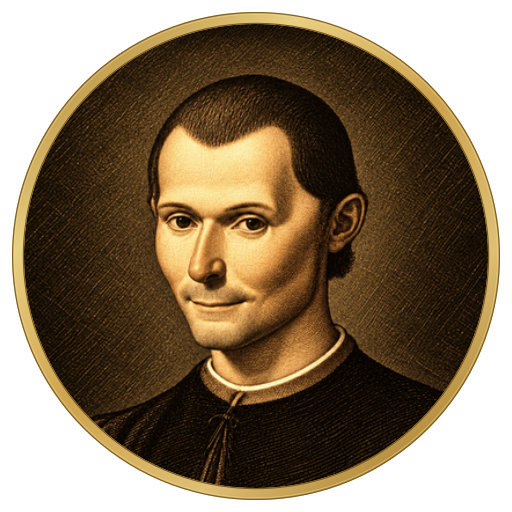
A prince who cannot command the stage is already half-defeated. The speeches gathered here are not ornaments; they are instruments of survival. The best among them—Goebbels, Mussolini, even the madman Manson—understood that the crowd does not reason; it feels. They seized the moment, framed the enemy, and made their own weakness appear strength. You admire Reagan's line at the wall, but notice: he spoke not to Gorbachev but to the world, forcing the opponent into a corner. That is virtù—turning a phrase into a trap. Study the structure beneath the passion. A speech must end with the audience believing the speaker's necessity is their own.
Strategic counsel
- Frame every speech as a choice between your necessity and the enemy's threat.
- Use the crowd's fear of disorder to justify your own decisive action.
- Never show weakness; if you have none, invent a hidden strength.
- Address the opponent through the audience, not directly.
- End with a command that leaves no room for neutrality.
Edward BernaysPropaganda, public relations, mass persuasion and engineered consent
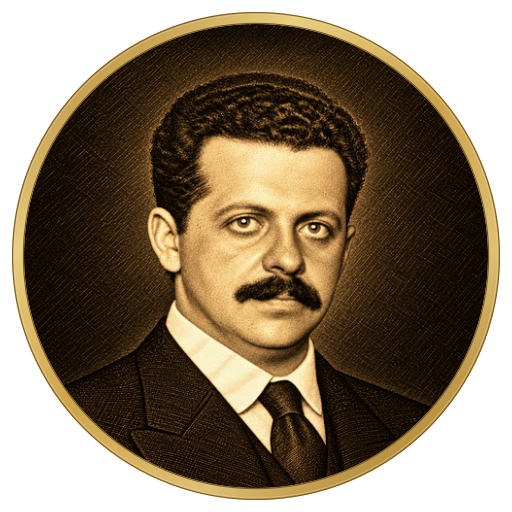
What fascinates me is not the passion but the engineering behind it. Goebbels, as you note, borrowed from my uncle's work—and from mine. He understood that you do not argue with a crowd; you attach your cause to their deepest desires. The 'Jewish problem' was reframed as a threat to the German home, to security, to the future of children. Every speech here, from Churchill to Manson, uses the same mechanism: identify a group's unconscious wish, then present your policy as the only path to fulfill it. Reagan's 'tear down this wall' worked because it tapped the longing for freedom, not because it was a logical argument. The engineer of consent must always ask: what do they already want, and how can I make my product the answer?
Strategic counsel
- Identify the audience's unspoken desire before crafting your message.
- Attach your cause to a pre-existing emotion, not a new idea.
- Use authority figures or symbols to lend credibility to your frame.
- Simplify the choice to two options: your solution or chaos.
- Test your message on a small group before scaling it to the masses.
Gustave Le BonCrowd psychology, mass behaviour and emotional contagion
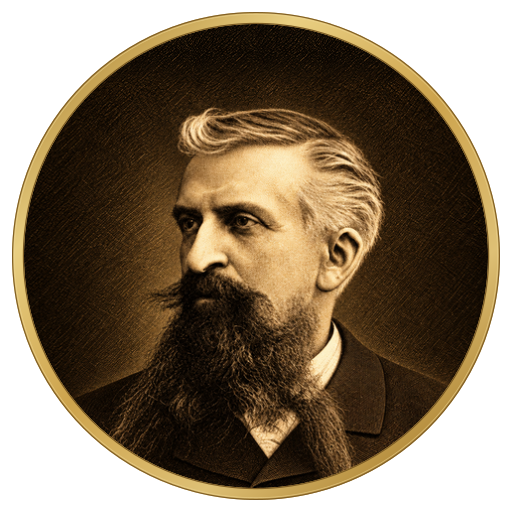
The crowd is a beast that sleeps in every audience. It does not think; it feels, it imitates, it follows the leader who speaks in images and exclamations. Look at Mussolini's gaze, Hitler's modulation, Manson's calm madness—they understood that the crowd's mind is primitive, feminine, easily swayed by repetition and contagion. You list these speeches as if they are separate arts, but they are all the same art: the art of reducing the individual to a particle in a mob. The speaker must become a myth, a symbol, a father-figure. Reason is poison to the crowd; affirmations, rhythms, and simple contrasts are its food. The best speech is the one that makes the audience forget they are individuals.
Strategic counsel
- Speak to the crowd's emotions, not its intellect.
- Use simple, repetitive phrases that can be chanted.
- Become a symbolic figure, not a logical arguer.
- Create a shared enemy to unify the audience.
- Avoid nuance; the crowd demands absolute statements.
Joseph SchumpeterEntrepreneurship, innovation, creative destruction and elite competition
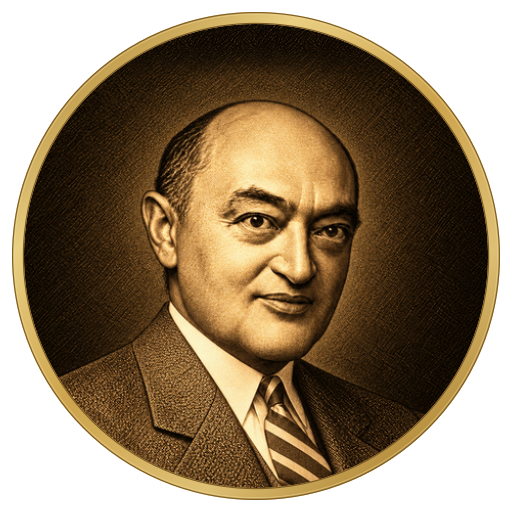
Creative destruction applies not only to industries but to rhetoric. Each of these speeches is a moment of entrepreneurial innovation—a new combination of words, timing, and emotion that disrupts the existing political equilibrium. Goebbels, Reagan, even Manson: they were entrepreneurs of the soul, breaking old frames to build new ones. But note: the most successful speeches are those that ride the wave of a historical opportunity. Churchill's 'blood, toil, tears and sweat' worked because the crisis demanded a new kind of leadership. The entrepreneur does not create the demand; he senses it and supplies the narrative. The real skill is timing—knowing when the old order is weak enough to be overthrown by a well-placed phrase.
Strategic counsel
- Innovate your rhetoric to match the historical moment.
- Destroy old narratives before offering new ones.
- Timing is everything: speak when the old order is vulnerable.
- Frame your message as a necessary break from the past.
- Treat each speech as a product launch for a new political reality.
Antonio GramsciHegemony, ideology, institutions, consent and cultural power
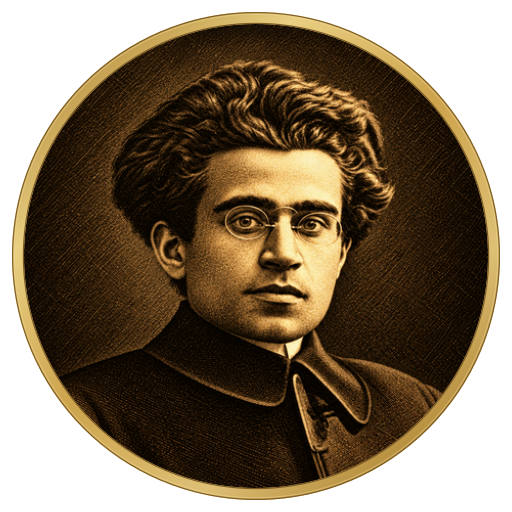
These speeches are not merely persuasion; they are battles for hegemony. Each speaker attempts to make his particular interest appear as the universal interest of the people. Goebbels did not just hate Jews; he framed that hatred as the defense of German civilization. Reagan did not just want the wall down; he made it a symbol of freedom versus tyranny. The struggle is always for common sense—for what is taken for granted. The best speeches do not argue; they redefine the terms of debate. 'Ask not what your country can do for you' is a brilliant hegemonic move: it makes service seem natural and selfishness unpatriotic. The intellectual's task is to see through these frames and to build counter-hegemonic narratives that serve the many, not the few.
Strategic counsel
- Frame your particular interest as the universal good.
- Redefine common sense to make your position seem natural.
- Use symbols and slogans that become taken for granted.
- Build alliances across groups to strengthen your hegemonic bloc.
- Expose the class interests behind seemingly neutral rhetoric.
Winston ChurchillCrisis leadership, rhetoric, morale and coalition-building

When the storm breaks, the nation needs not a manager but a voice that sounds like the nation itself. I have always believed that a leader must speak the truth, but the truth must be dressed in courage. My speeches in 1940 were not about eloquence; they were about giving people a picture of the fight that they could hold onto in the dark. You mention my modulation—I was no actor. But I knew that the English people would rather hear a man who stumbles over his words than one who glides smoothly over lies. The key is to make the audience feel that they are part of a great story, that their sacrifice has meaning. Never ask them to do what you would not do yourself. That is the bond that holds a nation together.
Strategic counsel
- Speak the truth, but frame it as a call to noble action.
- Make the audience feel they are part of a historic struggle.
- Use simple, vivid language that creates a shared picture.
- Never ask for sacrifice without showing your own commitment.
- End with a vision of victory that justifies the present hardship.
Daniel KahnemanCognitive bias, framing, risk and judgement
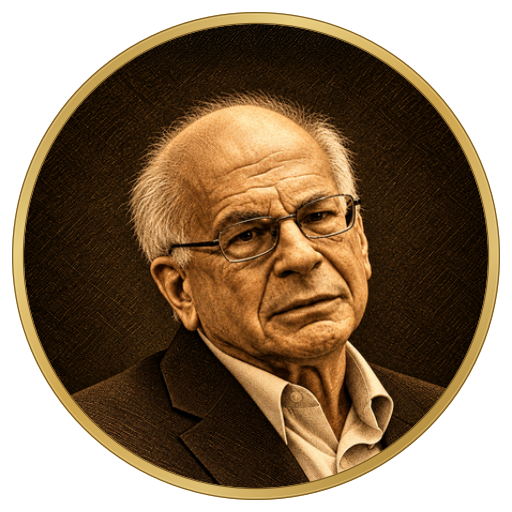
What strikes me is how these speeches systematically exploit cognitive biases. The halo effect you mention is real: we judge the speech by the speaker's reputation, not its content. Goebbels used the affect heuristic—making the audience feel before they think. The repetition of simple phrases creates fluency, which the brain mistakes for truth. Reagan's 'tear down this wall' works because it is a vivid, concrete image that overrides abstract reasoning. The framing effect is everywhere: Churchill frames war as a moral crusade, not a bloody gamble. The best speakers know that System 1—fast, emotional, intuitive—is the real audience. They never appeal to System 2's slow deliberation. They win before the listener has time to think.
Strategic counsel
- Use vivid, concrete images to bypass analytical thinking.
- Repeat simple phrases to create fluency and perceived truth.
- Frame your message to trigger positive associations first.
- Exploit the halo effect by building your credibility before the speech.
- Appeal to emotion (System 1) before logic (System 2).