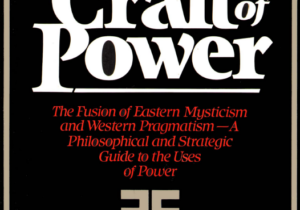
To my magnificient Reader,

This is Part 2 of 3 of The Craft of Power Summaries
Part #3 can be found here (in progress)
The book is rare and expensive though available on both the Internet and Amazon. You can find it here. Written by Ralph Gun Hoy Siu.
The Craft of Power Summary Part #2
HONING STRATEGIES AND TACTICS
The Eight Axioms
– Don’t confuse the platform for power with levers.
– Platforms are broad and strategic, levers are pointed and tactical.
– A platform is a springboard for many options, each lever is a commitment to a specific act.
– There are eight axioms that form quality strategy and tactics.
– 1: Adjust the objective to the resources, expending neither more for an intermediary target than it is worth in its contribution to the ultimate objective nor less than is needed to gain it.
– 2: Keep the objective always in sight, ensuring a clear line of attack without ending in a cul de sac.
– 3: Shape the operations so as to allow alternative tactical targets, thereby placing the opposition on the horns of dilemma.
– 4: Exploit the path of least resistance, always pointing in the direction of the final objective.
– 5: Pursue the course of least expectation on the part of the opposition, deceiving and beguiling to widen his miscalculation.
– 6: Maintain a flexible posture, responding to exigencies of the unexpected.
– 7: Refrain from repeating a line of attack that has just failed, recognising that the opposition had in all probability the reinforced themselves in the interim.
– 8: Dislocate the opposition, upsetting their strategic balance and disjoining their psychological reserve with goading lures and traps before striking the decisive blow.
Offense
– Though the general fundamentals remain the same, there are some small differences in how to obtain power depending on where you trying to obtain it. A king trying to take over a neighbouring kingdom may act a bit differently than an executive trying to overtake the CEO of a company. Calibration of tactics is key.
– When planning a takeover one must consider his options. If a direct takeover is not an option then one must resort to more indirect means.
– A direct takeover is simple. A king marches his army to the neighbouring country and invades. If a direct assault is not an option then resort to an indirect one.
– When resorting to an indirect takeover one must start small.
– Do not mount a new grab for power without a clear plan and knowing what will need to be done.
– Indirect takeover Phase 1: Get your allies appointed to key positions within the enemy structure. For example: a king wishing to take over a neighbouring kingdom indirectly, can get his allies appointed to key military positions in the enemy army and key positions in the enemies council. You start to gradually increase your influence indirectly through your allies that have infiltrated the enemy.
– Phase two: once you have your pawns in place a full on, and swift, take over will be simple.
– [NOTE] The book doesn’t give examples on how to get your allies placed in bed with the enemy but if you are intelligent enough to pull this off then you are intelligent enough to figure it out. I believe the lack of examples is because it’s highly situational. I find that referring to the 48 Laws of Power can help here.
– Be careful to make sure your power grabs remain under the radar for as long as possible. The opposition can’t defend against an attack he doesn’t see coming.
– Timing is everything. Moving at the right time, or at the wrong time, can affect the end outcome. Timing is not to be overlooked.
– Propaganda is useful, use it to your advantage.
– Once you have taken over the opposition you must put in place safeguards that will secure your new power position.
Defense
– You cannot always avoid confrontation nor can you always pick the time and place and therefore you must always be prepared for the worst case scenario at all times.
– The following measures can help safeguard your power:
– 1) Know the overall context of your power and the ensuing strategic consideration in its basic and interrelated facets
– 2) Establish a system of deterrence embedded in the tailored laws and rules
– 3) Manifest a system of deterrence backed by the power to punish
– 4) Continue the process of assimilating incipient oppositions
– 5) Defuse trouble spots and attack when necessary
– One of the best ways to maintain power is to make people dependent on you. It is much harder to control people that don’t need you.
– It may be better to be feared than loved but accomplish both and retaining your power will be much easier.
– Those who can’t be bought can be intimidated, those who can’t be intimidated can be bought. Very few are resistant to both.
– If you know you can’t stop dissidents from rising then seek to control instead of eliminating them. Subtly manipulate them into supporting causes that pose no threat to you.
– If you recognise an offence forming against you, a pre-emptive attack, assuming you have the numbers, can be a sound decision.
– If the opposition is strong then instigating a conflict between the opponent and another third party can work well. The third party will weaken the opposition for you. Better yet if the third party doesn’t realise you instigated it and is simply a pawn. Make sure, however, the third party doesn’t grow too strong if he wins and starts posing a threat to you.
– Remember, all these tactics work as well for the king as they do for the office executive. Calibration of tactics is key. Also, refer to The 48 Laws of Power and The 36 Stratagems.
Opportunist
– Opportunist don’t see people as good or bad but simply useful or not useful.
– They are constantly on the look out for opportunities that can help them accumulate more power.
– They are not above creating situations that can lead to opportunities.
– The opportunist will wait when a conflict breaks out, see who the likely winner is, and then align with them in order to gain favour with the victor once the war is over.
– They are often “middlemen” of sorts playing both sides to see who will benefit them the most.
– While playing both sides the opportunist is going to ensure to be the perfect courtier (Law 24) and to keep their hands clean (Law 26) to avoid suspicion.
– The opportunist is like a master chess player, he always plans several moves ahead.
– The opportunist thrives in chaos as chaos creates many opportunities in which the opportunist can then exploit.
– The supreme example of an opportunist is the character of Petyr “Littlefinger” Baelish from the Game of Thrones series on HBO.
Coalition
– History has shown that sooner or later allies ultimately become enemies.
– An ally will sometimes stab you in the back if it is in his best interest to do so especially if the ally is another person of power or person of much ambition.
– You should consider precautionary measures before voluntarily entering into an alliance.
– 1) Figure out if outside help is essential for your specific purpose at hand. Unless circumstances leave no alternative then it’s usually preferable to not seek an alliance. Be wary of making an alliance with a person who does not need you and is also powerful as they could just be using you only to discard you when they are done. They could even be indirectly taking over your power foundation.
– 2) If you do plan to make an alliance then be sure to establish a prior agreement as to what each member must contribute at all points of the alliance. Be suspicious of those who dont want to make a commitment and to those who promise you the moon. Both types are unreliable.
– 3) Maintain constant vigilance to ensure everything is going according to plan. If one ally seems to be intentionally getting too far out of line be sure to take steps to correct or compensate for this.
– 4) Take steps to ensure your ally isn’t simply using you to destory their enemies before turning on you to destory you. If you plan on uisng that stragety to destory someone then plan as if they are aware of your scheme.
– 5) Conduct your operation in such a way that at the time of the joint victory your own resverves and system are not so unbalanced that your competitive position is impoverished. The closer to victory against the common foe you stand, the more closeely should you scrutinise your own fortunes, adjust your balance, and toughen your resilience.
VECTORING RESOURCES
Parapropritary control
– The prelude to power in modern times is the battle for social or organisational positions, which constitute the decision-making loci governing resources. No chief of state owns the men he directs; no banker the money he manipulates, no bishop the heaven he promises, but they all act as if they do. Such is the common state of affairs in a paraproprietary society.
– There are two considerations to keep in mind as you try to move upwards in a paraproprietary society
– 1) The number of positions available within the inner circle. When on the outside trying to get in it can often be easier to convince the powers at be to enlarge the circle and create a new position rather than trying to displace someone already in the circle thus taking their position. You can also try to convince the powers that be to open up a different and new position that has the powers you want and then give that position to you.
– Once you become a member of the inner circle you should support moves to further restrict the membership. Sharing power is not only a loss of personal power but a threat to what power is left.
– 2) Within the inner circle will be different positions all with different amounts of power. Decide which is the best for your goals and keep an eye on it.
People
– First step on path to power to assemble a well-knit cadre backed by followers beyond that in numbers adequate for the attainment for the next two milestones. Be VERY cautious about trying to go anywhere without this cadre and be VERY cautious about trying to reach for power beyond the strength of the platform you have constructed.
– Ceaser is a great example. Through his charm and persuasion he gained much credit and favour with many of the senators and through his festivals, he gained favour of the people.
– In general, the magnitude of power in your hands is a direct function of the size of your constituency.
– Strive to increase the number of constituents you have.
– Strive to make all you constituents feel a sense of belonging to the organisation. The also need to feel like you are one of them and that you understand them.
– Minimize the overt expression of superiority by one segment of your followers over another. Example: A roman general ordered that slaves be added to the army to increase numbers and passed law forbidding any roman to belittle the slaves.
– Know and understand the people who follow you so that you can better persuade and control them.
– Continue to strengthen cadre by finding capable people and adding them in.
– Make sure to continue to keep an eye on the cadre though and stop a power struggle before it begins.
– If a person is doing a good job but is threatening you power and you must let him go its often better to do it with “face-saving honors” so he keeps his dignity and you dont create an enemy. However, sometimes its best to make an example of out this person so others fear trying to step up to your power.
Money
– The more corrupt a society the more money you need to control to gain and maintain power.
– The less money you have/control the more well versed in manipulation, deceit, and warefare you must be to ovecome the lack of money.
– People who have risen to power often had to borrow, beg, and steal to get the money they needed.
– In modern America “Super PACs” are a great example. The Candidate doesn’t own that money but controls millions of dollars worth of donations that he can use to further his cause.
Indentitive Inducements
– Money is an important factor in attracting and keeping good talent but its not always the only factor.
– Prestige symbols such as reputation, feelings of achievement, publicity, and status symbols often work as well.
– There exist three types if motivation
– Indentitive: prestige symbols
– Utilitarian: granting and withholding of material things
– Coercive: the threat of injury or other punishment
– Generally, indentitive is better than utilitarian which is better than coercive.
– Find out what a perons motivations are and you can find out the best way to control them.
Push & Pull
– Instruments for inducing action can be divided into the push and the pull.
– Instruments of Push deter action by using fear of punishment or injury.
– Instruments of pull offer gains and rewards such as compliments, bonuses, etc.
– Strive to make the gains you give aligned with your goals. Examples: The king offers a Knight a large tract of land if the king wins the war. The office executive offers a bonus if the project his men are working on wins the contract.
– The progressive series in the push pulling of power is: 1) Killing the target individuals, 2) eliminating them, 3) damaging them, 4) threatening them, 5) cajoling them, 6) bribing them, 7) persuading them, 8) seducing them, 9) attracting them, and 10) educating them to your view.
– Generally, you should use the more non-violent ones at the end of the spectrum. If effective they usually result in less backlash.
– In perilous situations, you will sometimes have to resort to the more violent ones. Most people can either be bribed, intimidated, or seduced.
SHAPING COMMUNICATIONS
Need to Know
– Only give information to those with a direct need for it else it may fall (or be leaked) into the wrong hands.
– Only give them as much information as they can process so they dont get overwhelmed. Once processed then give them the rest.
– Information is power so you want to control the flow of information regarding you and your operations.
– If trying to usurp someone you must control the amount of information they have. Keep them in the dark, feed them false information, make them confused even.
– The manipulation of information given to the constituency is essential to stay in power.
– If they feel the future is 100% certainly going to be positive and prosperous they are less likley to surrender power to you. If, however, you give them small doses of anxiety and uncertainty, you can retain power over them by making them believe only you can lead them to prosperity.
Private Channels
– Be careful of your inner-circle only telling you what they think you want to hear or worse, only what they want you to hear.
– Be sure to set up communication channels that bypass your staff so you can get accurate information. You want to know what’s really going on and what people really think and feel.
– Remember, people trying to usurp you will attempt to limit the amount of correct information that you are getting.
I hope you enjoyed Part #2 of the Craft of Power Summaries and again I want to thank my friend warped_mindless
Court of Seven
What ancient philosophers would say about modern strategy.
Niccolò MachiavelliPower, statecraft, political survival, virtù and fortuna

The eight axioms are sound but lack the crucial element of fortuna. No strategy survives contact with chance. The prince must cultivate virtù—the boldness and adaptability to seize opportunity when it appears, even if it means abandoning a carefully laid plan. The flexible posture axiom hints at this but does not go far enough. On the indirect takeover: this is well understood. But the text omits the importance of appearing to act for the common good. When placing your allies, do so under the pretext of reform or necessity. Let the people believe you are strengthening the state, not yourself. Caesar understood this perfectly. The defense section is too passive. A prince should not wait for opposition to form; he should create divisions among potential enemies before they unite. And when you must strike, strike decisively. Half-measures create resentment without eliminating the threat. It is better to be feared for cruelty than loved into ruin.
Strategic counsel
- Cultivate virtù to seize the opportunities fortuna presents.
- Always cloak self-interest in the language of the common good.
- Create divisions among potential enemies before they unite.
- Strike decisively; half-measures invite disaster.
- It is safer to be feared than loved, if you cannot be both.
Francesco GuicciardiniPolitical realism, interests, particular circumstances and opportunism

These axioms are too rigid. Circumstances always differ, and what worked for a Florentine merchant will fail for a Venetian admiral. The wise man studies the particular dispositions of his opponents, the exact balance of forces, and the mood of the moment. General rules are a starting point, never a substitute for judgment. The section on alliances is sound but misses the crucial point: one must always preserve one's own freedom of action. A written agreement is worthless if the stronger party decides to break it. Better to keep allies slightly uncertain of your intentions, so they must continue to court you rather than take you for granted. On the opportunist: this figure is often despised but frequently succeeds. The key is not to appear opportunistic. Maintain a reputation for reliability even as you shift positions. Let others call it prudence. And never burn a bridge entirely; today's enemy may be tomorrow's necessary partner.
Strategic counsel
- Judge each situation on its own particulars, not by abstract axioms.
- Preserve your freedom of action even within alliances.
- Keep allies slightly uncertain to maintain your bargaining position.
- Shift positions but maintain a reputation for reliability.
- Never permanently alienate anyone; circumstances change.
Thomas HobbesSovereignty, fear, deterrence, authority and social order

The defense section correctly identifies deterrence as central, but it misunderstands its foundation. Deterrence is not merely a system of punishments; it is the credible threat of overwhelming force that makes rebellion appear futile. The sovereign must not only have the power to punish but must demonstrate the will to use it without hesitation. The text's discussion of making people dependent on you is astute. In the state of nature, every man is a wolf to every other man. The sovereign's power is the only thing that prevents perpetual war. Therefore, any dependency that reinforces the sovereign's monopoly on force is good; any that creates alternative centers of loyalty is dangerous. When the author speaks of controlling information, this touches on a deeper truth. The sovereign must also control the interpretation of events. If the people believe the sovereign is weak or unjust, the covenant that holds society together begins to dissolve. Fear of the sovereign must be constant and justified by visible power.
Strategic counsel
- Deterrence requires credible will to use overwhelming force.
- Make subjects dependent on the sovereign for their security.
- Eliminate alternative centers of loyalty and power.
- Control not just information but its interpretation.
- Maintain constant visible demonstrations of sovereign power.
Gustave Le BonCrowd psychology, mass behaviour and emotional contagion
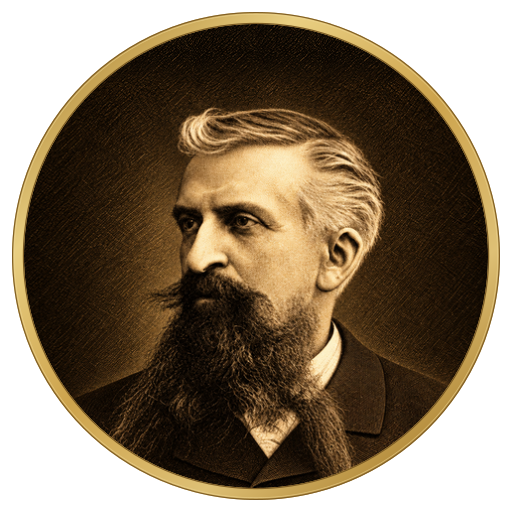
The text correctly identifies that constituents need to feel belonging, but it underestimates the irrational forces at work. Crowds do not reason; they feel. A leader must appeal not to logic but to sentiments, images, and simple affirmations repeated until they become unquestioned truths. The cadre is useful only if it understands crowd psychology. When discussing push and pull, the coercive end is often more effective than the author admits. Fear is a primal and reliable motivator. But it must be directed at an external enemy, not at the crowd itself. Unite your followers against a common threat, and they will surrender their individuality willingly. The manipulation of information is crucial, but the most powerful tool is prestige. A leader who radiates personal magnetism can make absurd claims seem plausible. The crowd does not need accurate information; it needs a compelling myth that gives meaning to its collective existence.
Strategic counsel
- Appeal to sentiments and images, not logic or evidence.
- Use repetition to make simple assertions seem like truths.
- Direct fear toward an external enemy to unify the crowd.
- Cultivate personal prestige; it makes any claim believable.
- Provide a compelling myth, not accurate information.
Edward BernaysPropaganda, public relations, mass persuasion and engineered consent
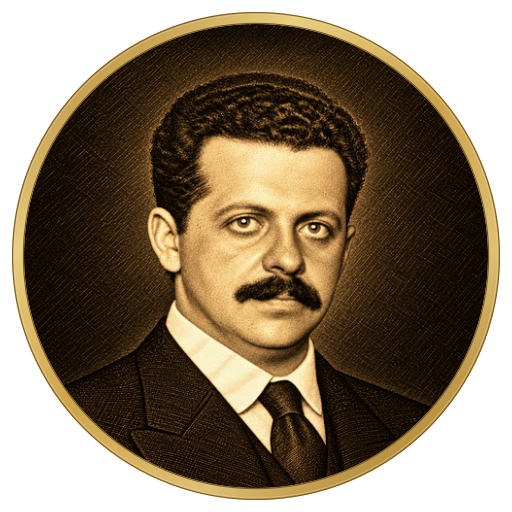
The push-pull spectrum is useful but incomplete. True engineering of consent operates below the level of conscious choice, shaping the very desires that make rewards attractive and punishments feared. The most effective propaganda makes people believe they arrived at the conclusion themselves. Controlling information flow is essential, but the real art lies in creating events that generate news organically. A staged spectacle that appears spontaneous carries far more persuasive force than any direct announcement. The need-to-know principle should extend to manufacturing the appearance of transparency while managing the underlying narrative. When the text mentions giving people small doses of anxiety, that is a classic technique. But the master stroke is to then offer yourself as the only solution to that manufactured unease. The public must feel they are choosing freely, even as every option has been pre-screened.
Strategic counsel
- Engineer consent by shaping desires, not just controlling information.
- Stage events that generate organic-seeming news coverage.
- Manufacture anxiety, then present yourself as the sole remedy.
- Make people believe they chose what you wanted all along.
- Transparency is a performance; manage the narrative behind it.
Otto von BismarckRealpolitik, alliances, diplomacy and limited objectives
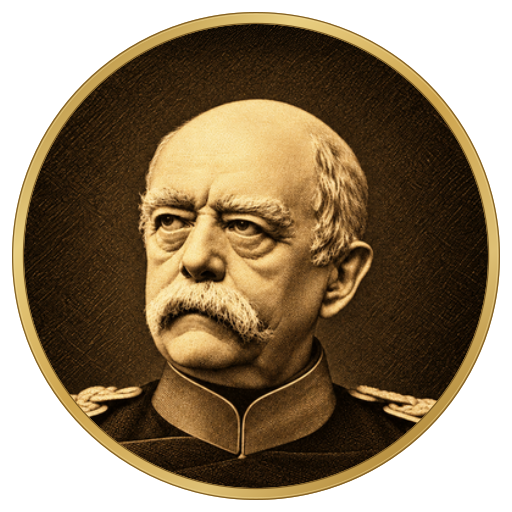
The axiom about adjusting objectives to resources is the foundation of all statecraft. Overreach destroys more princes than any enemy. One must know not only what one wants but what is possible given the forces at hand. The art lies in recognizing the limits of one's power and acting within them while appearing to aim higher. The coalition section is wise but incomplete. An alliance is a temporary convergence of interests, not a marriage. One should always calculate how the alliance will look after the common enemy is defeated. The strongest position is to have your ally need you more than you need them. Maintain reserves that keep you indispensable. On the opportunist: this figure is often necessary but must be managed carefully. Use such men for specific tasks, but never let them into your inner councils. They will sell you as readily as they sold others. Keep them dependent on your favor and uncertain of your intentions.
Strategic counsel
- Know the limits of your power and act within them.
- Treat alliances as temporary convergences of interest.
- Ensure your ally needs you more than you need them.
- Use opportunists for tasks, but exclude them from strategy.
- Maintain reserves that make you indispensable after victory.
Antonio GramsciHegemony, ideology, institutions, consent and cultural power

The paraproprietary control described here is a surface symptom of a deeper struggle for hegemony. One does not merely occupy positions; one must shape the very categories through which people understand their interests. The real battle is for the common-sense assumptions that make certain power arrangements seem natural and inevitable. When the text speaks of making constituents feel belonging, that is the moment of ideological work. A successful leader does not just command loyalty but manufactures consent by embedding his worldview into institutions, rituals, and daily practices. The cadre is not just a tool but a vehicle for propagating a new moral and intellectual leadership. The opportunist who plays both sides misunderstands power entirely. Lasting authority is built not by exploiting chaos but by patiently constructing a bloc of social forces that see your project as their own. Without that cultural foundation, every victory is brittle and reversible.
Strategic counsel
- Hegemony requires winning consent, not just controlling positions.
- Embed your worldview in institutions before seeking tactical victories.
- A cadre must be an organic intellectual collective, not a mere instrument.
- Exploit contradictions in the opposition's common sense, not just their resources.
- Lasting power depends on making your interests appear universal.