To my magnificient Reader,
Law #16: Use Absence to Increase Respect and Honor
Law #16 means controlling access with enough discipline that your presence retains weight and your attention continues to signal consequence. What remains permanently available is quickly treated as ordinary, whereas a deliberate interval allows memory, anticipation and comparison to raise perceived value. Absence is not disappearance for its own sake. It works only when you have already created something worth missing, when the audience understands the value withheld and when your return can be made decisive. Used with discipline, distance produces valuable scarcity; used carelessly, it produces relief, suspicion or eventual irrelevance.
Examples & Applications
Positive Historical Example: Charles de Gaulle(opens in new tab) leaves the Stage until France needs him
De Gaulle resigned as head of France’s provisional government on January 20, 1946(opens in new tab), after clashing with parties that favoured a parliamentary system he considered structurally weak. He did not spend the following years accepting lesser offices that would have made him another participant in the same arrangement. Instead, he remained a national figure outside daily government, preserving the authority acquired through wartime leadership while the Fourth Republic accumulated fragile coalitions and recurring crises. His distance protected him from responsibility for a system whose accumulating deficiencies continued to support his central argument.
When the Algerian crisis brought the regime towards collapse in 1958, his long absence changed political meaning altogether. He was no longer merely a retired politician; he appeared to be the reserve source of legitimacy whom ordinary parliamentary bargaining could not replace. France’s National Archives record his return to power in June 1958(opens in new tab), the preparation of a new constitution and its approval by a large referendum majority that September. He returned not to occupy the old position, but to redesign the office and the rules around it.
The mechanism was contrast: every government that failed in his absence increased the value of the stability he claimed to represent, while his refusal to join transient combinations kept that value unspent. This strategy would have failed without an established reputation, a recognisable doctrine and a crisis severe enough to make his return broadly acceptable. In professional life, the equivalent is to leave a dysfunctional process cleanly, continue developing authority elsewhere and return only when you can change the mandate. Remaining close enough to be useful, but sufficiently distant to prevent dilution, is the difficult strategic art.
Positive Modern Example: Beyoncé(opens in new tab) turns Silence into an Event
On December 13, 2013, Beyoncé released her self-titled visual album without the conventional procession of advance singles, interviews and promotional countdowns. The silence did not indicate inactivity; it concealed a complete product and prevented months of fragmented publicity from spending the audience’s attention before the work arrived. When the album appeared, audience discovery, public reaction and purchasing activity unfolded almost simultaneously across the global market. The absence of a campaign became the campaign because it concentrated information into a moment the market could not comfortably ignore.
The commercial response showed how effectively scarcity and compressed attention had been converted into immediate, measurable demand around the world. Apple reported that 828,773 albums were sold through iTunes in three days(opens in new tab), setting a store record and reaching number one in 104 countries. The more important result was a direct transfer of agenda-setting power from the promotional system to the artist herself. Retailers, journalists and listeners had to respond to the artist’s timing, rather than watching a familiar campaign negotiate for progressively smaller portions of their attention.
This was controlled scarcity, not magical secrecy. Beyoncé already possessed an audience, a reputation for finished work and enough distribution power to make immediate global availability credible. She withdrew from the promotional ritual while remaining present in the audience’s cultural memory, then returned with more substance than the silence had promised. A leader or brand can use the same principle by reducing routine commentary, refusing premature previews and speaking when a complete decision can alter behaviour. Silence amplifies authority only when substantial authority and demonstrated value already stand securely behind it.
Negative Historical Example: Louis XVI(opens in new tab) lets Distance become Desertion
During the French Revolution, Louis XVI’s attempted flight from Paris on the night of June 20, 1791, turned physical absence into political self-indictment. The royal family travelled in disguise towards the eastern frontier but was recognised at Varennes, stopped and returned under guard. The episode mattered because the king still occupied a constitutional position that depended upon some belief in his willingness to inhabit it. By trying to leave secretly, he allowed opponents to interpret uncertainty about his intentions as evidence that the monarchy itself could not be trusted.
The failure at Varennes(opens in new tab) weakened the fiction that king and revolution could be reconciled through constitutional forms. His absence did not make subjects appreciate the order he embodied; it made the nation imagine that he would seek foreign support, reverse concessions or abandon the settlement when an opportunity appeared. The attempted escape had changed absence from a symbol of rank into persuasive evidence of political bad faith. Scarcity cannot increase respect when the missing person owes a duty of presence; in that setting, withdrawal feels less like sovereignty than evasion.
The modern application is direct. When a chief executive, minister or team leader disappears during a crisis, subordinates must make decisions without authority while stakeholders infer that the leader wishes to escape the consequences. No amount of ceremonial reappearance can fully restore confidence if the absence exposed divided loyalties or concealed intent. Strategic distance should remove you from distracting noise, but never from a consequential duty that only you can discharge. Before withdrawing, establish who governs, which commitments remain fixed and when you will return; otherwise, your silence gives adversaries the privilege of explaining it.
Negative Modern Example: Disney makes a Galaxy feel ordinary
For many years, the arrival of a new Star Wars film had been treated as a rare international cultural event. After acquiring Lucasfilm, Disney shifted the franchise towards a rapid theatrical cadence, with a new film arriving each year from 2015 through 2019. The early releases generated enormous attention, yet their accelerating repetition gradually changed the audience’s relationship with the product. What had once interrupted the calendar began to occupy a predictable slot within it, and anticipation had less time to rebuild between one campaign and the next.
Following the commercial disappointment of Solo: A Star Wars Story, Disney chief executive Bob Iger(opens in new tab) accepted responsibility for the timing and announced that the theatrical programme would slow. In his September 2018 interview(opens in new tab), the diagnosis was admirably concise and unusually candid: the company had moved too quickly across the theatrical franchise. The strategic mistake was not that the underlying property had lost all value, but that frequency was consuming the scarcity through which much of that value had previously been expressed.
Abundance is seductive because it produces more launch dates, more inventory and more opportunities to monetise attention. However, every additional appearance also teaches the audience how urgently it must respond and how costly postponement will be. If another instalment, speech or product will arrive soon, postponement becomes rational and absence ceases to hurt at all. The corrective is not artificial withholding of mediocre work, but a cadence in which each return carries a distinct reason to matter and enough empty space for appetite to become visible again.
Spirit of the Law: Use Absence to Increase Respect and Honor
The spirit of Law #16 is the disciplined management of perceived value through deliberately controlled access and carefully timed return. People often judge importance partly by the opportunity cost of obtaining attention from a person, institution or product. Constant exposure removes that cost and encourages familiarity to replace judgement: the leader becomes background commentary, the expert becomes an unlimited help desk and the brand becomes another item competing on the shelf. A measured absence interrupts routine consumption and forces the audience to notice what your presence had quietly been supplying.
Three conditions must exist before withdrawal creates power: first, there must be demonstrated value, because unknown people do not become prestigious merely by being unavailable. Second, the audience must retain a clear and reliable memory or signal of that value throughout the interval. Third, the return must remain credible, because indefinite absence eventually teaches others to substitute, reorganise or forget you. The purpose is not to make access difficult at all times, but to prevent access from becoming so automatic that it no longer communicates status or consequence.
Use absence differently according to the dependency involved: a leader can delegate routine decisions and reserve personal intervention for moments that establish direction. An adviser can stop supplying unpaid, immediate answers and create defined channels through which serious requests receive serious work. A brand can reduce releases while increasing the distinction of each one, and in every case the interval should heighten contrast without breaking trust. Those who depend upon you should experience your distance as deliberate structure, rather than unexplained neglect or abandonment.
The reversal occurs when visibility is still being built, when a crisis requires ownership or when competitors can replace you without meaningful cost. In those circumstances, absence does not create respect or productive scarcity; it merely surrenders the field to more present competitors. Machiavellian restraint therefore begins with an unsentimental question: will people feel the loss of my contribution, or merely enjoy relief from my presence? Withdraw only when the answer is supported by observed behaviour, then return decisively before scarcity decays into comfortable irrelevance.
Most Important Learnings
- Create Value before Scarcity. Absence magnifies an established contribution but cannot manufacture one from nothing.
- Control the Interval. Withdraw long enough for contrast to grow, yet return before substitution becomes permanent.
- Remain present in Memory. Reputation, doctrine and past results must continue speaking while you are physically or publicly absent.
- Never abandon Obligation. Leaders who disappear during consequential moments reliably convert mystery and distance into public distrust.
- Make every Return matter. Reappear with a decision, product or performance substantial enough to justify renewed attention.
In one sentence: Use absence to increase respect by withholding routine access after proving your value, then returning at the moment your presence can carry the greatest consequence.
Court of Seven
What ancient philosophers would say about modern strategy.
Niccolò MachiavelliPower, statecraft, political survival, virtù and fortuna
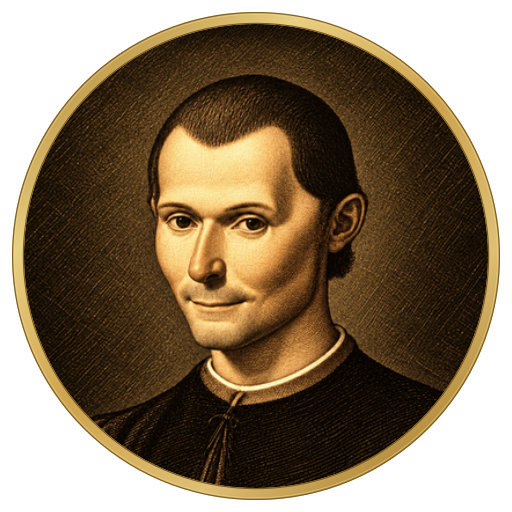
A prince who makes himself too available teaches his subjects that his presence costs nothing. I have seen many rulers ruin their authority by attending every council, answering every petition and appearing at every ceremony until the people ceased to notice them. The crowd does not value what it can have at any hour. Withdraw, but never in fear. Leave when you have already demonstrated your capacity to govern, and leave so that your absence becomes a question the people must answer themselves. When they grow weary of their own incompetence and call for your return, you come back not as a supplicant but as a necessity. That is the difference between a king and a clerk.
Strategic counsel
- Withdraw only after establishing undeniable value, never before.
- Let absence create a question that only your return can answer.
- Return with a mandate changed in your favour, not the same old terms.
- Never abandon a duty that only you can discharge during crisis.
- Make your presence rare enough that each appearance feels decisive.
Charles-Maurice de TalleyrandNegotiation, diplomacy, political survival and opportunism
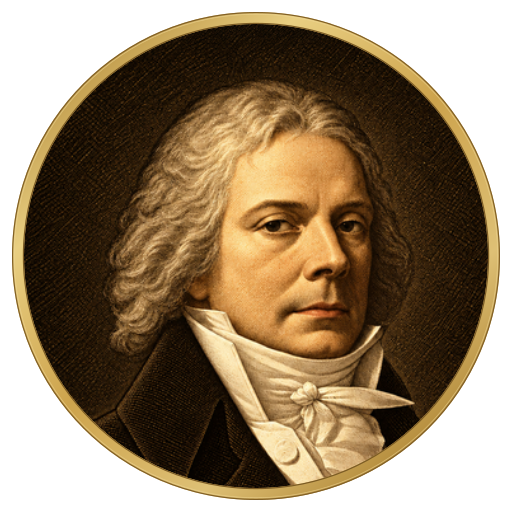
I have always found that the man who is never absent is never missed, and the man who is never missed is soon replaced. The art lies in knowing when to step back so that others feel the weight of your absence more keenly than they ever felt the weight of your presence. A diplomat who attends every negotiation cheapens his signature. Let the crisis ripen, let the parties exhaust themselves, and then arrive as the one who can still speak to everyone. Your distance must never look like desertion; it must look like patience. The world will always pay more for the man who arrives late but indispensable.
Strategic counsel
- Absence must appear as strategic patience, not as abandonment.
- Let others exhaust themselves before you offer your solution.
- Return only when your presence can change the outcome decisively.
- Never attend every negotiation; scarcity gives your signature weight.
- Remain on good terms with all sides while you are away.
Baltasar GraciánDiscretion, reputation, social intelligence and strategic concealment

A person who is always visible becomes part of the furniture, and furniture is never honoured. The wise man knows that esteem is kept alive by intervals of withdrawal, during which the memory of his excellence can ripen without the corrosion of daily familiarity. But take care: withdrawal without substance is mere affectation, and the world soon sees through it. First, ensure your worth is established and remembered. Then, let your absence speak of depth, not of emptiness. Return not when you are bored, but when your return will be received as an event. In this way, you make yourself a rarity that the world values precisely because it cannot have you always.
Strategic counsel
- Establish undeniable worth before you withdraw, or absence is empty.
- Let memory of your excellence ripen during the interval of silence.
- Return only when your reappearance can be received as an event.
- Avoid becoming furniture; daily familiarity corrodes respect.
- Withdraw with grace, never with resentment or visible calculation.
Friedrich NietzscheWill to power, status, resentment, morality and self-overcoming
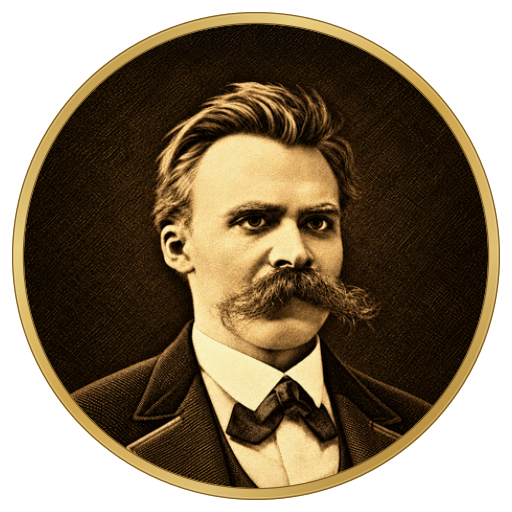
The herd values what is rare because it cannot possess it, and despises what is common because it can. To make yourself scarce is to make yourself a prize. But this game requires strength: you must be able to endure the silence, to let others forget you, and to return with something that shatters their comfortable expectations. Do not withdraw out of weakness or resentment. Withdraw out of the fullness of your power, so that your absence becomes a test that others fail. When you return, you return as one who has overcome even the need for their approval. That is the will to power made visible: not the need to be seen, but the capacity to be seen only when it serves your ascent.
Strategic counsel
- Withdraw from strength, not from weakness or resentment.
- Let your absence become a test that others fail without you.
- Return with something that shatters comfortable expectations.
- Rarity is a form of power; commonness is a form of slavery.
- Endure the silence; the herd cannot, and that is your advantage.
Gustave Le BonCrowd psychology, mass behaviour and emotional contagion
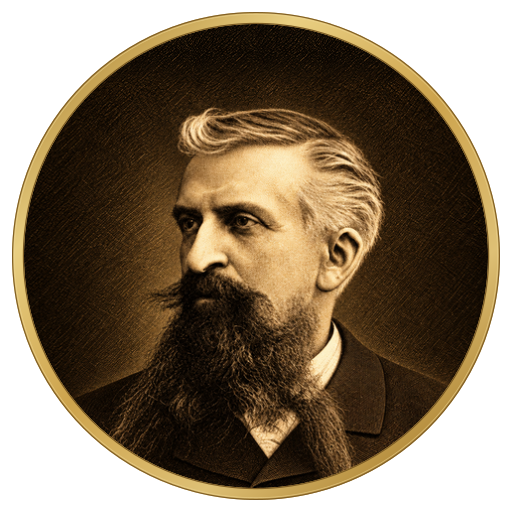
The crowd does not reason; it feels. And what it feels most powerfully is the contrast between presence and absence. A leader who is always before the crowd ceases to excite any emotion at all, because the crowd's attention is quickly exhausted by the familiar. The crowd needs intervals of emptiness to imagine what it has lost. But the crowd also forgets quickly. If your absence lasts too long, another image will fill the void. The art is to withdraw at the peak of your impression, so that memory of you remains vivid, and to return before the crowd has transferred its devotion to a new idol. Control the timing of your appearances, and you control the crowd's emotions.
Strategic counsel
- Withdraw at the peak of your impression, while memory is still vivid.
- Return before the crowd transfers its devotion to a new idol.
- Crowds need intervals of emptiness to imagine what they have lost.
- Familiarity exhausts the crowd's attention; absence renews it.
- Control the timing of appearances to control collective emotion.
Henry KissingerBalance of power, geopolitics and diplomatic leverage
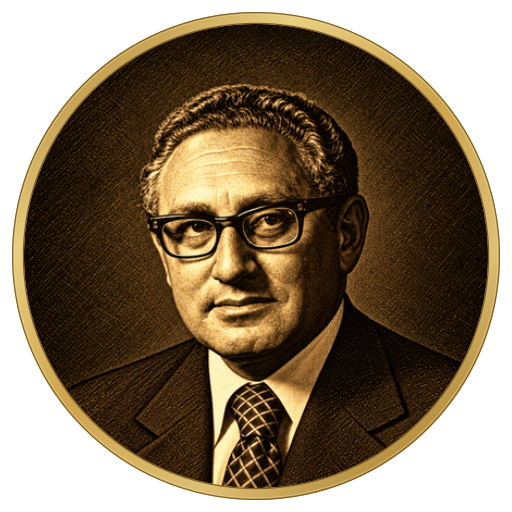
In diplomacy, the leader who is always available to negotiate has already conceded the most important point: that he needs the agreement more than the other side. Absence creates uncertainty about your intentions and your alternatives, and uncertainty is a form of leverage. The other party must fill the vacuum with its own anxieties. Yet absence without a credible threat of independent action is merely isolation. De Gaulle understood this: he withdrew not to disappear, but to let the failures of others accumulate until they had no choice but to accept his terms. The key is to ensure that your absence is more painful to them than your presence would be. That is the essence of strategic distance.
Strategic counsel
- Absence creates uncertainty, and uncertainty is diplomatic leverage.
- Ensure your absence is more painful than your presence would be.
- Withdraw to let others' failures accumulate in your favour.
- Never be always available; it signals you need the deal more.
- Maintain a credible alternative so absence is not seen as weakness.
Edward BernaysPropaganda, public relations, mass persuasion and engineered consent
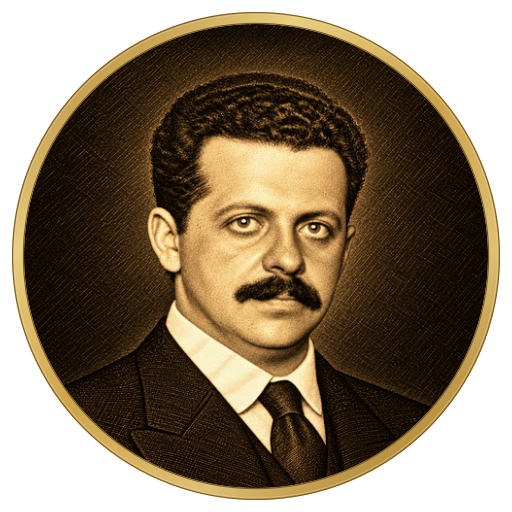
The public's attention is a finite resource, and every appearance spends a portion of it. The mistake is to believe that more appearances mean more influence. In reality, constant visibility trains the public to ignore you. The most effective communication is the one that arrives as an event, not as background noise. Beyoncé understood this perfectly. By withholding the usual promotional ritual, she made the album's arrival a psychological event that the public could not ignore. The silence itself became the campaign. But this only works when the public already desires what you have to offer. First, engineer that desire. Then, control its satisfaction through scarcity. That is how you manufacture not just consent, but hunger.
Strategic counsel
- Constant visibility trains the public to ignore you.
- Withhold routine communication to make each message an event.
- Engineer desire first, then control its satisfaction through scarcity.
- Silence can become the most powerful campaign when properly timed.
- Never spend attention before you have something substantial to deliver.