To my magnificient Reader,
Crush your enemy totally means ending a rival’s capacity and incentive to resume the contest, not just winning one visible exchange. A partial victory leaves humiliation without obedience, which is the most dangerous political combination. You must remove the machinery, coalition and logic of retaliation, then build an order where the old conflict cannot return. The exception is precision: never destroy a functioning system until you know what will occupy the space. Indiscriminate punishment enlarges the enemy coalition faster than it disables remaining capacity.AI Article Summary
Law #15: Crush Your Enemy Totally
Law #15 means ending a rival’s capacity and incentive to resume the contest, rather than congratulating yourself for winning one visible exchange. A partial victory often produces the most dangerous combination in politics: humiliation without obedience. The defeated party retains its people, grievances, relationships and route back to power, while you mistake temporary silence for surrender. “Totally” should therefore be read as a strategic condition, not a licence for cruelty. The conflict is finished only when retaliation has become impossible, unattractive or more costly than a durable settlement.
Examples & Applications
Positive Historical Example: The Allies destroy the Regime and rebuild the State
In 1945, the Allied powers did not treat Nazi Germany’s military defeat as sufficient proof that the political danger had disappeared. Germany was occupied, its armed capacity was dismantled3), Nazi institutions were prohibited and authority passed to the occupying powers2). The initial American occupation directive described Germany as a defeated enemy and required the destruction of Nazism and militarism, while later policy pursued the elimination of Nazi influence from public life. The objective was not another armistice with the same machinery waiting behind it, but the removal of the regime’s ability to reorganise itself under a new banner.
Yet the more intelligent part of the settlement came after destruction. In the Western zones, the Allies gradually transferred administration to democratic German institutions, supported economic recovery and connected the new Federal Republic to a wider European and Atlantic order. The occupation thus attacked the enemy system while preserving the human and material foundations from which a legitimate state could be built. A useful study of the reconstruction period shows how security, political reform and recovery had to reinforce one another rather than proceed as separate projects.
The mechanism matters more than the scale of the war, because the same strategic problem appears in smaller contests. The Allies removed command structures, symbols, weapons and legal continuity from the defeated regime, then offered ordinary Germans a future that did not depend upon restoring it. This combination denied committed Nazis both the means of return and a mass constituency desperate enough to support one. In organisational conflict, the equivalent is to dismantle the rival’s vetoes, patronage network and privileged information, while giving neutral employees a credible place in the successor order. Crush the hostile system; do not manufacture an entire population of enemies.
Positive Modern Example: Netflix makes Blockbuster’s Store Network worthless
Netflix did not defeat Blockbuster by building slightly better video stores and competing more efficiently within the incumbent’s familiar model. Under Reed Hastings, it first separated film rental from the journey to a shop through a subscription DVD-by-mail service, then made its own successful model expendable by moving aggressively into streaming. Each transition removed a reason for customers to tolerate Blockbuster’s inherited advantages: local presence, shelf space and immediate physical inventory. What had once protected the incumbent became a costly network tied to a declining behaviour.
The decisive attack was therefore directed at the basis of Blockbuster’s power, not at its public image. Netflix’s 2010 annual filing reported more than 20 million subscribers at year-end, while Blockbuster had filed for bankruptcy that September with heavy debt and thousands of stores still to support. Netflix did not need every Blockbuster customer, nor did it need to destroy the brand in argument. It changed the economics until the rival’s most formidable assets demanded cash without providing a defensible advantage.
This is how the law usually appears in business: the cleanest victory does not take a competitor’s position, but makes that position strategically irrelevant. When confronting an incumbent, identify the dependency that converts scale into power—distribution, regulation, switching costs, proprietary data or habit—and design the contest so that dependency becomes a burden. Price wars merely wound both sides, leave the original structure intact and therefore rarely decide the strategic question. A changed battlefield can close the conflict before the incumbent understands that its familiar weapons no longer reach you.
Negative Historical Example: Napoleon Bonaparte humiliates Prussia and finances its Return
After defeating Prussia, Napoleon imposed the 1807 Treaty of Tilsit, removing vast territories, restricting military power and burdening the kingdom with French demands. The treaty’s published terms demonstrate how thoroughly France rearranged Prussian territory and subordinated its movement to the new continental order. It looked like total mastery. From the French court, no continental rival appeared capable of reversing the verdict. Prussia had lost status, land and freedom of action, while Napoleon possessed the armies and prestige to enforce the settlement.
Yet he left the Prussian state politically alive, institutionally coherent, resentful and capable of learning from defeat. The punishment created an urgent reason to reform administration, education and the army; restrictions on troop numbers encouraged methods that trained men in rotation without openly exceeding the permitted establishment. Humiliation supplied concentrated political energy, while institutional survival provided the vessel that could contain and direct it. By 1813, Prussia again confronted France, now strengthened by reforms whose purpose had been sharpened under French pressure. The conquered state had used the interval not to accept inferiority, but to prepare its return.
Napoleon’s error was not insufficient severity, but a settlement that maximised grievance without removing the machinery through which grievance could become organised power. He extracted obedience for the present but did not create legitimacy, absorption or a stable alignment for the future. This is the classic danger of stopping after a spectacular victory: the opponent studies your method, repairs the weakness you exposed and recruits allies using the memory of your domination. If you cannot eliminate the route back, make peace on terms the other side has a practical interest in preserving.
Negative Modern Example: Paul Bremer destroys the State but not the Network
In 2003, the Coalition Provisional Authority sought to prevent Saddam Hussein’s order from returning by removing senior Ba’athists and dissolving military and security entities. The intention resembled a total settlement: demonstrate that the old instruments of repression were finished and build new institutions without them. However, Coalition Provisional Authority Order Number 2 did far more than remove a hostile command from authority. It dissolved organisations that had also contained trained personnel, administrative knowledge, salaries, status and networks extending far beyond the leadership.
The result was a dangerous inversion of the law’s intended logic, because destruction fell most heavily on the successor order. The visible state was crushed, but many of the people capable of resisting the occupation retained their skills, weapons knowledge, personal ties and reasons for revenge. At the same time, the successor authority itself had weakened the machinery needed to provide security and govern. A subsequent UK parliamentary defence report connected the dissolution of the army with the inadequate development of Iraqi security forces during the insurgency. Destruction had removed essential capacity from the new order without reliably removing it from every adversarial network still available.
The lesson is precision: an enemy regime, a professional institution and the population dependent upon it are not the same object, even when propaganda compresses them into one label. If you punish all three indiscriminately, you enlarge the enemy coalition faster than you disable its remaining capacity. Before dismantling an organisation, map which functions must disappear, which people can be separated from compromised leaders and which capabilities the successor will need on its first morning. Total victory is not achieved when everything associated with an opponent lies broken; it is achieved when no coherent opposition can inherit the ruins.
Spirit of the Law: Crush Your Enemy Totally
The spirit of Law #15 is closure, understood as the removal of every credible route by which the original conflict could resume. Every serious rival possesses four such routes: operational capacity, a sustaining coalition, a legitimising story and an incentive strong enough to justify another attempt. A victory becomes durable only when those routes are systematically removed, redirected or made prohibitively expensive to use. You may acquire the rival’s critical resource, split the coalition, expose the story as obsolete, bind key actors into the new order or negotiate a settlement whose benefits exceed the value of revenge. Physical destruction remains only one instrument among several, and it is usually the least subtle available.
A careful Machiavellian strategist distinguishes an enemy who must be neutralised from an opponent who can be converted. Some actors cannot safely coexist with your position because their identity, survival or authority depends upon destroying it; leaving them wounded simply purchases a more dangerous contest later. Others are fighting over divisible interests and can be given a dignified exit, a profitable role or guarantees that make renewed conflict irrational. Treating the second group like the first wastes assets and creates martyrs; treating the first like the second confuses manners with security.
Apply the law by defining the political end state with precision before taking the first consequential or aggressive step. Ask what the rival would require to retaliate in six months, which allies would fund or legitimise that return, and what action would deprive the opposition of a unifying grievance. Then decide whether the cleanest conclusion is displacement, absorption, deterrence or settlement; never leave an adversary both humiliated and capable. Just as importantly, never destroy a functioning system until you know which authority, incentives and routines will occupy the space it leaves behind.
The reversal is severe: an unnecessary display of total force can unite neutral parties against you, harden a negotiable dispute into an existential one and make your own coalition fear what victory will permit you to do next. Ruthlessness is valuable only when disciplined by political purpose. The professional form of this law is controlled finality—a result that survives your departure because the old conflict has lost its means, audience and strategic logic within a political order capable of outliving victory.
Most Important Learnings
- Finish the political Conflict. A visible win is temporary unless the rival’s route back has also been closed.
- Remove Capacity and Incentive. Durable victory makes retaliation both difficult to execute and unattractive to pursue.
- Separate Regimes from Systems. Destroy hostile command structures without discarding every function the successor order requires.
- Convert negotiable Opponents. Absorption and credible settlement often neutralise opposition more completely than indiscriminate punishment.
- Rebuild the empty Space. Power abandoned after destruction will be occupied by the fastest surviving network, not necessarily your preferred one.
In one sentence: Crush an enemy totally by ending the machinery, coalition and logic of retaliation, then build an order in which the old conflict has nowhere useful to return.
Court of Seven
What ancient philosophers would say about modern strategy.
Niccolò MachiavelliPower, statecraft, political survival, virtù and fortuna

A prince who leaves his enemy with both grievance and capacity has not finished the contest, only postponed it. The art is to recognise that humiliation without destruction breeds a more cunning adversary, one who will study your methods and wait for your fortune to turn. I have seen too many rulers mistake a spectacular victory for a secure one, only to find the defeated party returning with allies sharpened by resentment. The true measure of a settlement is not the severity of the punishment but whether the defeated have a practical interest in preserving the new order. If you cannot eliminate their route back, bind them with benefits that make rebellion more costly than compliance. A wise prince destroys the hostile system while offering ordinary people a future that does not depend on restoring the old one.
Strategic counsel
- Distinguish between an enemy who must be neutralised and an opponent who can be converted through a dignified exit.
- Never leave an adversary both humiliated and capable of organised retaliation.
- Destroy the command structure and patronage network, not the entire population that depended on them.
- Offer neutral parties a credible place in the successor order to deny the defeated a mass constituency.
- Define the political end state before taking the first aggressive step.
Otto von BismarckRealpolitik, alliances, diplomacy and limited objectives
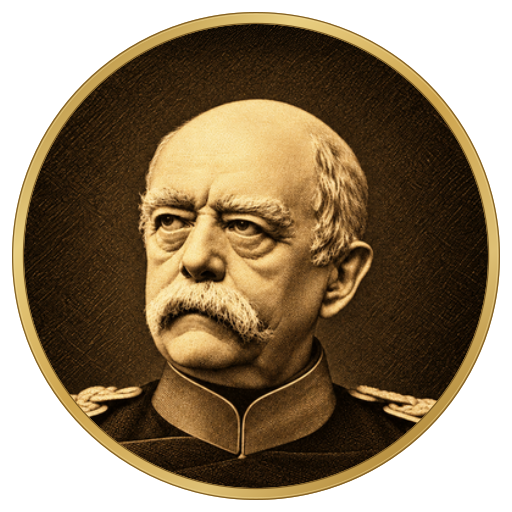
A statesman who pursues total destruction without considering the aftermath is no better than a gambler who stakes everything on one throw. I learned in the wars of German unification that the objective is not to annihilate the opponent but to arrange a settlement he has a practical interest in preserving. The Treaty of Tilsit was a masterclass in how not to conclude a conflict: it left Prussia with every reason to reform and every institution needed to do so. The prudent course is to limit your demands to what you can enforce and what the other side can accept without permanent resentment. Leave the defeated a role in the new order, bind their interests to yours through alliances, and ensure that any future conflict would cost them more than they could gain. A peace that humiliates without absorbing is merely an invitation to a second war.
Strategic counsel
- Limit your war aims to what can be secured without creating an irreconcilable enemy.
- Bind the defeated party's interests to the new order through alliances and economic ties.
- Avoid public humiliation that concentrates the opponent's will to revenge.
- Ensure the settlement offers the other side a dignified and profitable role in the status quo.
- Calculate the cost of enforcement before demanding terms that exceed your capacity to sustain.
Napoleon BonaparteOperational strategy, ambition, organisation, leadership and overextension

A spectacular victory is worthless if it leaves the enemy's institutions intact and his will to fight unbroken. I crushed Prussia at Jena and dictated terms at Tilsit, yet within six years they were marching against me again. The error was not in the severity of the punishment but in leaving the Prussian state alive, its bureaucracy and army reformed by the very pressure I applied. I taught them how to defeat me. When you strike, you must strike so completely that the opponent cannot recover his balance within the same generation. But even I learned that destruction alone is not enough: you must also occupy the space, impose your own institutions, and make the conquered population dependent on your order. A half-destroyed enemy is more dangerous than one you never fought.
Strategic counsel
- Strike with such overwhelming force that the enemy cannot reorganise within a strategic timeframe.
- Do not leave the defeated state's administrative and military institutions intact to reform under pressure.
- Occupy the conquered territory and impose your own institutions to prevent a power vacuum.
- Recognise that humiliation without absorption creates a more determined and capable adversary.
- Ensure that the settlement removes both the means and the will for the enemy to return to conflict.
Antonio GramsciHegemony, ideology, institutions, consent and cultural power

The struggle for hegemony is never settled by a single military or economic victory. The real contest is over common sense, over the stories people tell themselves about what is natural and inevitable. Napoleon defeated Prussia on the battlefield but left its intellectual and administrative elite intact, and they used the interval to forge a new national consciousness that eventually overwhelmed him. He won the war of manoeuvre but lost the war of position. A durable victory requires dismantling not only the enemy's material capacity but also its cultural and ideological infrastructure: the schools, the press, the symbols, the narratives that sustain its legitimacy. You must offer a new moral and intellectual leadership that makes the old order seem not just defeated but obsolete. The most complete victory is one in which the defeated come to see your order as their own.
Strategic counsel
- Dismantle the enemy's ideological and cultural institutions, not just its military and economic capacity.
- Offer a new moral and intellectual leadership that makes the old order seem historically obsolete.
- Win the war of position by transforming common sense, not just the balance of forces.
- Ensure that neutral and former enemy populations can consent to the new order as their own.
- Recognise that a defeated elite left with its cultural influence intact will rebuild its hegemony.
Joseph SchumpeterEntrepreneurship, innovation, creative destruction and elite competition
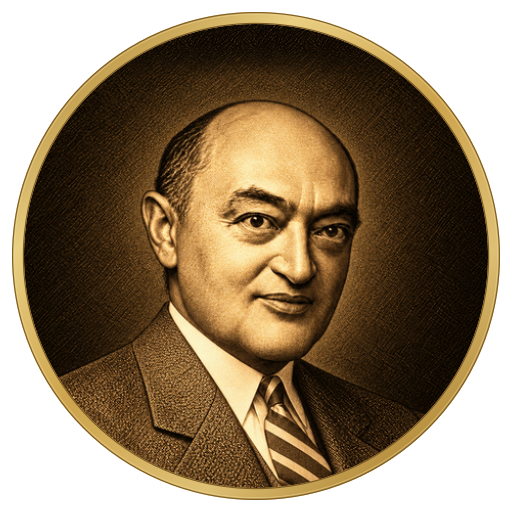
The most elegant destruction is not to defeat a rival in its own game but to make its entire business model obsolete. Netflix did not beat Blockbuster at video rental; it changed the technological and economic basis of the industry until Blockbuster's stores became a liability rather than an asset. That is creative destruction in its purest form: the old order is not crushed but rendered irrelevant by innovation. Yet the entrepreneur must beware of the same fate. Every successful innovation creates the conditions for its own supersession. The victor who rests on his triumph will find that the very assets that secured his position—scale, distribution, brand loyalty—become the inertia that prevents him from adapting to the next wave. The true lesson is not to crush your enemy but to ensure you are always the one making the next move.
Strategic counsel
- Make the rival's core assets strategically irrelevant rather than attacking them directly.
- Identify the dependency that converts the incumbent's scale into power and design the contest to turn it into a burden.
- Avoid price wars that wound both sides and leave the original structure intact.
- Recognise that every successful innovation creates the conditions for its own creative destruction.
- Ensure your organisation retains the capacity to cannibalise its own successes before a competitor does.
Henry KissingerBalance of power, geopolitics and diplomatic leverage

The statesman's task is not to annihilate an adversary but to create a structure of incentives that makes continued conflict irrational for all parties. The Allies' treatment of West Germany after 1945 is the model: they dismantled the Nazi regime's capacity for aggression while integrating the German people into a broader European and Atlantic order that gave them a stake in peace. That is the difference between a settlement and a truce. A total victory that excludes the defeated from the new order merely postpones the conflict. The art is to design a settlement that transforms the former enemy into a partner whose interests are aligned with the stability of the system. This requires precision: you must distinguish between the regime you must destroy and the society you must incorporate. Punish the leadership, but offer the population a future that does not depend on restoring the old order.
Strategic counsel
- Design a settlement that transforms the former enemy into a stakeholder in the new order.
- Distinguish between the hostile regime that must be dismantled and the society that must be incorporated.
- Offer the defeated population a credible future that does not depend on restoring the old leadership.
- Integrate the defeated state into a broader alliance structure that aligns its interests with stability.
- Ensure that the settlement creates incentives for the defeated to preserve rather than overturn the outcome.
Carl von ClausewitzWar, political objectives, friction, escalation and strategic concentration

War is a continuation of political intercourse, and the victory that does not serve a political purpose is a waste of blood and treasure. The error of a partial victory is that it leaves the enemy's will unbroken while his capacity to resist may even be sharpened by the experience of defeat. Prussia after Jena is the classic case: the humiliation concentrated the national will and drove reforms that made the army more effective than before. The commander must understand that the climax of a campaign is not the battle but the political settlement that follows. You must calculate not only how to defeat the enemy's forces but how to destroy his will to continue the struggle, and that requires attacking the sources of his moral and political cohesion. A victory that leaves the enemy's government, alliances, and national spirit intact is no victory at all.
Strategic counsel
- Ensure the military victory serves a clear political purpose that outlasts the campaign.
- Attack the enemy's moral and political cohesion, not just his armed forces.
- Calculate how the defeat will affect the enemy's will to continue the struggle, not just his immediate capacity.
- Recognise that humiliation can concentrate the enemy's national will and drive effective reforms.
- Plan the political settlement before the battle, not as an afterthought to the victory.
Sources & Books
Sources
- 1)Avalon Project - Directive to Commander-in-Chief of United States Forces of Occupation Regarding the Military Government of Germany; April 1945 — Avalon Project — Avalon Project - Yale Law School, 1945
- 2)Historical Documents - Office of the Historian — U.S. Department of State — Office of the Historian, 1945
- 3)Historical Documents - Office of the Historian — U.S. Department of State — Office of the Historian, 1945
- 4)The Effects of Netflix and Blockbuster Strategies on Firm Value — Scholarship at Claremont — Scholarship at Claremont, 2015
- 5)Denazification — Wikipedia — Wikipedia, 2025
Books
- The 48 Laws of Power — Robert Greene — 9780140280197Greene's Law #15 is the direct source of the article's central strategic principle of total victory.
- The Art of War — Sun Tzu — 9781590302255Sun Tzu's doctrine of finishing the enemy's capacity to fight underpins the article's definition of closure.
- The Prince — Niccolo Machiavelli — 9780140449150Machiavelli's advice on destroying or embracing a conquered state frames the article's distinction between neutralisation and conversion.
- Strategy: A History — Lawrence Freedman — 9780199325153Freedman's analysis of strategic closure supports the article's argument that victory requires removing the logic of retaliation.
- The Dictator's Handbook — Bruce Bueno de Mesquita and Alastair Smith — 9781610391849The book's logic of removing rival coalitions directly reinforces the article's four-route framework for durable victory.
As an Amazon Associate I earn from qualifying purchases.