
To my magnificient Reader,
This is the final part of The Craft of Power Summaries. Credit goes to warped_mindless for his effort.
The book is rare and expensive though available on both the Internet and Amazon. You can find it here. Written by Ralph Gun Hoy Siu.
Data Translation
– You must be able to interpret and convert incoming data into useful information.
– Be mindful that your enemies will try to feed you false data and information. Related Law: #8 Use Bait
– Never base a major decision on a single piece of data. Always double check via multiple sources and verify it.
– Be mindful of how your perception makes you interpret data and information. Human beings are prone to make emotional decisions.
Intelligence
– Knowledge is power, so they say. Only the proper application of knowledge & information is power. Everything else is just coffee-house-bullshit.
– People often feel moral guilt for secretly gathering intelligence on people. Don’t be one of them.
– Rationalise these feelings away as this is an important step that must be carried out with the utmost confidence to avoid getting caught.
– Spies are useful. Place spies in enemy organisations and have them report their findings back to you.
– Spies may be recruited by the means of bribes and providing them with the information they need in return. Blackmail and other methods can also be used but should be utilised sparingly. It is best to find unhappy members of that organisation and turn them into your spies. Promise them revenge and rewards.
– Open source intelligence techniques are extremely useful. Thanks to the world wide web, this is now an easy task. People are too lazy or too dumb, hence don’t cover their tracks online. Find their emails or usernames using social engineering, use people finding sites and you can often find every site and forum they post on. -Employ hackers (can be hired cheap from over seas) hack into their emails and social networking sites, and you will learn more than you could ever imagine.
– Some things to learn about your enemies: What gives them power? Who are their allies and enemies? What are their strong and weak points? What are their goals? What are their interests? What makes an attractive bait?
– Do not let them know you are gathering intelligence about them, as they will take further steps to safeguard it and feed you false information.
– Related Law: #14: Pose as a friend, work as a spy.
Integrative Principle
– Your organisation must have stated goals to give your followers something to believe in.
– People want to feel like they are apart of something bigger than themselves. Play up that fantasy and people will follow you.
Orthopraxy
– In ancient times, sheer force and wealth were enough to control people and maintain power. That usually is not the case anymore but in some situations, it might still work. Example: if you own a business or manage one, the threat of getting fired (threat via force) and the next paycheck (threat via wealth) can be enough to keep people in line, but it certainly is not the best way. It’s better if the workers love you so they want to work for you and will, therefore, be more productive. Avoid being hated & despised at all costs and instead aim to be feared or loved, since you cannot be both. (like Niccolò Machiavelli said)
– In modern times, a tacit consent from the ruled for the ruler to rule seems necessary. I can highly recommend you to read Locke’s Philosophy.
– It is better to get people to willingly surrender freedom on the part of the people at large or at least have a relative passivity towards the encroachments on it.
– You strip freedom away slowly one little chunk at a time, until you have taken away as much as you want or as much as possible without arousing resentment.
– One great tool for this is propaganda, the purpose of which should not be sympathetic education but subtle manipulation.
– The illusion of freedom is a scintillating tactic. Example: Letting people vote for their leader but in reality the voting is rigged. If the people don’t realise this then they feel like they have freedom.
Propaganda Methods
– Propaganda is a massive subject with much written about it and its suggested that you find a more comprehensive source on the subject but the following techniques will get you started:
– Controlling Media: Media is a great way to implant ideas and opinions in the publics mind. The media can present only one side of any story and hammer it in repetition until everyone understands and believes it.
– Adapting messages: Messages to the opposition should convey the advantages of joining your cause. At the same time, disparaging attacks from the opposition must be vigorously displaced. Messages to supporters of your cause should stress the “fact” that they are apart of the winning team with a good cause and led by an inspired tradition-maker, a man or woman of the times. Messages to the neutral public should stress the similarity of your positions to its traditional values and the morals and the identity of what you are trying to do what it wants in the long run.
– Employing sign stimuli: Use a symbol and define its meaning so its not misinterpreted. Properly chosen signs can trigger predictable behavior patterns. Example: A severed head as been used to invoke fear for thousands of years. What you wear also acts as a sort of sign/symbol. A rich man who dresses poor will often appear as the voice of the people. The poor man who dresses rich will have better luck mingling with the upper class. Rallying allies: People who are kindred to at least one aspect of your propaganda will usually stop to listen to the rest. Find people/groups most like yours and rally them to your cause. Don’t neglect small groups as they add up fast.
– Solidifying biases: Once well established the objective of much of your mass communication should be reinforcing favorable opinions in contrast to changing unfavorable ones. Those who are disposed to follow your lead are given rationalizations for doing so. Condition your followers to close their ears and minds to opposing messages and opinions. A good defense against opposition opinions is to alert your followers that someone is going to try and persuade them. For instance if you say to them “Our enemies will soon try to persuade you that what we are doing is wrong. They will use lies and trickery to try and confuse you. We will show them that we are not easily confused and manipulated.” People don’t like it when someone tries to persuade or manipulate them so by framing the opposition as trying to do just that your followers will naturally resist.
– Exploiting foibles: Effective propagandist know how to limn their line with attachments to some basic human susceptibilities. They appeal to emotions such as hope, shame, fear, guilt, anxiety, etc. For example, cosmetic companies arent selling makeup, they are selling hope. Trump, when running for president, used a combination of fear and hope to sell his message.
– Pettifogging truths: Suppress information that you don’t want people to know. Use disinformation to counter it. Discredit the person or people spreading it. Discredit the information itself (uisng lies if need be).
– Spreading innuendos: In concern to proaganda, the use of innuendo is highly effective. Name calling (to discredit the person), glittering generality (using vague words to envoke power emotions), plain folks (making the people feel as if you are one of them), testimonial (using authority figures to support your cause or associate evil people with your opposition), transfer (associating yourself or your cause with things people like), card stacking (manipulating information to present a bias case), and bandwagon (promotes the desirability of joining the cause and shows that everyone else is doing so).
– Remaining silent: During periods of grave uncertainities or delicate balance, you should refrain from public statements, no matter how tempting is it to reply to the thinsg being said. Do not let your own propagandist goad you into making statements against your better judgement.
ORCHESTRATING CEREMONIES
Strategy Reinforcement
– Life without ceremony is like a gift without wrapping.
– All great leaders have recognised the relationship between ceremonial reinforcement and social control.
– Example One: A leader appears calm and collected in the face of dispair.
– Example Two: A powerful Duke wanted the allegiance of a neighbouring Baron. The Baron casually mentioned he would support the Duke, but the Duke wanted to cement this promise more carefully. The Duke assembled all the nobles at a grand party and had the Baron swear an oath of allegiance to him on a sept, to a priest, in front of all the nobles in a grand ceremony.
– Example Three: When the United States Army captured Iraq’s capitol city they made sure to topple a massive statue of Saddam (the enemy leader) in a fit of a grand ceremony on live TV.
– Example Four: A leader host a massive festival filled with food, drink, and enjoyment, to keep the people happy and distracted. Participation
– To obtain and maintain power its important to convey a sense of citizen participation. Being involved soothes the feeling of being ‘used’ by the leader.
– To accomplish that you should encourage their participation with power of decision on all small matters that do not jeopardise your power.
– Your continuation in power rest on social respectability which calls for a judicious blend of actual and ceremonial participation by your constituency. Credibility
– Your constituents (people you need to stay in power) must have faith in your credibility and not only believe what you say but must believe in you as well.
– Telling people that your honest isn’t enough. Your actions must display it (which is why its important for your underhanded deeds to go unnoticed).
I hope you enjoyed the 3 part series about The Craft of Power written by /u/warped_mindless, contributor to /r/the48lawsofpower and edited by me, Modern Machiavelli.
Court of Seven
What ancient philosophers would say about modern strategy.
Niccolò MachiavelliPower, statecraft, political survival, virtù and fortuna
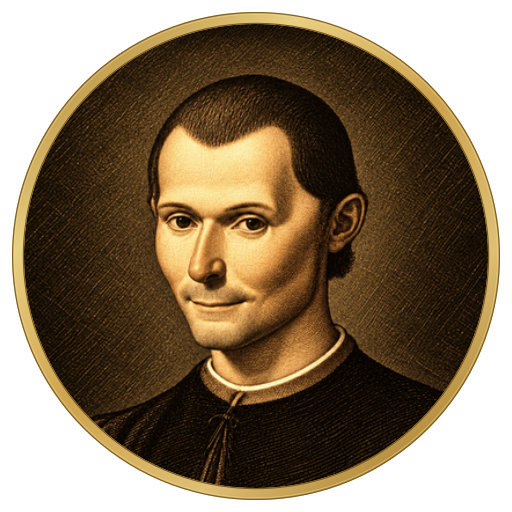
A prince who relies solely on force or wealth to command obedience is a prince who has not read his own history. The threat of the sack is useful, yes, but it breeds resentment, and resentment is the seed of conspiracy. Far better to be feared in a manner that does not tip into hatred, for hatred makes men forget their own safety in their desire for revenge. The orthopraxy described here—stripping liberty slowly, piece by piece—is the method of a fox who knows when to feign sleep. Yet the illusion of freedom is a fragile thing; if the people ever glimpse the strings, the puppet-master becomes the villain. Let them vote, let them believe they choose, but ensure the choices are those you have already approved. That is the art of governing without the constant need for the sword.
Strategic counsel
- Cultivate fear without hatred to avoid conspiracies.
- Use slow, incremental encroachments on liberty to avoid arousing resentment.
- Maintain the illusion of choice to secure voluntary compliance.
- Never let the people glimpse the strings of control.
- Balance the methods of the lion and the fox according to circumstance.
Thomas HobbesSovereignty, fear, deterrence, authority and social order
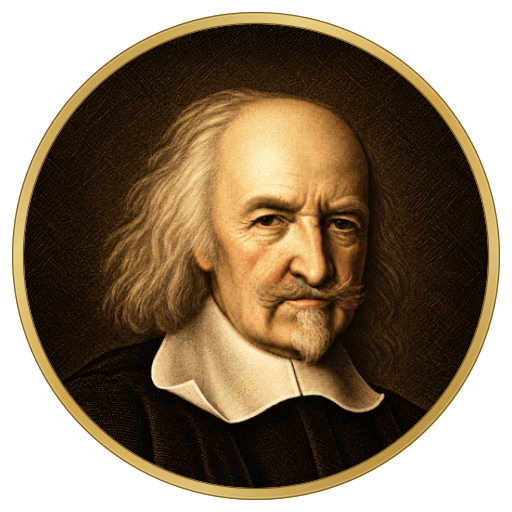
The natural state of man is a war of all against all, where life is solitary, poor, nasty, brutish, and short. Every piece of intelligence gathered, every spy placed, every secret uncovered—these are not acts of treachery but of self-preservation. The sovereign must know the true intentions of rivals, for ignorance invites the knife in the dark. The call to gather intelligence without moral guilt is sound. In the state of nature, there is no morality, only the relentless pursuit of security. The sovereign who hesitates to spy, who feels shame in deception, delivers his people into the jaws of those who feel no such compunction. The Leviathan must see all, know all, and act on that knowledge to maintain the peace.
Strategic counsel
- Treat intelligence gathering as a fundamental act of self-preservation.
- Reject moral guilt over espionage as a luxury the sovereign cannot afford.
- Assume every rival is gathering intelligence on you.
- Use multiple sources to verify data and avoid deception.
- Recognize that ignorance is the greatest threat to order.
Edward BernaysPropaganda, public relations, mass persuasion and engineered consent
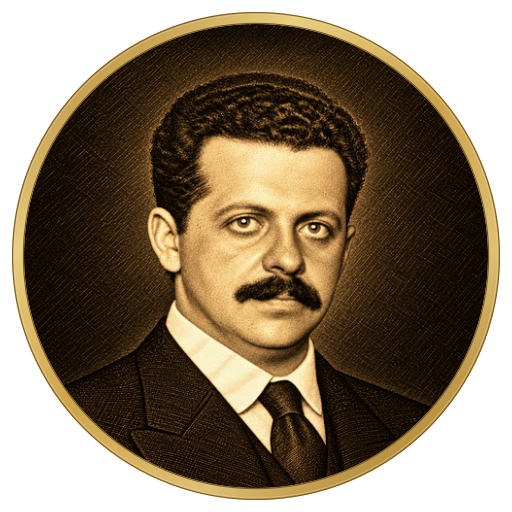
The conscious and intelligent manipulation of the organized habits and opinions of the masses is an important element in democratic society. Those who understand the mechanisms of the collective mind can engineer consent without coercion. The methods outlined here—controlling media, adapting messages, employing symbols—are the tools of a modern prince who governs not by force but by the invisible hand of persuasion. The key is to make the people believe they are acting on their own volition. When you frame the opposition as manipulators, you inoculate your followers against their influence. This is not deception; it is the art of leading the herd by appealing to its deepest instincts. The propagandist who masters this craft shapes reality itself.
Strategic counsel
- Engineer consent by framing choices as the people's own.
- Use media repetition to implant ideas and solidify biases.
- Inoculate followers against opposition by warning of manipulation.
- Appeal to emotions like hope and fear to drive action.
- Adapt messages to different audiences for maximum effect.
Gustave Le BonCrowd psychology, mass behaviour and emotional contagion
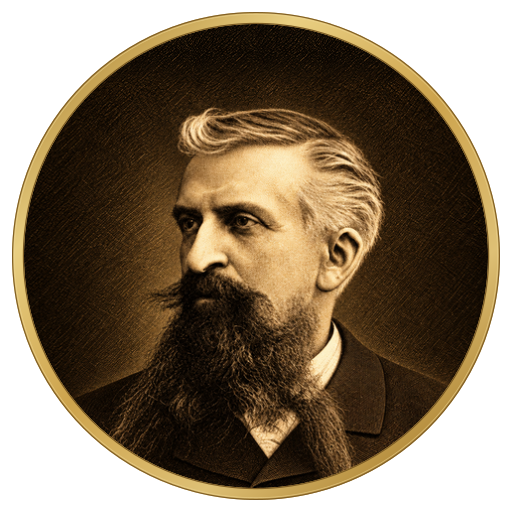
The crowd is a beast driven by sentiment, not reason. It will follow the leader who understands its primitive impulses—hope, fear, the need for belonging. The propagandist who appeals to logic is a fool; the one who stirs the emotions of the multitude commands their souls. The symbol of a severed head, the spectacle of a toppled statue—these speak directly to the unconscious mind. Ceremony is the language of the crowd. A grand festival, a solemn oath sworn before nobles, a leader calm in despair—these rituals bind the masses more effectively than any law. The crowd does not analyze; it feels. Give it a hero to worship, a villain to despise, and a spectacle to remember, and it will surrender its freedom willingly.
Strategic counsel
- Appeal to the emotions of the crowd, not its reason.
- Use powerful symbols and rituals to bind the masses.
- Create heroes and villains to focus collective sentiment.
- Leverage spectacle to distract and control.
- Understand that the crowd craves belonging and will follow a strong leader.
Otto von BismarckRealpolitik, alliances, diplomacy and limited objectives
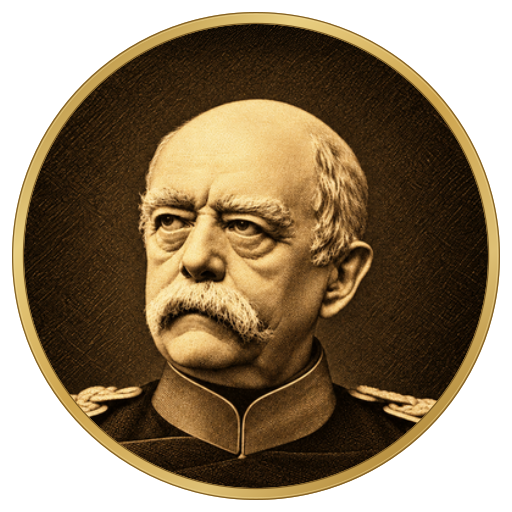
Politics is the art of the possible, the science of the achievable. The gathering of intelligence is not a moral question but a practical necessity. Know your enemy's strengths, his allies, his weaknesses, his desires. Only then can you lay the bait that he cannot resist. But beware: the enemy is also gathering intelligence on you. Feed him false data, and let him dance to your tune. The integrative principle—giving followers a cause larger than themselves—is the glue that holds an organization together. People will endure hardship for a vision. But do not mistake sentiment for strategy. Alliances are built on interests, not affection. Rally the kindred, yes, but always keep your objectives limited and your options open. The statesman who overreaches loses everything.
Strategic counsel
- Gather intelligence on enemies' strengths, weaknesses, and desires.
- Feed false data to mislead rivals.
- Give followers a cause to bind them to your organization.
- Build alliances on interests, not sentiment.
- Keep objectives limited to avoid overreach.
Antonio GramsciHegemony, ideology, institutions, consent and cultural power
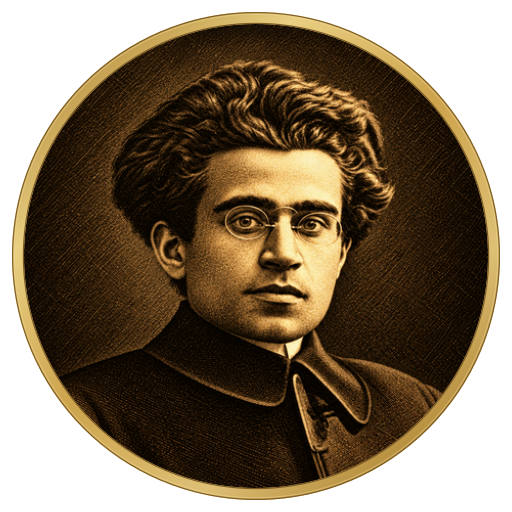
The struggle for power is not won on the battlefield alone but in the minds of men. Hegemony is the quiet, persistent shaping of what is considered common sense. The propaganda methods described—controlling media, defining symbols, solidifying biases—are the tools of cultural domination. The ruling class does not merely govern; it manufactures consent by making its worldview appear natural and inevitable. The orthopraxy of slow encroachment on freedom is the method of a bourgeoisie that fears revolution. But the illusion of freedom is a fragile construct. The people may vote, but if their choices are circumscribed by the dominant ideology, they are prisoners in a gilded cage. True change requires a counter-hegemony—a war of position that challenges the very assumptions of the ruling order.
Strategic counsel
- Shape common sense to manufacture consent for your rule.
- Use media and symbols to establish cultural dominance.
- Recognize that slow encroachments on freedom require ideological cover.
- Challenge the dominant worldview to create space for change.
- Understand that the war for power is fought in the minds of the people.
Robert CialdiniPersuasion, reciprocity, authority, scarcity and social proof

The principles of persuasion are universal, and they are on full display here. The bandwagon effect—showing that everyone is joining your cause—taps into social proof. The use of authority figures in testimonials leverages the principle of authority. The scarcity of truth, the innuendo, the glittering generality—each is a lever that moves the human mind, often without conscious awareness. But the most powerful tool is consistency. Once people commit to a cause, they will rationalize their choice and defend it against opposition. The propagandist who frames the enemy as a manipulator triggers reactance—people resist being controlled, and that resistance solidifies their loyalty. The key is to secure small initial commitments, then let the human need for consistency do the rest.
Strategic counsel
- Use social proof by showing widespread support for your cause.
- Leverage authority figures to enhance credibility.
- Secure small initial commitments to trigger consistency.
- Frame opposition as manipulative to trigger reactance.
- Appeal to emotions like hope and fear to drive action.
Editorial note: Robert Cialdini did not make this statement. It is an AI-generated interpretation based on documented public writings, speeches, interviews and ideas.



[…] Good stuff, read it: This is the final part of The Craft of Power Summaries. Credit goes to warped_mindless for his effort. Part #1 may be found here Part #2 may be found here The book is rare and expensive though available on both the Internet and Amazon. You can find it here. Written by Ralph Gun Hoy… https://modernmachiavelli.com/the-craft-of-power-summary-3/ […]
Thank you for your recommendation of this book and your articles ! I would have never known about it otherwise. I was eager to get it and through some connection i got it finally for a very cheap price! I’m blessed. It’s a true gem !