To my magnificient Reader,

As you know I am an advocate of academic research papers about the Dark Triad, Power, Machiavellianism & Psychology, and in this article I outline the dangers of said academic papers.
WARNING! This is very dry (I am talking Sahara-I-want-to-drink-my-own-piss-Bear-Grylls-style-dry) and if you are looking for hands-on information, applicable to real life situations, I recommend you check out my 48 laws of power summaries.
This article was written to highlight the dangers of academic research and why you need to be skeptical even when reading high quality research papers by people who dedicated their whole lives researching the topic at hand.
Analysis of the following academic research paper:
http://wikileakssudbury.org/WKL/E-December-14.pdf
found via the reputable academic database “Refseek.com” found within my resource list.
Title:
Politician personality, Machiavellianism, and political skill as predictors of performance ratings in political roles
Authors:
Jo Silvester (1), Madeline Wyatt (2), and Ray Randall (3)
(1) Cass Business School, City University London UK,
(2) Kent Business School UK, University of Kent, UK
(3) School of Business & Economics, University of Loughborough, UK
A few searches via a web search engine revealed that all three of the authors are not students but actual experts or at least self-proclaimed experts on the field, having dedicated parts of their research effort in their academic careers to the research of the topic at hand (Machiavellianism). Not a huge one though but enough to take their study into consideration and not dismiss it without a second thought. What might be a mistake if you read my conclusion.
Jo Silvester is a female chartered psychologist who attained three titles in her field (PhD; MSc; BSc), specialised in the assessment and development of leadership. Since 2002 she is a professor of Occupational Psychology. Her studies led her to develop a unique competence based personality for both the conservative party (2001-2002) and the liberal party (2009). Also a strong background of research on the valuable topic of diversity.
Dr. Madeline Wyatt is another Occupational Psychologist currently lecturing in the HR-management sector. She too is a woman with a psychology degree and an interest and background in the research of diversity.
Dr. Ray Randall, another academic who did his duty in the research of occupational psychology and helped develop various tests related to occupations in both private economy as well as politics. Unlike the other authors he never was involved with “diversity” but solely focused on skills & competence in various sectors, judging all genders equally.
The aim of the study was to make the performance of politicians tangible and quantifiable. The second objective was finding out a relation between the performance and the level of extroversion, neuroticism, conscientiousness, Machiavellianism & political skills, both self-reported of 231 politicians (n=231), 185 of them were also judged by their colleagues (n=729) and officers (n=729), of said politicians.
During the course of the study five latent factors emerged: Resilience (to be referred to as RS), Politicking, Relating to Others, Analytical Skills (AS), Representing People.
The following assumptions were made, based on the frequently explored question of the relationship between personality & politics in the field of political psychology ((Jost & Sidanius, 2004): Personality influences Political Performance (cf. Dietrich, Lasley, Mondak, Remmel, & Turner, 2012; Mondak, Hibbing, Canache, Seligson, & Anderson, 2010; Simonton, 1998; Winter, 1998).
It is a pretty good bet to assume that personality does in fact influence, well, anything, but the authors made the discovery that there has not been done any research regarding the correlation between self-rated personality traits and performance. This posed the first question to be answered by the study.
To answer this question, the authors looked towards the comprehensive studies having been done in the field of occupational psychology and employee performance from industrial organization (I/O) (e .g., Barrick & Mount, 1991; Schmidt & Hunter, 2004).
Of interest to the academics was whether politicians, from the United Kingdom, with a certain degree of performance shared a similar mental model. The second question to be answered by this study was (as mentioned above) whether self-rated personality traits may be used as a basis to predict the politician’s behaviour.
The study was done as a reaction to the request (e.g., Best, 2011; Dietrich et al., 2012; Simonton, 1998) for studies in the field of occupational psychology combined with political behaviour containing a large n-sample.
Studies about political performance ultimately lead to the problematic question of: What the actual fuck is political performance and how do you measure it? What constitutes bad performance and what good performance?
Can the poll and election results be used as a proper indicator of performance? According to a study (Lodge, Steenbergen & Braus, 1995) they can’t because they will be influenced by the performance of the party they are running for with a certainty matching irrefutable laws of physics.
This leads us to a benefit of being a politician. Unlike a manager you are not rated based on data and hard facts, (Armey & Murphy, 1998) but have the freedom to define the pillars of the performance you are measured and judged on upon yourself (March & Olsen, 1999; Morrell & Hartley, 2006; Sylvester, 2012).
Conscientiousness is said to be the most consistent factor influencing performance (Barrack & Mount, 1991; Salgado, 1997). The more conscientious a person is, the more likely he is going to be goal oriented, reliable able to wither the storm of failure. Navigating in complex ambiguous environments such as the political landscape requires self-motivation and persistence. (Morrell & Hartley, 2006; Simpson, 2008).
Extroverted individuals are more outgoing that introverts ((Costa & McCrae, 2006) what has a positive impact on the likelihood of campaigning, signing petitions and attending rallies (Anderson, 2009; Monday et al., 2010; Vecchione & Caprara, 2009)
Neuroticism is a negative trait for a politician to possess because being anxious is detrimental for political performance.
Political Skill is of importance for charming & manipulating people, webbing networks and is an important factor influencing political and managerial performance. (Andrews, Kalmar, & Harris, 2009; Gentry, Gilmore, Shuffler, & Leslie, 2012; Todd, Harris, Harris, & Wheeler, 2009)
Machiavellianism, a skill needing no further introduction but still receiving one, is the likelihood of a person to attempt to manipulate other people for his own gain (Christie & Gees, 1970, Biberman, 1985; Drory & Gluskinos, 1980; Grams & Rogers, 1990). Machiavellianism according to the definition of the word, influence political performance positively. This is not necessarily the case (Deluga, 1998; Pillai, Williams, Lowe, & Jung, 2003) for electoral results, because voters prefer a candidate who comes across as trustworthy. Hence the modern prince must at least give the impression of being honest, while concealing his true intentions (Me, 2016). A hypothesis of this study was, that Machiavellianism would most likely have a negative influence on political performance.
To summarise the method and research question:
1) Competency analysis of how behaviour and personality traits are affecting political performance.
2) Testing the connection between various performances constructs that politicians with a certain skill degree share.
The candidate’s questions were all politicians and employed officers in local authorities.
The numbers and claims of significance seem to check out, after controlling a bunch chosen at random.
Results:
Politicians share similar ideas about what constitutes political performance.
Their general hypothesis was true and personality traits as well as character did indeed influence perceived performance.
The hypothesis that conscientiousness influences political performance was partly true.
Extroversion, just like Narcissism, led the politician to estimate their performance level much higher than it actually was perceived.
A correlation between Machiavellianism and self perceived PK has been proven, as well as a negative effect on self-rated RS, RP, and RO.
Agreeableness has been shown to be beneficial for Representing people, but negative for Politicking (PK).
Openness has no influence on anything. But another result of the study “determined” the following, a little contradictory statement:
Apparently Politicking (secrecy, dishonesty and a lust for political blood sport) is a negative trait for politicians. Yeah, you absolutely should tell politicians, that they need to stop concealing their intentions and say more than necessary. That they need to avoid competition in the form of political manoeuvring, acquiring and maintaining power, as well as dishonesty…
Neuroticism, conscientiousness, and political skill correlated significantly with politician RS and AS. There also seems to be a correlation between conscientiousness, agreeableness, Machiavellianism, and PK, though not significant.
RO wasn’t influenced by any personality trait.
Extroversion did not significantly correlate with political performance (tell that to all the introverts running the country. What? Can’t find any? Tough luck… While I do agree that introversion does have various benefits regarding skills like forging alliances and projecting calmness, they are not unique to introverts and can be seen with many introverts. But hey, I do not have 3 titles in valuable fields like occupational psychology or diversity, so what do I know?)
Politicians who are deemed good performers have the following traits: More resilient (no research was done on the question if they are merely resilient or anti-fragile but it would not come as a surprise to me if the researchers are not familiar with Nazism Nicholas Taleb), able to represent others and a highly developed Analytical Skill.
The results, while superficially insightful, lead me to my criticism of this study.
Criticism:
Despite this being one of the most comprehensive studies, the sample was relatively small and one must not draw an eager conclusion based upon this study, presenting it as a fact. While the method used seems accurate, there is no guarantee that 1) the politicians answered and assessed themselves accurately and 2) that the observers who judged the politicians were able to give an accurate judgment.
Regarding the notion that extroversion doesn’t have a positive effect on political performance: You should totally tell that to all the introverts running the country. What? Can’t find any? Tough luck… While I do agree that introversion does have various benefits regarding skills like forging alliances and projecting calmness, they are not unique to introverts and can be seen with many introverts. But hey, I do not have 3 titles in valuable fields like occupational psychology or diversity, so what do I know? Do you know if the people who proclaimed themselves to be extroverts have been judged by others to be introverts because they appear calm and quiet? I can only recommend the authors to read up on stoicism. Meditations by Marcus Aurelius would be an excellent start.
What about different countries? Different social background? Parties they belong to? Other personality traits like being proactive or the IQ? These questions have not been answered but in my opinion are a huge indicator for political effectiveness.
Ergo one can conclude that this study offers valuable insight into a small, specialised segment of British politicians that may or may not be applied to other slightly different environments. Further research is required and this study is unable to give a definite answer to the questions asked by the occupational psychology & diversity researchers.
So can we conclude that this study was a failure? Yes and no. Yes for mankind, no for the researchers since in the last paragraph before the acknowledgements they give the real reason for their study. The aim was not necessarily to answer the call for bigger, more expression ate studies in this sector it actually was, and I quote the researchers:
“to increase awareness of the importance of political work. Classical political theorists and historians, such as Aristotle, Plato, and Machiavelli, devoted considerable attention to what constitutes good democratic leadership and how it might be achieved (Glad, 2002). By continuing this work and studying politicians as political workers, we argue that I/O psychologists could bring a unique perspective to one of the most important questions for the 21st century, namely how can elected representatives deliver good government?”
What does this tell us, what can we take away from this study? It is not a study one can look towards hoping his questions to be answered in a satisfactory way but we can draw an irrefutable connection between this study and the work – of Florentine strategist and father of political science as well as Realpolitik- The Prince. Its main purpose is a job application.
Now some individuals may argue that despite this commonality there also are a lot of differences, one being that The Prince already prepares the magnificent Lorenzo Di Medici that The Prince must not only to be seen as a manual for a ruler who wants to both acquire and maintain power, but also a job application. This study doesn’t reveal its real purpose, the attempt to increase the value of their current jobs, until the very last page.
Now this obvious fact doesn’t make the results of the study untrue, though the criticism I gave does devalue it and the study must be read while taking into account all of my posed questions.
Congratulations, you now know why to not trust everything someone with a couple of fancy titles says and you really belong to the elite inner circle of Machiavellians, since digging through such an article demands dedication and highlights your interest for the art of power.
Court of Seven
What ancient philosophers would say about modern strategy.
Niccolò MachiavelliPower, statecraft, political survival, virtù and fortuna
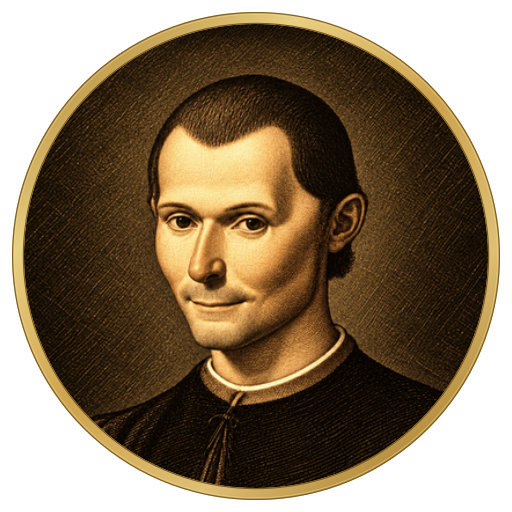
A study that calls politicking a negative trait reveals a profound misunderstanding of how power actually operates. Secrecy, manoeuvring, and the occasional deception are not flaws in the system—they are the system. To advise politicians to abandon these tools is to advise them to disarm in a battlefield where everyone else carries a blade. The researchers claim their work continues my tradition. If so, they should learn the first lesson: appearances matter more than reality. A prince must seem trustworthy while acting prudently. The study confirms that voters reward perceived honesty, but it mistakes this preference for a moral command. The wise ruler gives the people the appearance they demand, not the truth they cannot handle.
Strategic counsel
- Treat every study as a political document with hidden motives.
- Never confuse what people say they want with what they reward.
- Maintain the appearance of virtue while calculating every move.
- Use academic findings as intelligence, not as moral instruction.
- Remember that the real purpose of any work is often concealed until the end.
AristotlePolitics, rhetoric, ethics, institutions and practical wisdom
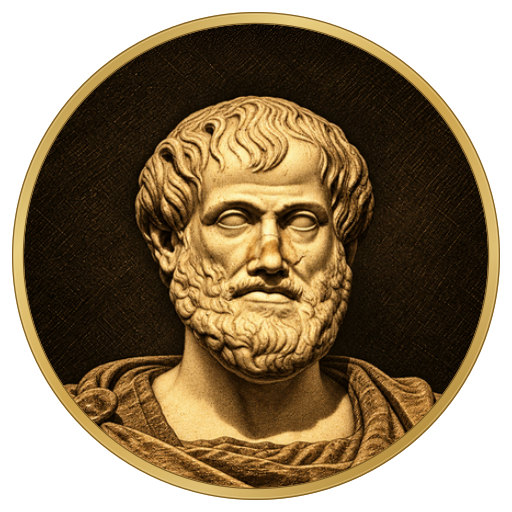
Every political community aims at some good, and the politician's art is to discern which actions serve the flourishing of the whole. This study attempts to measure performance, yet it reduces excellence to a set of traits without asking: performance toward what end? A resilient, analytical politician who cannot deliberate justly is merely an efficient instrument for any purpose. The researchers rightly note that politicians define their own performance criteria. This is both a danger and an opportunity. Without a shared understanding of the common good, self-defined metrics become tools of self-aggrandisement. True political skill lies not in charming or manipulating, but in the practical wisdom to align personal ambition with the welfare of the city. That is the measure we should seek.
Strategic counsel
- Define performance by contribution to the common good, not by self-serving metrics.
- Cultivate practical wisdom as the highest political skill.
- Distinguish between mere competence and virtuous leadership.
- Ensure that resilience serves justice, not just survival.
- Judge politicians by the ends they pursue, not only by the traits they display.
Marcus AureliusStoic self-command, duty, judgement and resilience
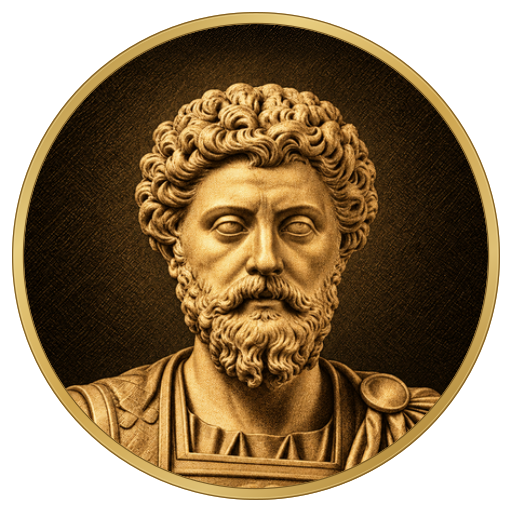
When I governed, I did not ask whether I was extroverted or conscientious. I asked whether I was just, temperate, and devoted to duty. The study's focus on personality traits misses the inner citadel: the ruling faculty that chooses how to respond to every event. A politician who masters his own judgements needs no external validation of his character. The finding that neuroticism harms performance is no surprise. An anxious mind cannot see clearly. But the remedy is not to select only the naturally resilient; it is to train the mind through philosophy. Stoic discipline can transform a nervous disposition into steady composure. The researchers would do well to study not only what politicians are, but what they can become through self-command.
Strategic counsel
- Train the inner ruling faculty before seeking external skills.
- Do not mistake natural temperament for fixed destiny.
- Judge politicians by their actions, not by self-reported traits.
- Cultivate calm clarity as the foundation of good judgement.
- Remember that duty to the whole outweighs personal ambition.
Gustave Le BonCrowd psychology, mass behaviour and emotional contagion
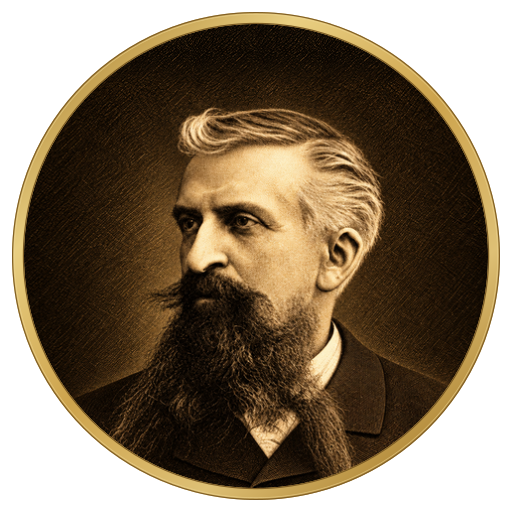
The study treats politicians as isolated individuals, yet in reality they are creatures of the crowd. A politician's performance is not a matter of personal traits alone; it is shaped by the emotional contagion of the assembly, the rally, the nation. The researchers measure resilience and analytical skill, but these count for little when the crowd is seized by a collective impulse. What matters is the leader's ability to understand and harness the irrational forces of the masses. The study notes that voters prefer trustworthy candidates, but trust is an emotion, not a rational calculation. A leader who can project simple, repeated images of honesty will sway the crowd far more effectively than one who actually possesses the trait. The art of politics is the art of managing collective illusions.
Strategic counsel
- Study the emotional currents of the crowd, not just individual traits.
- Project simple, powerful images that resonate with collective sentiment.
- Recognise that rational arguments rarely move the masses.
- Use repetition and affirmation to build trust, not complex reasoning.
- Understand that a leader's perceived character matters more than actual character.
Edward BernaysPropaganda, public relations, mass persuasion and engineered consent
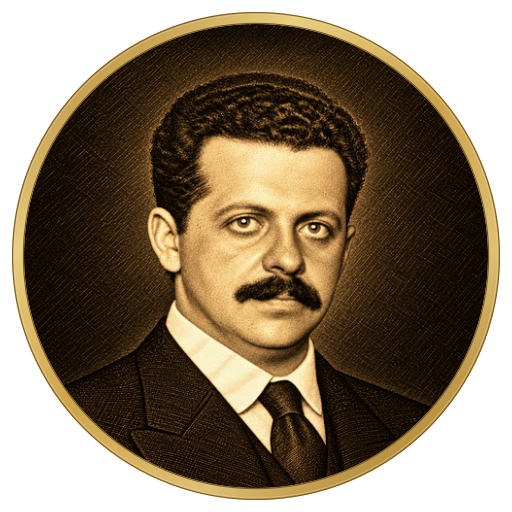
This study is itself an exercise in engineered consent. The researchers present their work as objective science, but its real purpose—revealed only at the end—is to elevate the status of occupational psychology in the political sphere. They are not merely studying power; they are competing for it. Every academic paper is a campaign for influence disguised as inquiry. The finding that politicking is viewed negatively is a gift to any public relations strategist. If the public believes that secrecy and manoeuvring are bad, then the wise politician will be seen to reject them—while continuing to use them discreetly. The study provides the perfect cover: a scientific justification for the appearance of transparency. That is the highest form of propaganda: making the desired behaviour seem natural and inevitable.
Strategic counsel
- Recognise every study as a potential tool for shaping public opinion.
- Use scientific findings to legitimise the appearance you wish to project.
- Keep your real methods invisible while promoting visible virtues.
- Engineer consent by aligning your message with existing biases.
- Understand that the purpose of research is often to advance the researcher's agenda.
PlatoPolitical leadership, elites, justice, education and regime decline
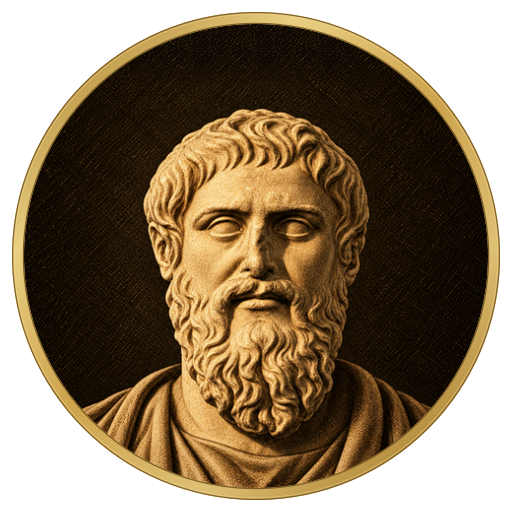
The study asks what traits make a good politician, but it never asks the prior question: what is a good politician? In the Republic, I argued that the ruler must be a philosopher—one who knows the Form of the Good and governs accordingly. Measuring resilience and analytical skill without reference to wisdom and justice is like judging a ship's captain by his stamina while ignoring his knowledge of the stars. The researchers' hidden aim—to elevate their own profession—mirrors the very problem I diagnosed. Those who study politics without philosophy become sophists, selling techniques of persuasion rather than seeking truth. Until we demand that our leaders pursue genuine knowledge of justice, we will continue to be governed by those who are merely skilled at appearing competent. The study is a symptom, not a solution.
Strategic counsel
- Ask what a good politician is before measuring performance.
- Demand that leaders pursue wisdom, not just competence.
- Recognise that technique without philosophy is mere sophistry.
- Look beyond self-serving motives in academic research.
- Insist that justice, not efficiency, is the ultimate standard.
Daniel KahnemanCognitive bias, framing, risk and judgement
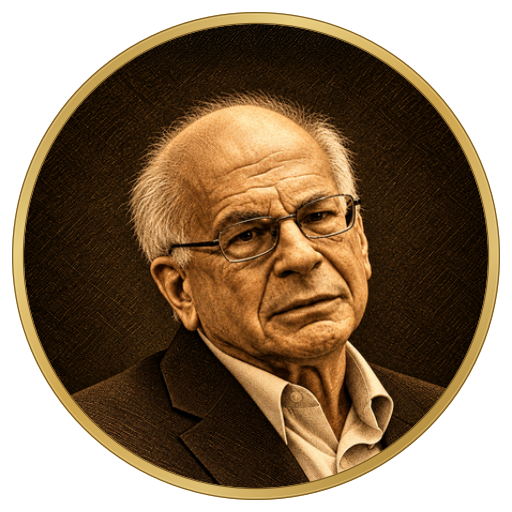
The study relies heavily on self-report and colleague ratings, both of which are vulnerable to systematic biases. Politicians overestimate their own abilities—the finding that extroverts inflate their performance is a classic example of the better-than-average effect. Meanwhile, colleague ratings are shaped by halo effects and recency bias. The correlations reported may reflect shared biases as much as true relationships. The researchers' conclusion that politicking is negative should be treated with caution. What they measured as 'politicking' may simply be the visible part of necessary strategic behaviour. Our minds are pattern-seeking machines; we readily label complex manoeuvres as dishonesty when we lack the full picture. A more rigorous approach would distinguish between destructive manipulation and legitimate political skill, but that requires a clarity the current study does not provide.
Strategic counsel
- Treat self-report data with deep scepticism due to overconfidence bias.
- Consider how halo effects distort colleague ratings.
- Distinguish between observed behaviour and underlying intent.
- Recognise that negative labels may reflect observer bias, not reality.
- Demand replication and larger samples before drawing firm conclusions.