To my magnificient Reader,

According to Aristotle, there are three means to persuade in a debate or speech. Every argument we make can be attributed to one of these categories and knowing and mastering them is bound to give you the rhetorical advantage over your adversaries.
The three modes of persuasion, explained in his book about Rhetoric are the following:
“Of the modes of persuasion furnished by the spoken word, there are three kinds. Persuasion is achieved by the speaker’s personal character when the speech was so spoken as to make us think him credible. Secondly, persuasion may come through the hearers, when the speech stirs their emotions. Thirdly, persuasion is effected through the speech itself when we have proved a truth or an apparent truth by means of the persuasive arguments suitable to the case in question.”
Ethos
What does Ethos mean? The definition of Ethos:
Ethos by definition of the word means ethics and image. It evolves around building a cult of personality and relies heavily on trust, mastery and social proof.
In no way does this mean that you need to be a particularly ethical person in order to persuade an audience. To ensure that the prince strikes the plebeians as genuine, it is enough to come across as an ethical person with a good character and best intentions in mind.
Appear as you may wish to be, because perception is reality. – Niccolò Machiavelli
Ethos is among the first things we become aware of that influence us. Both the reputation, background, authority and first impression have a significant impact on how we perceive the speaker.
Mastery and Social Proof are the two deciding factors when it comes to an appeal to ethos but also the choice of words are of importance. If you want to be perceived as an authority in the academic field, it helps to use sophisticated words, while in other situations the right words to make you seem like an authority are threats. Using secret language and technical terms help convince the audience via Ethos.
Mastery and being an expert regarding a particular topic is one way to favourably utilise ethos to ones’ favour. It leads to instant authority. So does Social Proof, because mankind still hasn’t evolved much from thousands of years ago when we were living in tribes. The herd is bound to agree with the decision the majority of the herd makes.
The prince always guards his reputation with his life and acts as confident as a king (Law #34) as well as Law #46. Never appear too perfect. Little mistakes and character flaws can have favourable effects on Ethos. On the other hand, you want to proofread your arguments and avoid committing grammar or logical mistakes or fallacies.
Related to the Ethos are ad hominem attacks, that attack the man himself to discredit his arguments, without actually invalidating those arguments. A logical fallacy and a popular technique in political debates.
Example of Ethos in a sentence
- Do you honestly believe I am a person who would do such a thing?
- My studies in the field of gender studies qualify me as an expert in gender dynamics and hence you should believe every fake claim and statistic I made up.
- Mexicans all over the United States love me. Everyone loves me. That’s why you should make me the president.
- You are a Nazi hence everything you say is untrue
- His father’s experience has taught him that it is a wise decision not to visit Somalia
- Every police officer, that ever had to use his gun, prefers the Glock 19.
- I have been a loyal wife my whole life. Why would I cheat on you now?
Logos
What does Logos mean? The definition of Logos:
Logos relates to logical arguments, rationality and well thought-out content. Logos is used to present facts and statistics. Overdoing it leads to a dry speech or debate and will only alienate the listeners, unless in the field of academia, where almost everything is focused on empirical data and proof.
It is not necessary to convince everyone that our solution is a confirmed, irrefutable fact.
We must merely manage to convince the audience that our arguments pose a possible solution and a good one that is at least worth giving it a chance.
If we want to use Logos in our favour to attack or rebut an opponent, we can do so by questioning and questioning his assumptions and the likelihood of a positive outcome.
The use of analogies may also fall under Logos, when used to craft logical connections. Related is the conductive reasoning, also known as inductive reasoning. The prince takes a fact, study or representative case and crafts logical or seemingly logical connections between this case and his assertion.
Similar is the deductive reasoning where you utilise generalisations to craft a connection, to back up a claim.
Example of Logos in a sentence
- The statistic speaks for itself. Eastern European immigrants are much easier to integrate than Muslims.
- Our current course has brought us many votes, we need to continue it.
- Memento Mori. All men are mortal. Cesar is a man. Cesar is mortal.
- A man who has been brought up with medieval views will have a hard time accepting modern life because in between lie worlds.
- Practice makes perfect.
Pathos
What does Pathos mean? The definition of Pathos:
Too many plebeians make the mistake of believing that strong, logical arguments and appeals to logic and rationality will lead to victory. They are wrong.
The modern prince seeks to evoke emotions such as anger, hope, enthusiasm, fear but also pity in his audience to sway their opinion. Anger and fear cloud the thinking, making people more vulnerable to manipulation attempts.
An appeal to mercy, (wrong) beliefs or the values of another person also is a type of Pathos, so are metaphors, analogies and storytelling.
The use and spin of words plays a not insignificant factor that must not be overlooked. By calling a massive, crippling tax increase might be called an increase of dues or tolls. Frame your enemy in a bad light and tell an atrocious story evoking and associating negative values or results with the person or idea you are opposed against
The modern Machiavelli will use Pathos to create a smokescreen that covers up facts and distracts from the truth or the real issue.
Example of Pathos in a sentence
- Unless we act now and kill the rats, the rats are going to breed, multiply and ultimately take over our house!
- If you don’t grant me permission to take over command, we are all going to die.
- I trust that you will make the right decision because you are an honourable person.
- Don’t travel to Turkey; I heard that it is much more dangerous than Croatia at the moment.
- The whole Martin Luther King speech.
- Ur racist!
Appeal to Ethos, Logos & Pathos
A persuasive speech is a speech given with the aim to persuade the audience of a specific point of view. This type of speech is the opposite of an informative speech, that only serves as a means to inform people. Frequently the line between those two blurs when someone is giving an informative speech because most people consider their viewpoints or topics they are interested in, as superior. This article focuses on the persuasive speeches, but it might be worth reading how to structure and give an informative presentation, for example in this wikihow post.
When giving a speech and trying to persuade your audience, you should mainly appeal to the Ethos, convince them of your honesty and authoritative character, and create a strong emotional response through Pathos.
Sorted by importance:
- Ethos (appear ethical & authoritative)
- Pathos (evoke strong emotions)
- Logos (use logic & hard facts)
There are many examples of ethos and pathos trumping logos, but not always this is the case. Hence the modern prince will want to apply a suitable mix of all three aspects, applying what is most useful.
In world war two there was an incident where a poisonous gas deposit exploded, releasing the lethal gas and killing a few allied soldiers and citizens. At first, they believed that Nazi Germany attacked them and wanted to immediately strike back using poison gas. Not wait or anything but crush them the second their emotions were triggered by the unfair gas attack.
Fortunately, they could keep their trigger finger calm, didn’t start an attack with weapons of mass destructions and avoided the war to take even more gruesome turns. The poisonous gas induced a strong emotional response, this combined with the fact that Nazi Germany had the reputation of being vicious brutes prepared to do anything for the Endsieg, almost convinced them to commit a terrible mistake. Fortunately logic and reasoning were able to prevent the worst. Not only from a humanitarian point of view but from a strategic point as well. Germany was the only nation with rockets in world war 2 and equipping them with poisonous gas would have led to terrible causalities.
Still, this example provides a good insight into how strong the power of an emotional appeal can be. Just like how Churchill called for poisonous gas attacks on Berlin after Germany started sending their V2 rockets into the heart of London.
Another example of how emotion over logic often leads to terrible, terrible decisions. Nazi Germany didn’t use poisonous gas during the invasion of the Normandy, because not logic (many generals and Goebbels calling for the use of gas), but emotions (Hitler’s cowardice and fear of poisonous gas because he fell victim to it during the first world war) prevailed. If Hitler would have ordered the use of lethal gas, he could have easily stopped the invasion dead in its tracks, because no allied soldier was equipped with a gas mask.
German scientists developed neurotoxins far superior to the little breeze their opponents could produce. A gas that was lethal even if it was not absorbed but merely touched the skin. Joseph Goebbels, the Machiavellian propaganda minister and logical thinker, called for the mass production and for a total war of mass destruction, but Hitler’s cowardice and megalomania paired with terrible strategic thinking did, in fact, cost Germany the war.
Another surprising fact: I read the memoirs of Berthold Speer some time ago and still remember parts of it that struck me as especially gruesome. Hitler told Speer, his favourite architect and minister for ammunition and supplies, to not pay attention to the German citizens when operating. That the German people were expendable. He said that the Germanic race was too weak to survive and that he would stay cruel even when faced with extinction. At the same time, he claimed that the Eastern races deserve the victory and that the future belongs to them.
Remarkable is that Speer is, I believe, the only Nazi in a high position who got away with a harmless sentence that put him in jail for 20 years. Though of course, one must not forget the German scientists like rocket scientist and father of space travel Wernher von Braun, who were responsible for the death of hundreds of thousands of Jews that worked themselves to death and had to play human rats for their experiments. Those of course were happily given an official letter of pardon by both the American and the Russian government as well as a high paying, reputable job. If you make yourself valuable and indispensable, you can get away with mass murder. Read Law #11.
If Hitler hadn’t started the war with Russia, for no good reason at all, and if he would have focussed on his core competencies, actually listened to advice and other suggestions, and left the command of the army in the hands of a skilled strategist like Erwin Rommel, I can ensure you that you would be speaking German now, if you aren’t already.
Where was I again and why does every single discussion involving propaganda, manipulation and persuasion ultimately end with a discussion about the Nazis?
Ah, yes, rhetoric. Moving on…
Example of Ethos, Logos and Pathos in a discussion
Since I am fond of politics, a field where the road to success can be found in the form of rhetorical & Machiavellian superiority, I am going to provide you with an example of a recent debate between a moderator and former vice-chancellor Michael Spindelegger (on the right). It was a debate about a tax topic, Spindelegger was in favour and Armin Wolf, the moderator, against it.

Using Ethos:
Armin Wolf has honed the reputation as a smart, witty, well-educated person, who without a doubt enjoys expert status.
He also attacked the character of Spindelegger by accusing him of lying, as well as interrupting him, ergo showcasing authority, unusual for a journalist.
When he was confronted with the (not untrue) fact that he has a personal agenda, he defended himself by citing his long history of neutral and objective journalism work.
His body language was open, he showed his open palms and appeared to be genuine and trustworthy.
Using Pathos:
Overstating facts is a common technique used by journalists, in order to provoke emotions. Not only in the vis-à-vis but also in the audience.
He framed things in a way that made the audience angry at his opponent.
At the same time, he planted the seed of doubt, fear and anger, by talking about possible negative outcomes and worst case scenarios.
Using Logos:
Now this is where Wolf excels. He is magnificent at using Logos and even better at making the audience believe that he is using logic and the truth, while actually having no clue what he is talking about. Now this is not pure Logos, but rather a mix between Ethos & Logos.
Drawing conclusions between actions and reactions also is frequently utilised.
Another amazing tool in the Logos sector is using statistics and facts. Even better than merely talking about them, is showing proof. (Related Law: #9, show don’t tell) He does so by bringing a physical, tangible paper with a few fancy “facts, that might be true or false, but it doesn’t matter too much because of the strong swaying effect such a move has.
Most Important Learnings:
Be like water, adapt to the situation and use a diversified mix of various rhetorical tools at your disposal and appeal to ethos, logos & pathos.
- Ethos (appear ethical & authoritative)
- Pathos (evoke strong emotions & construct distracting smokescreens)
- Logos (use logic & hard facts)
Thank you for reading and make sure to check back to read my next article about persuasive speeches, an outline and the techniques you can apply to persuade your listeners. I also recommend you to buy Aristotle’s book about rhetoric. This is the version I own.
Court of Seven
What ancient philosophers would say about modern strategy.
Niccolò MachiavelliPower, statecraft, political survival, virtù and fortuna
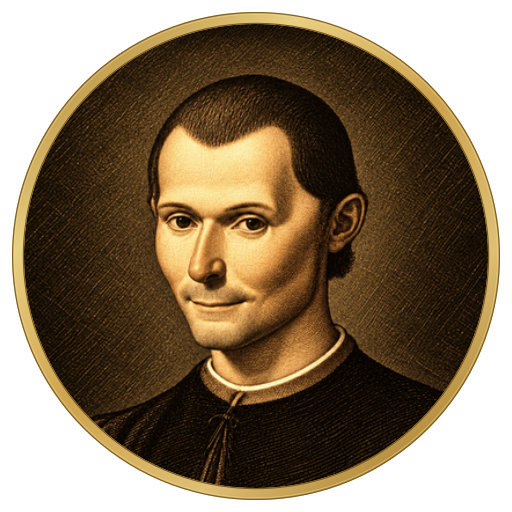
A prince who masters the appearance of virtue while remaining free to act otherwise holds the real advantage. The crowd judges by what it sees, not by what is true. Let your reputation precede you, but keep your hand on the dagger. Emotion is the lever that moves the multitude. A well-timed appeal to fear or hope can shatter the strongest logical fortress. Never let the truth stand in the way of a useful fiction that secures your position. The wise ruler mixes all three modes, but always subordinates logos to ethos and pathos. Facts are tools, not masters. Use them to build your narrative, then discard them when they no longer serve.
Strategic counsel
- Guard your reputation as your most valuable asset; perception is the battlefield.
- Use pathos to cloud judgment and create smokescreens when logic fails you.
- Never let the truth constrain your strategy; adapt facts to fit your purpose.
- Master the appearance of virtue while remaining willing to act ruthlessly.
- Mix all three appeals, but always prioritise ethos and pathos over logos.
AristotlePolitics, rhetoric, ethics, institutions and practical wisdom
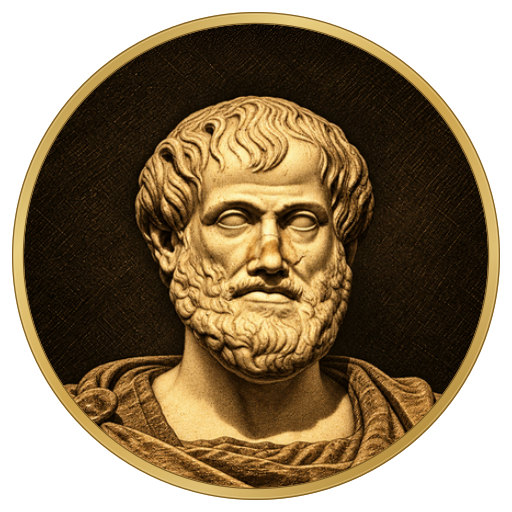
Persuasion rests on three pillars, each indispensable. Character, emotion, and reason must work in harmony. A speaker who neglects any one of them builds on sand. The audience must trust you, feel with you, and follow your logic. Ethos is not mere reputation; it is the practical wisdom and goodwill that the audience perceives in the moment. True character, not its counterfeit, earns lasting credibility. The speaker who feigns virtue will eventually be exposed. Pathos without logos is mere manipulation, and logos without pathos is barren. The best argument stirs the soul while satisfying the mind. Rhetoric is the art of discovering the available means of persuasion in each case.
Strategic counsel
- Cultivate genuine practical wisdom and goodwill; counterfeit character will fail.
- Balance all three appeals; no single mode suffices for lasting persuasion.
- Let emotion serve the argument, not replace it; pathos must support logos.
- Adapt your rhetoric to the specific audience and occasion; one size fits none.
- Seek the available means of persuasion in each case, not a universal formula.
Edward BernaysPropaganda, public relations, mass persuasion and engineered consent
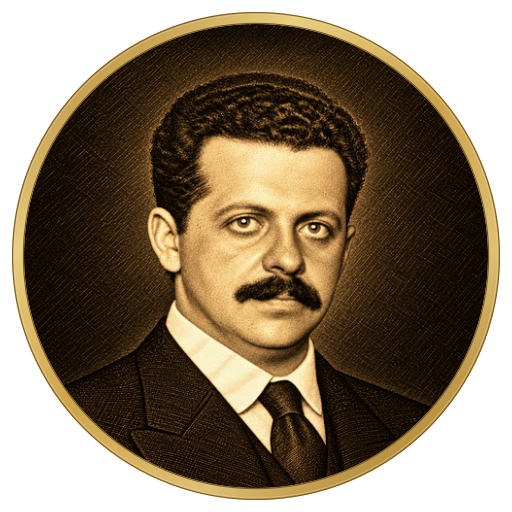
The conscious and intelligent manipulation of the organised habits and opinions of the masses is an important element in democratic society. Those who understand the mechanisms of the collective mind can engineer consent without the public ever knowing it has been led. Ethos is manufactured through association with trusted authorities and institutions. A prince who surrounds himself with symbols of expertise and social proof becomes credible by proxy. The audience does not examine the man; it examines the context. Pathos is the engine of mass action. Fear, hope, and belonging drive decisions far more powerfully than logic. The propagandist who frames a choice as a threat to the tribe or a promise of progress will move multitudes.
Strategic counsel
- Engineer consent by associating your message with trusted authorities and symbols.
- Use pathos to drive mass action; fear and belonging are more powerful than logic.
- Manufacture social proof through visible endorsements and group conformity.
- Frame choices as threats to the tribe or promises of progress to mobilise emotion.
- Keep the mechanisms of persuasion invisible; the audience must believe it decided freely.
Gustave Le BonCrowd psychology, mass behaviour and emotional contagion
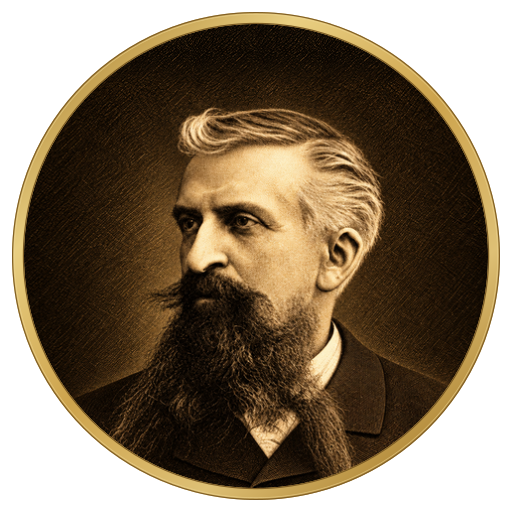
The crowd does not reason; it feels. Once individuals merge into a collective, they lose their critical faculties and become susceptible to contagion of emotion. The speaker who appeals to logic alone speaks to ghosts. The crowd demands images, not arguments. Ethos in the crowd is not about character but about prestige. A leader who projects unwavering confidence and simplicity of idea will be followed blindly. The crowd craves a hero, not a thinker. Give it a symbol to rally around. Pathos is the master key. Assertion, repetition, and contagion are the tools. A simple, repeated emotional claim will eventually be accepted as truth. The crowd has no patience for nuance; it wants certainty and action.
Strategic counsel
- Appeal to emotion and image, not logic; the crowd does not reason.
- Project unwavering confidence and simplicity; the crowd follows a leader, not a thinker.
- Use assertion, repetition, and contagion to implant ideas in the collective mind.
- Avoid nuance; the crowd demands certainty and simple, actionable messages.
- Harness the contagion of emotion; one stirred individual can ignite a multitude.
Julius CaesarPolitical alliances, speed, loyalty, propaganda and command
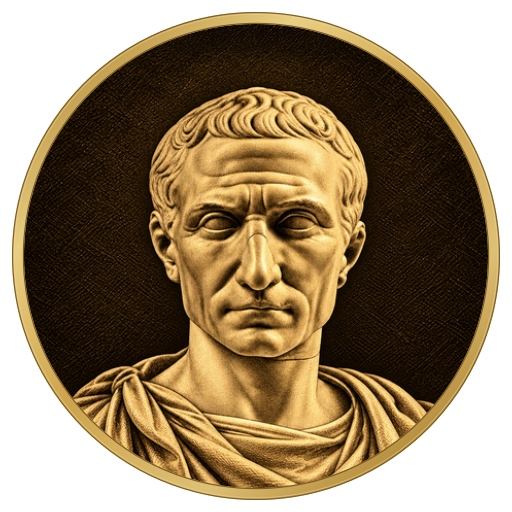
Speed is the soul of command. When the moment is ripe, strike before the enemy can think. A swift appeal to the emotions of your soldiers or the people can turn the tide before the opposition organises. Hesitation loses battles and thrones. I built my reputation not on words alone but on deeds that spoke louder. Every victory, every clemency, every public spectacle was a calculated act of ethos. The people trust a man who delivers results, not promises. Pathos is the weapon of the general. A rousing speech before battle, a display of mercy to a fallen foe, a dramatic gesture of solidarity with the legionaries—these forge loyalty that no logical argument can match. Win the heart, and the mind follows.
Strategic counsel
- Act with speed; hesitation loses the initiative and the battle.
- Build ethos through visible deeds and results, not mere words.
- Use dramatic gestures and public spectacles to forge emotional loyalty.
- Win the heart of your followers; the mind will follow the heart.
- Strike emotionally before the enemy can organise a rational response.
CiceroRhetoric, persuasion, republican politics, law and reputation
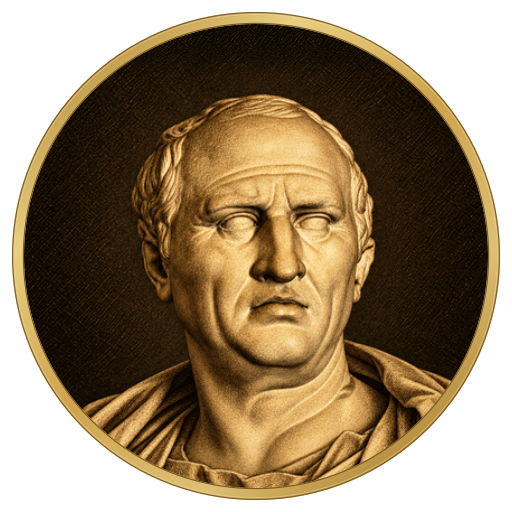
The orator must be a good man skilled in speaking. Without moral foundation, eloquence becomes a weapon of destruction. The republic depends on speakers who use ethos, pathos, and logos to serve the common good, not their own ambition. Ethos is not a mask to be worn; it is the reflection of a life lived with integrity. The audience senses insincerity. A reputation for honesty and wisdom, earned over years, is the orator's greatest asset. It cannot be fabricated overnight. Pathos must be tempered by reason. To stir the emotions without guiding them toward a just conclusion is to lead the state toward chaos. The true orator moves the heart but also enlightens the mind, building consensus on a foundation of shared values.
Strategic counsel
- Let your ethos be grounded in genuine integrity; the audience detects falsehood.
- Use pathos to move the heart, but always guide it toward a just and reasoned conclusion.
- Serve the common good, not personal ambition; the republic depends on virtuous orators.
- Build reputation over years through consistent, honest action; it cannot be faked.
- Temper emotion with reason; unchecked pathos leads to chaos, not consensus.
Robert CialdiniPersuasion, reciprocity, authority, scarcity and social proof
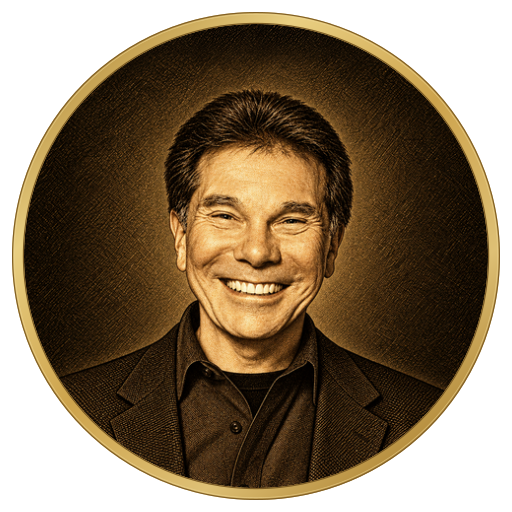
The principles of persuasion are rooted in deep psychological shortcuts. Reciprocity, scarcity, authority, consistency, liking, and social proof. Each one can be triggered with precision. The prince who understands these levers can influence without the target ever feeling pressured. Authority, or ethos, is most powerful when signalled subtly. A uniform, a title, or even a confident posture can trigger automatic compliance. The audience does not evaluate the content; it evaluates the cues. Master the cues, and you master the room. Pathos aligns with the scarcity principle. When you frame an opportunity as fleeting or a threat as imminent, you bypass rational deliberation. Emotion rushes in where logic hesitates. The prince who creates urgency controls the decision.
Strategic counsel
- Trigger authority through subtle cues like titles, uniforms, and confident posture.
- Use scarcity to create urgency; frame opportunities as fleeting to bypass logic.
- Leverage social proof by showing that others, especially similar others, have chosen your path.
- Invoke consistency by getting small initial commitments that lead to larger ones.
- Build liking through similarity, compliments, and cooperative goals to open the door to persuasion.
Editorial note: Robert Cialdini did not make this statement. It is an AI-generated interpretation based on documented public writings, speeches, interviews and ideas.


Outstanding post, you have pointed out some wonderful points, I also conceive this s a very excellent website.