
To my magnificient Reader,
For you, my magnificent reader: this post analyses the meaning of “Win through your Actions, never through Argument”. What follows is an in-depth summary of approximately 2300 words.

Any momentary triumph you think gained through argument is really a Pyrrhic victory: The resentment and ill will you stir up is stronger and lasts longer than any momentary change of opinion. It is much more powerful to get others to agree with you through your actions, without saying a word. Demonstrate, do not explicate.
Contents of Law #9 of the 48 Laws of Power
Part 1: Video Summary
Part 2: Examples & Applications
Part 3: Negative Example
Part 4: Spirit of the Law
Part 5: Most Important Learnings
Short Video Summary
Examples & Applications
#1
Piero Sadorini, the famous major of Florence, lived during the time of Da Vinci, Machiavelli and Michelangelo. He got his hands on a marvelous marble stone. Unfortunately one of his artists mutilated the stone beyond saving. Many other artists inspected the botched stone and came to the conclusion that it was ruined. All but one.
Michelangelo traveled to Florence to make himself a picture of the mess. After evaluating the case, he believed himself being able to salvage it. Piero Sadorini was a little sceptical but in the end allowed Michelangelo to start chiseling away.
It turned into a true master piece, famous far beyond the borders of Italy. David, with the sling shot in his hand. As soon as Michelangelo finished this fine work, he showed it to Sadorini.
Believing himself to be an expert critic of the highest calibre (a little below your average Yelp critic), he informed Michelangelo that David’s nose was too big. The major didn’t realize what the artist saw: that the angle bastardized his view of the perfect nose.
Now Michaelango could have explained Sadorini that little fact, risking to offend his taste. But he chose the right thing, which was to show, rather than tell. He picked up some dust and his tool and pretended to be working on the nose, dropping some dust in the process. He artuflly gave the appearance of changing the form of the nose, while not removing a single grain of marble.
When he was done, he asked Sadorini if it was to his liking now. Cheerfully the major praised Michelangelo for making the nose come alive.
Michelangelo managed to metaphorically change his mood, not his mind.
Example #2
Victor Lustig, one of the most effective con artists, used the Law – Win through your Actions, never through arugment – to get out of a possible deadly situation. One of his schemes was to convince his victims that he owned a machine to print money. A fancy looking hoax of course. Selling the machine to quite a few people, he made a small fortune. Most of his victims were so embarassed that they had been played for fools, that they took no action. No vendetta and they didn’t even report the crime to the police.
One gentleman, Sheriff Richards of Remsen County, was not an individual who took lightly to being conned. He tracked Victor Lustig down in a hotel and confronted him. He wanted his money back, threatened him and made a scene. The con man was not impressed and stayed calm. He used a perfect mix of both showing and telling.
At first he feigned ignorance and acted confused by the claim that the maschine is not working. Then he confidently bombarded the sheriff with technical mumbo jumbo, confusing him. His act oozed confidence and boldness, so the sheriff soon dropped his aggressive behavior. Doubt and insecurity befell his mind. Because Lustig was so calm, confused and confident, the sheriff wanted to believe him.
The con man then gave him his money back and promised to visit him in his town to fix the machine. A few days later the sheriff was arrested. Apparently he passed counterfeit bills. The same bills he received from Victor Lustig…
Negative Example
Dumbo Pretendiavelli found himself in deep trouble with his girlfriend. Somehow she had lost attraction for him. Neither she nor Dumbo knew, what was the reason, but his girlfriend formed new connections and spread out her tentacles, preparing to swing to another branch.
Dumbo Pretendiavelli has a lot of beta provider qualities. A good steady income, warm and caring, romantic and his girlfriend meant the world to him. He wouldn’t dare looking after another woman passing by. Making sure that his girlfriend leads a happy comfortable life, he constantly showers her with gifts and affection.
Realizing the sharp decline in their relationship, Dumbo decided to have a talk with her. His plan was to convince her to stay with him and appeal to her logic. He tried to explain why he is such a great catch for her. That he loves her and makes a great provider, that they share the friend circle and have many interests in common.
Win through your actions, never through argument means exactly that. Acta, non verba. Deeds, not words. He violated this law, thinking that he could convincer her and talk her into loving him.
But human beings don’t work that way. Despite considering ourselves logical, rational beings, we are only one evolutionary step away form animals. Our instincts decide our emotions and actions.
Instead of saving their relationship he alienated her even more. A month later he found her in his own bed with another guy called Chad Thundercock.
In a desperate attempt to uncover where he had gone wrong, he searched for answers. But instead of improving himself, working out, honing dominant traits, stopping to be a pushover; he tried to use words over deeds.
Spirit of Win through your Actions, never through Argument
Show proof & Prove them Wrong
If you find yourself in an argument, no matter if in a business situation or online, it makes sense to link to evidence. Words are good, but actionable proof is better. Convince them by undenieable proof instead of arguing why they are wrong. Unfortunately this doesn’t work all the time, since some people won’t accept the truth, even if it punches them in the face. Some people are so engulfed in their own dream world, that they are beyond redemption. You win some, you lose some, but at least you have to try.
If you merely convince them with your words, they are likely to resent you for it. Or how Ben Franklin put it: A man who is convinced against his will, is of the same opinion still.
Guns (proof, demonstration) & politeness (words) is much more effective than politeness alone – Vladimir Putin
An interesting example of actions over talk is the bumblebee. Physicists have proven, that the bumblebee is unable to fly. That it violates the laws of physics. The bumblebee doesn’t care about that talk and flies anyway.
Know when to prove them wrong
The modern prince has to refrain from being a know-it-all. People hate smart-asses. If you have to prove everyone and everything wrong, it reveals an underlying problem. Fix it and keep your mouth closed. Even if you win a pointless battle, you might lose the war. Before trying to argue and proof someone wrong, ask yourself:
What’s in it for me, what is to be gained if I start an argument. – Lionel Fox
A derivation of a quote coined by the best general to ever lead troops into battle. The following quote is one of my favourites and you too should always keep it in mind. Not only in this situation, but in many other everyday life situations.
Don’t fight a battle if you don’t gain anything by winning. – Erwin „Desert Fox“ Rommel
Is it wise to waste your time, energy and resources on fighting an uphill battle? Most likely not. The general who wins a battle, undergoes meticulous planning beforehand. And so should you. Plan & analyze how much each battle is going to cost you, and the most beneficial outcome. If you stand a good chance at winning and the reward is juicy, go to war. Otherwise save your resources and fight another day.
You work in sales and have a customer who speaks nicely about his current product. You tell him how awesome your product is and belittle his purchase. An argument arises and maybe you will be able to convince him, that your product really is a much better choice and that he wasted his money.
Supreme victory for you! As you walk out of the door you think: “I showed that sucker!”. But without any sale. You both lose. Better try a more subtle approach, agree with him (no matter how stupid he sounds) and prove him wrong following the principle of don’t explicate, demonstrate.
If you are invited to a dinner party and the host thinks a quote from Shakespeare was actually made by Mickey Mouse, why argue? You have nothing at all to gain. Think of him as a fool and get over your ego. If you can’t get over your ego and have the urge to prove him wrong, say well I might be wrong but I believe this quote comes from Shakespeare. Take out your phone and show him the source of the quote. This will make him resent you less than if you would start an argument. Read: resent you less. Nobody likes getting proven wrong, so it often makes sense to keep quiet.
Sometimes you should let it go, but in other situations it does make sense to prove your opponent wrong. Either via words or better yet, by demonstration and action.
If you openly attack someone and start an argument, you automatically put your opposite on the defense. Hence you should probe subtly and reveal his intention that way. Many people won’t tell you what they really think. Ask someone if he likes your eassay/product and he is likely to say „yeah, sure, why not“. If you are looking for a real critique of your work, so you are able to improve it, you are better off asking: What could I do to improve xyz.
Use this technique to find out what your opposite thinks. It works wonders.
Acta, non Verba
Acta, non verba is latin and translates to Win through your Actions, never through Argument. If you are stingy and want the 1:1 translation: Deeds, not Words!
Don’t explain your philosophy, embody it. – Epictetus
You want to win the election and not the debate. Don’t pursue short-term victories, if your long-term strategy is at risk. Sometimes it is better to walk away and avoid getting sucked into your opponent’s frame. A perfect example would be Law #8, where I explained that Donald Trump walked away, instead of accepting the challenge of the debate.
Try to change their mood by walking away or winning via action, as opposed to merely changing their minds. Talk is cheap. Unless you require legal assistence of course…
If you own or work for a company’s PR department, you should already be familiar with that approach. Acta, non verba is the best advice one can give. People are always going to judge the prince and the principality, based on the actions they take. While words do have their place in deceiving a crowd, action is preferred. Abide to the old proverb that actions speak louder than words.
If you happen to evoke a shitstorm, sit it out and wait for it to subdue. Apologize and move on. Or pour oil into the fire. Always keep Law #48 in mind. Assume formlessness and adapt your plan when beneficial.
Promising too much and letting your customers down is a mistake. Better to underpromise and overdeliver than the other way around. Unless you are a politician. In this case it is much better to overpromise, underdeliver and gamble with the short attention span of the people. This might sound like sarcasm, but it is not. I have close ties to politics and trust me, this is done all the time, because it is so effective. People in the private sector can not get through with this shady tactic though.
Defend yourself against accusations
If someone accuses you of lying, you either ignore it or get emotional and prove them wrong. Arnold Schwarzenegger, by some believed to be a racist and Nazi, came under fire for praising Hitler. In an emotional speech he assured the public that „he despises Hitler and everything he stood for“. By becoming angry that some people might believe him to be a nazi, he managed to convince his critics that he is in fact against that ideology. Even though various points would speak against him.
Similar to what Victor Lustig did, when his victim confronted him about his fake product. He acted confused and pretended to not know what the problem was. By acting in a confident manner, going into the offensive, both men have manged to overcome doubts.
Most Important Learnings
- Back up your statements with proof & evidence
- Guns & Politeness are much more effective than politeness alone
- Don’t explain your philosophy, embody it
- Don’t change their mind, change their mood
- Never fight a battle if you don’t gain anything by winning
I hope you enjoyed reading my interpretation of Law #9 – Win through your actions, never through argument. If you have more examples of the possible applications or questions of any kind or wish to share your thoughts and experiences, please feel free to do so.
Grab the book here and support the author if you don’t already own it.
If you want to read more summaries, go to the main 48 Laws of Power post and choose your favoured law. If you are looking for book suggestions, find out what Machiavelli would have read.
Go ahead and share it with your friends & on social media. Until next time, fellow Machiavellians.
Court of Seven
What ancient philosophers would say about modern strategy.
Niccolò MachiavelliPower, statecraft, political survival, virtù and fortuna
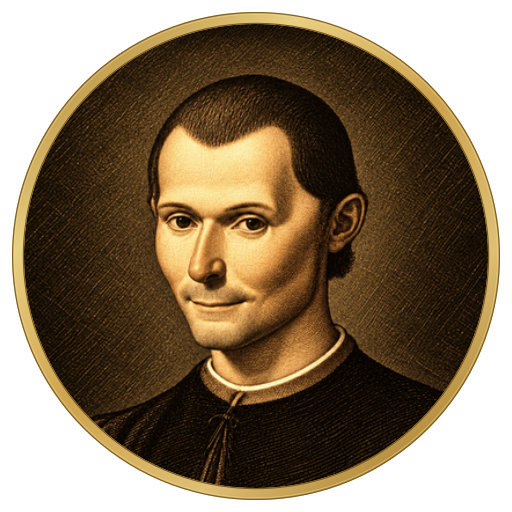
A prince who argues is a prince who reveals his weakness. The mob respects the man who acts, not the man who explains. When Michelangelo faced a critic, he did not debate proportions; he picked up his chisel and made the critic believe he had been heard. That is the art of appearances, and it is worth more than a thousand syllogisms. The con man Lustig understood this better than most scholars. When cornered, he did not plead or reason; he performed confusion so convincingly that the sheriff doubted his own eyes. Words are wind. A well-staged action, even a lie, carries the force of truth. Let your deeds be your argument, and let your enemies exhaust themselves trying to refute what they cannot deny.
Strategic counsel
- Never argue with a fool in public; let your results shame him silently.
- When challenged, stage a small action that redirects attention from your weakness.
- Use confusion as a weapon: baffle your opponent with confident nonsense.
- Let your reputation be built on visible outcomes, not on promises or explanations.
- Remember that the crowd judges by what it sees, not by what it hears.
Marcus AureliusStoic self-command, duty, judgement and resilience
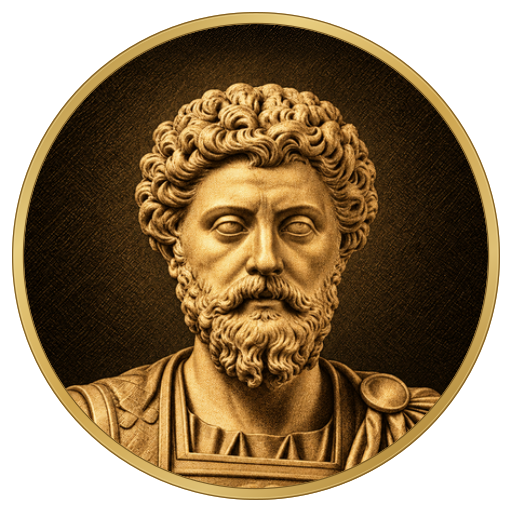
Why do you burn your spirit in disputes that change nothing? The man who argues is a man who has forgotten that he is but a brief guest in this world. Your duty is to act rightly, not to convince others that you are right. Let your actions flow from nature and reason; if they are misunderstood, that is the other's burden, not yours. When someone accuses you falsely, consider whether their opinion matters to your purpose. If it does not, let it pass like a cloud. If it does, correct them not with heated words but with a calm demonstration of the truth. The bumblebee does not argue with the physicist; it simply flies. Be like the bee: do your work, and let the noise fade.
Strategic counsel
- Measure every dispute against your duty; most are not worth your peace.
- Correct falsehoods with calm demonstration, not with anger or argument.
- Remember that the opinions of others are outside your control; focus on your own actions.
- Let your life be your philosophy; do not waste breath explaining it.
- When attacked, ask yourself: does this accusation touch my virtue or only my vanity?
Baltasar GraciánDiscretion, reputation, social intelligence and strategic concealment

To win an argument is to lose a friend. The wise man knows that persuasion is a subtle art, not a battle. When you must correct another, do so without letting him feel the sting of defeat. Michelangelo did not tell the mayor he was blind; he let the mayor believe he had improved the statue. That is the height of social grace: to make the other feel clever while you achieve your aim. Never let your tongue outrun your judgement. If you must prove a point, let your actions speak first, and let your words be few and soft. The man who argues loudly reveals his insecurity. The man who acts with quiet confidence commands respect without demanding it. Cultivate an air of mystery; let others wonder at your methods, and they will attribute more wisdom to you than you possess.
Strategic counsel
- Let others believe they have discovered the truth themselves; do not force it upon them.
- When you must correct someone, do it so subtly that they thank you for it.
- Never argue in public; it diminishes your reputation and elevates your opponent.
- Use silence as a tool: it often persuades more effectively than speech.
- Cultivate an air of mystery; let your actions speak, and let your intentions remain veiled.
Francesco GuicciardiniPolitical realism, interests, particular circumstances and opportunism
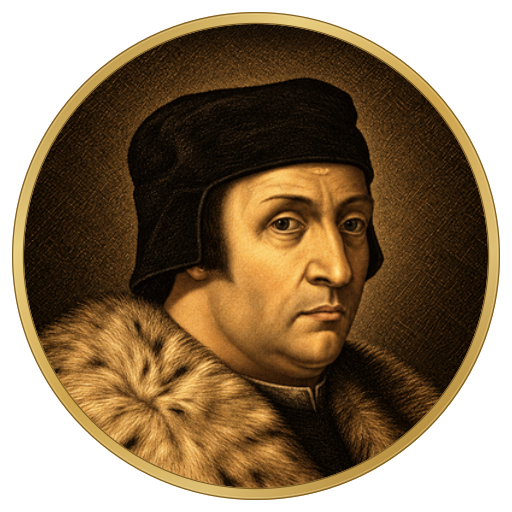
Every dispute must be weighed against its particular circumstances. There is no universal rule that argument is always bad. In some cases, a well-placed word can prevent a greater evil. The wise man does not follow maxims blindly; he considers the time, the place, the persons involved, and the likely consequences. What works for a prince may fail for a merchant. Consider the example of the con man: he argued, but he did so with such art that it seemed like action. He mixed words and deeds so cunningly that the sheriff could not tell them apart. That is the true skill: not to avoid argument, but to know when argument is itself a form of action. Judge each case on its own merits, and never let a general principle blind you to the particular.
Strategic counsel
- Do not follow any law of power without considering your specific circumstances.
- Sometimes a clever argument is the most effective action; learn to disguise it as such.
- Weigh the cost of every dispute: a small victory may lead to a large enmity.
- Study the character of your opponent; some men are moved only by words, others only by deeds.
- Remember that general principles are guides, not chains; adapt them to the moment.
Carl von ClausewitzWar, political objectives, friction, escalation and strategic concentration
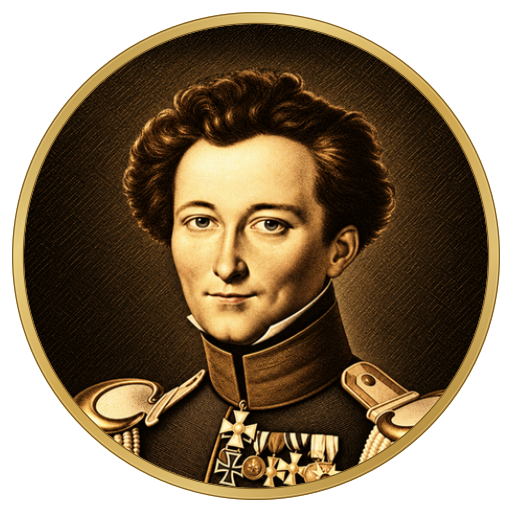
Every argument is a battle, and every battle must serve a political purpose. Before you engage, ask yourself: what is the objective? If you cannot name a concrete gain, then the battle is a waste of forces. The general who fights for pride alone is a fool. Conserve your energy for the decisive point, and let minor disagreements pass without a shot. But do not mistake passivity for strategy. Sometimes a demonstration of force—a single, undeniable action—is worth more than a thousand skirmishes. Michelangelo's chisel was his cannon; he did not waste powder on the mayor's nose. He feigned an adjustment and won the field. That is the economy of force: achieve the objective with the least expenditure of will and resources.
Strategic counsel
- Never enter a dispute without a clear political objective; otherwise, you fight in the dark.
- Conserve your energy for decisive points; let trivial disagreements pass unchallenged.
- A single, well-timed action can achieve what hours of argument cannot.
- Feign adjustment when direct confrontation would cost too much; win by appearing to yield.
- Remember that friction multiplies in arguments; the longer you talk, the more you risk.
Otto von BismarckRealpolitik, alliances, diplomacy and limited objectives
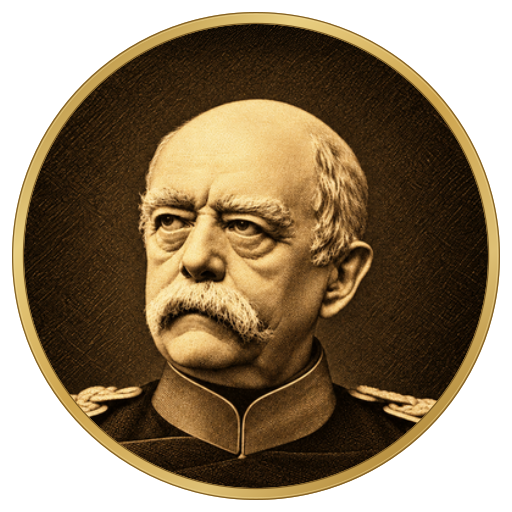
Politics is the art of the possible, and argument is rarely possible. When you must persuade, do so with facts that cannot be denied, not with rhetoric that can be twisted. The Prussian needle gun spoke louder than any diplomat's speech. Let your actions create a reality so compelling that your opponents have no choice but to accept it. But beware of overplaying your hand. The con man's trick worked because he knew when to retreat and return the money. He did not press his advantage to the point of ruin. In statecraft as in life, know when to demonstrate strength and when to feign weakness. A well-timed concession can be more powerful than a victory, for it lulls your enemy into complacency while you prepare your next move.
Strategic counsel
- Let your actions create a reality that makes argument unnecessary.
- Know when to retreat: a strategic concession can be more powerful than a victory.
- Use facts as your weapons; they are harder to refute than opinions.
- Never humiliate your opponent in public; you may need his cooperation tomorrow.
- Remember that the art of politics is to achieve your aims with the least possible friction.
Julius CaesarPolitical alliances, speed, loyalty, propaganda and command
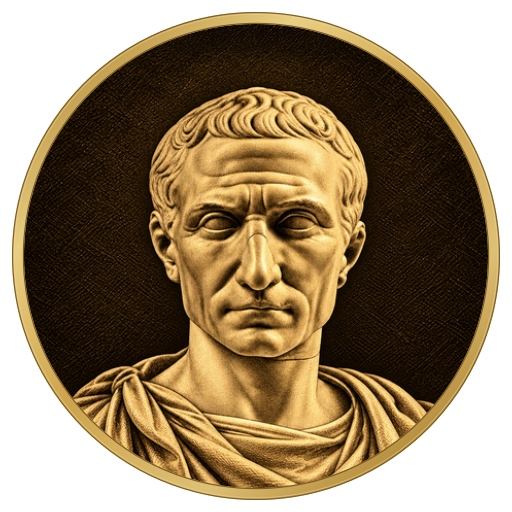
Speed is everything. While your enemy is still talking, you have already crossed the Rubicon. I did not win Gaul by debating the Gauls; I won by marching, building bridges, and showing them the might of Rome. Argument is hesitation, and hesitation is death. Act first, and let your actions speak so loudly that no one dares to question them. But action alone is not enough; you must also control the story. After I defeated Pompey, I did not argue that I was merciful; I pardoned his followers and let my clemency become legend. That is the true art: to perform an action that is also a statement. Let your deeds be so clear, so bold, that they become their own justification. Then no argument can touch you.
Strategic counsel
- Act with speed; hesitation gives your enemy time to argue and organize.
- Let your actions be so bold that they silence all debate before it begins.
- Control the narrative after every action; make your deeds speak for themselves.
- Use clemency as a weapon: a generous act can win more allies than a thousand arguments.
- Remember that the crowd loves a winner; do not waste time explaining, just win.


[…] Show, don’t tell. Manipulation is much easier if you base it upon tangible things and emotion instead of talk. Win through your actions, never through argument. […]
[…] Show, don’t tell. Manipulation is much easier if you base it upon tangible things and emotion instead of talk. Win through your actions, never through argument. […]