To my magnificient Reader,
Welcome my magnificent reader, this post analyzes the Law “Infection: Avoid the Unhappy and Unlucky”. What follows is an in-depth summary with approximately 2300 words

You can die from someone else’s misery – emotional states are as infectious as disease. You may feel you are helping the drowning man but you are only precipitating your own disaster. The unfortunate sometimes draw misfortune on themselves; they will also draw it on you. Associate with the happy and fortunate instead.
Contents of Law #10
Part 1: Video Summary
Part 2: Real Life Applications
Part 3: Negative Example
Part 4: Spirit of the Law
Part 5: Most Important Learnings
Video Summary
Examples & Applications
#1
Once upon a time, there was a Modern Prince. His life was mediocre but full of troubles. He zealously worked on himself and believed himself to be destined for something greater. His self-improvement attempts were constantly sabotaged by his friends, conscious or subconscious.
On the coming of evening, he entered his house and entered his studies. At the door, they took off the day’s clothing, covered in mud and dust, and put on garments regal and courtly. Reclothed appropriately, he entered the ancient courts of ancient men, where he is received by them with affection. He fed on this feed which was solely his and which he was born for. Where he was not ashamed to ask the ancient men for the reasons of their actions. And they kindly answered him. For four hours at a time, he would feel no boredom. He would forget every trouble, not fear poverty, not frightened by death and would give himself entirely over to them.
So he planned, but trouble came knocking at his door. Over and over again, he was bombarded with the infantile problems of his peers and female friends. Them offloading their problems upon his was burdensome and drained his energy. Their negativity dragged him down and left him insecure and lethargic.
Deep inside he knew what the biggest obstacle, blocking his way to success, was. His friends and family. One day the Modern Prince asked himself a question, with a life changing outcome.
Why make their insecurities my problem?
He could find no reasonable answer. Hence, he decided to make tabula rasa and drop all the negativity from his life. He started seeing his own problems in a more favorable light and got rid of his negative friends and family members. From now on he only let positive people into his life that shared the same goals. People who could help him and whom he could learn from. He managed to weave connections with the elite and skillful, and their skills & reputation faded upon him.
Three months later his life took an 180° turn. Everything fell into place, and he now is leading a magnificent life, steadily improving. With the burden of his glanderous friends gone, he was free to climb the Mount Everest. And so he did.
Negative Example #1
Lola Montez, also known as Marie Gilbert is an excellent negative example of whom to avoid. Her whole life was a mixture of con games, seduction, manipulation and bringing doom over her courtiers.
A gold-digging fame whore, how we would call her today. Back then she was a courtesan to the royal court. She was wickedly ambitious and evil at her core. Having no morals, only caring for herself and her own gain. She did what gold-diggers do best and was always on the look-out for those who were powerful and wealthy.
She would arrange „coincidences“, where she met her future victims, to gain their attention. Over the course of the next weeks and months, she would create strong emotions in them. Both positive and negative, taking them on a rollercoaster ride of emotions. A powerful technique that led many men to fall for her. Including King Ludwig of Bavaria.
A king fell victim to her charm, despite being warned by every sane person in his kingdom. He supported Lola and even let her unqualified opinions affect his rule. Soon after she took a place next to the king’s side, the people rose up and demonstrated against the succubus. Despite kicking her out, Ludwig never recovered from her glanderous influence.
Never try to fix such an infectious person. You will get sucked into their maelstrom and slowly start to demise.
Negative Example #2
Dumbo Pretendiavelli just got dumped by his girlfriend because he violated Law #8 (read the story here). Now after having undertaken a successful self-improvement journey, he felt that his sexual market value was high enough, so he started looking for a new girlfriend.
A little background info: He is the member of a far-left party, so is his master.
He attended a social event where the rich and famous get-together. His eyes fell upon a beautiful young woman. With he new found confidence he struck up a conversation with her. She was accompanied by her father, and Dumbo involved both of them into a friendly conversation that went excellent.
Usually, nothing to scorn at, but that young woman was the daughter of an influential right-wing politician.
After the event, his master got angry and gave him a lesson on Law #5 and Law #10. If he was brought into connection with the enemy, his reputation was sure to suffer.
Dumbo Pretendiavelli apologized, learned from this mistake and was glad that his reputation had not taken a major hit.
If it wasn’t for the intervention of his master, Dumbo Pretendiavelli might have found himself in a very unfavourable position. Being in love with the enemy, who could possibly spy on him. That on top of the hit his reputation would have taken.
Spirit of Infection: Avoid the Unhappy and Unlucky
In Business
You will encounter the unlucky & infectious in every walk of life. For example in the workplace. Avoid coworkers who gossip all the time, for they are certain to gossip about you as well. Same goes for the unlucky managers. The unlucky are certain to crash & burn at some point. You don’t want your name attached to them when they do. Stick to the skillful and fortunate.
Drop customers who are glanderous. Don’t argue with them. Don’t yield to their threats or begging. Simply walk away, knowing that such customers are much more trouble than they are worth.
Also, avoid people who hold too much power over you. Be it a friend, political ally, bordering state, buyer, seller, lobbyist, etc. The rule of thumb is: Try not to have a customer or buyer who is responsible for more than 5-10% of your revenue. Even a lower percentage could be dangerous if your well-being depends on this person/deal.
Look at Finland. Nokia was responsible for 4% of the countries GDP. Twenty-five percent! And look at Nokia now. Gone with the wind and it left a huge crater in the Finnish economy. After Microsoft had bought them up, they moved most of their business out of the country. Unemployment in the „Nokia City“ Salo skyrocketed to 20%.
What certainly didn’t help were the economic blockades against Russia, a huge trade partner of Finland. As well as the decline in paper-product demand (another big part of Finland’s economy).
Finland’s economic numbers are disastrous, eclipsing the Greek horror numbers. Their growth is at an estimated 0,6% in the year 2016. Their public debt has surpassed the EU guideline of 60% of their GDP. If a country that was destroyed from both the inside as well the outside (Greece) can outperform you, your country is in deep trouble.
Sometimes you will have to drop a formerly fruitful association. A good example would be the causa Lance Armstrong. After his doping scandal, almost all of his sponsors dropped him. Since the companies are not stupid, they probably did know that every single individual, playing any sport on a professional level, is doping. But Lance Armstrong was caught and having your name connected to him was bad for business.
You must never let anything negative become associated with your brand name. Do the opposite and connect your brand to the lucky and glorious.
Don’t let your Reputation become Infected. Avoid being seen with people whom you shouldn’t be seen with!
The Law of Attraction
While it being pretty much bunk, the theory checks out. You attract what you think about most of the time. If you are bitter & dissatisfied, you are going to attract alike. People who grumble all the time and are too envious, usually donÄt make it far.
Don’t get the reputation of being a negative, unlucky person. This quote rings very true:
Laugh and the whole world laughs with you, weep and you weep alone.
People don’t want to associate with people, who bring them down. They want to spend time with people who add value to their own life. Nobody respects or gives a damn about the weak and negative. If you want pity, go look for it somewhere else.
Associate with the Lucky & Skillful
A worker who is enthusiastic can affect the whole company. The opposite rings true as well. If someone is toxic, he is going to poison the drinking well of the company. Many studies have proven that a weak link can be the demise of the otherwise strong chain.
Make sure to surround yourself with positive, driven people whom you can learn from. Use the fortunate as an example of what to become and the unfortunate as what not to become.
You are the average of the five people closest to you. While this is an overstatement, it still has a true core. It is simple maths. If you hang out with smart people, you will have smart friends and soon will be smarter as well. If you hang out with well-connected people, you will soon see your own network grow. If you hang out with negative people, you will become negative as well.
Drop the dead weight
I am an advocate of having a strong inner frame, but people’s qualities & moods will fade onto you. Be it negative, or positive. No matter how strong your inner frame is, it will get shaken and take a change to the worse, if you surround yourself with negative people.
Never surround yourself with those who share your weaknesses. If you spend enough time with them, they will amplify your deficits. Avoid the Unhappy and Unlucky before they leave an irreversible dent on you.
Don’t court someone who is in an infectious relationship. No matter if she is the abuser or the abused. They will always frame themselves as victims, no matter what. To frame oneself as a victim is human nature. Do not believe them for a second, and even if you do, ask yourself: Am I prepared to make her problems my problems?
A good indicator is a problematic past, with a long history of causalities and trouble.
If they are in an abusive relationship at that particular moment.
Are they overtly jealous & negative?
How does your mood or success change when you are around them?
Ditch the people who bring you down. When you get rid of those disturbances, you will soon see your life take a turn for the better. If you are a negative person, it is very likely that your friends are as well.
While it is in our modus operandi to hold on to the old, it is your best bet to eliminate the old, to make space for the new. Make tabula rasa if things don’t work out; stop doing what you are doing, if it doesn’t work.
The status quo might feel comfortable but doesn’t advance you. If you love yourself and them, set them free. This is the only way, you and them, can improve. Some people don’t want to improve their lives, and this is in no way your fault. They lack the maturity to deal with their own problems and are only looking to offload them onto you.
In no way, you must see this as your own failure. Even Freud and Jung said that people can only be helped to a certain degree. Some never want to be plugged out of their personal matrix.
A marvelous quote to sum up this law comes from Baltasar Graciàn who said:
Recognize the fortunate so that you may choose their company and the unfortunate so that you may avoid them. Misfortune is usually the crime of folly, and among those who suffer from it there is no malady more contagious: Never open your door to the least of misfortunes, for, if you do, many others will follow in its train… Do not die of another’s misery.
Most Important Learnings
- Look at the infected and unhappy to fuel your motivation never to want to end up like them.
- Avoid people who are known to have flaws (selfishness, weaknesses, etc.)
- Uncover the glanderous and quarantine them as early as possible
- People don’t want to associate with people, who bring them down but instead with people who add value to their life.
- Use the fortunate as an example of what to become and the unfortunate as what not to become.
- For the sake of your reputation, avoid being seen with people you should not be seen with
I hope you enjoyed reading my interpretation of Law #11 – Learn to keep People dependent on you. If you have more examples of the possible applications or questions of any kind or wish to share your thoughts and experiences, please feel free to do so.
Grab the book here and support the author if you don’t already own it.
If you want to read more summaries, go to the main 48 Laws of Power post and choose your favoured law. If you are looking for book suggestions, find out what Machiavelli would have read.
Go ahead and share it with your friends & on social media. Until next time, fellow Machiavellians.
Court of Seven
What ancient philosophers would say about modern strategy.
Niccolò MachiavelliPower, statecraft, political survival, virtù and fortuna

A prince who cannot recognise a poisonous courtier deserves the ruin that follows. You may call it compassion to rescue the drowning man, but I call it stupidity to let him drag you under. The unfortunate are not merely unlucky; they are often architects of their own misery, and they will gladly make you a co-architect. The key is not cruelty but calculation. Quarantine the infected before they infect your enterprise. Associate with the fortunate not out of snobbery but because fortune favours those who position themselves near its source. A reputation stained by contact with the wretched is a wound that takes years to heal, if it heals at all.
Strategic counsel
- Sever ties with anyone whose presence consistently lowers your energy or reputation.
- Cultivate relationships with the skilled and fortunate; their success will reflect on you.
- Never let pity override strategic judgement when dealing with the chronically unlucky.
- Monitor your associations as vigilantly as you monitor your enemies.
- Cut off a failing venture or ally before its collapse tarnishes your name.
Baltasar GraciánDiscretion, reputation, social intelligence and strategic concealment

The wise man knows that a single ill-chosen companion can undo years of careful reputation-building. Misfortune is a contagion that enters through the smallest crack in your social defences. Never open your door to the least of miseries, for others will follow in its train. Discernment is the highest form of prudence. Study people as you would study a text: look for patterns, not isolated incidents. A person with a long history of broken relationships and failed ventures is not a victim of fate but a carrier of folly. Let the fortunate be your mirror and the unfortunate your warning.
Strategic counsel
- Judge people by their patterns, not their promises or sob stories.
- Keep your social circle small and carefully curated; quality over quantity always.
- Avoid those who habitually play the victim; they will cast you as the villain.
- Let the unfortunate serve as a living lesson in what to avoid.
- Guard your reputation more fiercely than your wealth; one bad association can tarnish both.
Marcus AureliusStoic self-command, duty, judgement and resilience
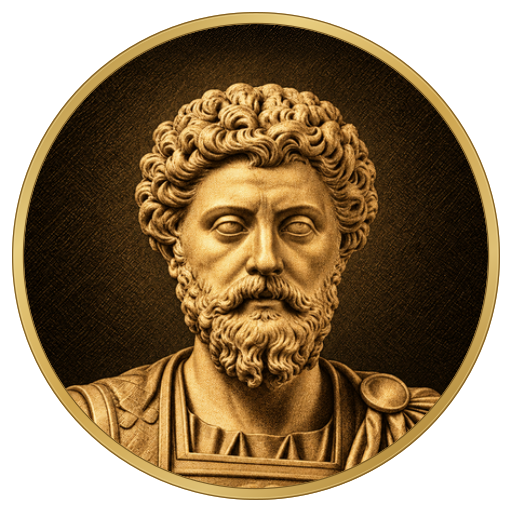
The mind takes on the colour of its frequent thoughts and its frequent company. If you sit daily with those who complain, envy and despair, do not be surprised when your own mind grows heavy. You are not a stone; you are a river, and the waters around you will stain your current. This is not about harshness but about duty. You have a responsibility to be useful, and you cannot be useful if you are drained. Choose companions who call forth your best qualities, not those who feed your weaknesses. The Stoic does not flee discomfort, but neither does he volunteer for a drowning that helps no one.
Strategic counsel
- Notice how your mood and clarity shift after time with each person; let that be your guide.
- Do not mistake endurance of toxic company for virtue; it is self-neglect.
- Surround yourself with people who challenge you to be better, not those who indulge your flaws.
- Remember that your time and attention are finite; spend them where they bear fruit.
- If you cannot change a person's influence, change your proximity to them.
Gustave Le BonCrowd psychology, mass behaviour and emotional contagion

Crowds are not moved by reason but by sentiment and contagion. One unhappy individual in a group can act as a bacillus, spreading despondency faster than any argument can counter. The emotional state of the collective is determined by its most vocal and extreme members. This is why a leader must be ruthless in filtering his inner circle. A single pessimistic voice, if allowed to persist, will infect the entire body. The fortunate and enthusiastic are not merely pleasant; they are strategically necessary. They set the emotional tone that makes action possible. Choose your associates as you would choose your generals.
Strategic counsel
- Remove negative influencers from your team before their mood becomes the group norm.
- Cultivate visible enthusiasm in your inner circle; it will spread faster than any directive.
- Recognise that emotions are more contagious than ideas; manage the emotional climate first.
- Isolate chronic complainers immediately; they are a liability to collective morale.
- Use the energy of the fortunate to set a positive emotional tone for the whole group.
Francesco GuicciardiniPolitical realism, interests, particular circumstances and opportunism

General rules are useful, but particular circumstances decide everything. It is one thing to avoid the chronically unlucky; it is another to abandon a friend in temporary hardship. The wise man distinguishes between a run of bad luck and a character that attracts disaster. I have seen too many men ruin themselves by following maxims without discretion. The real art is knowing when to cut ties and when to extend a hand. Judge each case on its own merits, not on a slogan. And never forget: your own interest is the only reliable compass. If an association brings more loss than gain, the reason matters little.
Strategic counsel
- Distinguish between temporary misfortune and a permanent pattern of self-destruction.
- Let your own interest, not sentiment or dogma, guide decisions about association.
- Consider the specific circumstances before applying any general rule of avoidance.
- Be wary of those who demand loyalty while offering only problems in return.
- Keep your options open; a rigid policy of exclusion can be as harmful as excessive tolerance.
SenecaStoicism, adversity, wealth, political survival and self-control
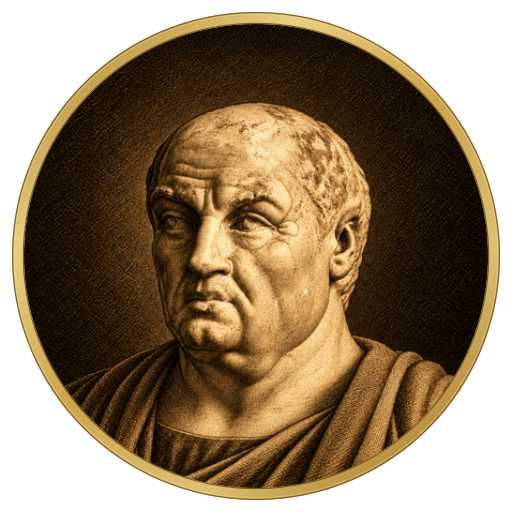
We are not so strong that we can remain untouched by those around us. Even the healthiest body takes ill in a plague-ridden city. Do not mistake this for weakness; it is nature. The wise man chooses his companions as carefully as he chooses his food, knowing that both become part of him. But let us not be cruel in our prudence. If a friend stumbles, offer help. If he insists on lying in the mud, you are not required to lie beside him. There is a difference between compassion and self-destruction. The greatest kindness you can offer some people is to let them face the consequences of their own choices.
Strategic counsel
- Offer help to those who genuinely seek to improve, not to those who wallow.
- Recognise that your own resilience has limits; do not test them unnecessarily.
- Choose friends who make you stronger, not those who drain your strength.
- Let those who refuse help face their own consequences; it is the kindest cruelty.
- Guard your inner peace as a sacred resource; do not let others deplete it.
Sigmund FreudUnconscious motives, desire, repression, aggression and group psychology

What appears as simple bad luck often conceals a deeper compulsion. The chronically unhappy are not merely unfortunate; they are often driven by unconscious needs to repeat painful patterns and to draw others into their drama. You are not rescuing them; you are being recruited as a character in their neurotic script. The desire to 'fix' such people is itself suspect. It may mask a grandiose fantasy of your own omnipotence or an unconscious attraction to their intensity. Ask yourself honestly: what need of yours is being served by this entanglement? The healthiest response is not to diagnose them but to examine your own motives for staying.
Strategic counsel
- Examine your own unconscious reasons for tolerating toxic relationships.
- Recognise that chronic victims often have a hidden investment in staying victims.
- Do not mistake emotional intensity for depth or connection.
- Ask what need in you is being met by trying to rescue the unrescuable.
- The most therapeutic act is sometimes to withdraw your presence from the drama.