
To my magnificient Reader,
Robert Greene's second law of power warns against trusting friends too readily, as envy and ambition often lead to betrayal. Instead, it advises using former enemies, who may prove more loyal due to having more to prove. This summary explores historical and modern examples, including Byzantine and Chinese emperors, and political figures like Lincoln and Obama, to illustrate the strategic value of converting adversaries into allies. Readers gain practical insights into managing relationships, recognising warning signs, and leveraging enemies for motivation and advantage.AI Article Summary

Be wary of friends – they will betray you more quickly, for they are easily aroused to envy. They also become spoiled and tyrannical. But hire a former enemy and he will be more loyal than a friend, because he has more to prove. In fact, you have more to fear from friends than from enemies. If you have no enemies, find a way to make them.
Contents of the 2nd Summary of the 48 Laws of Power (by Robert Greene)
Part 1: Video Summary
Part 2: Examples
Part 3: Negative Examples
Part 4: Spirit of the Law
Part 5: Most Important Learnings
Video Summary of the Law
Examples on how to apply the 48 Laws of Power
Example #1)
Michael III emperor of the Byzantine Empire (840-867) is a prime example of naive trust leading to one’s downfall. One day he visited a steed where a horse went loose and threatened the physical integrity of the king. Basil I came to his aid, pacifying the horse and thus saving the king. This was the beginning of a bond between the king and the peasant, that lasted a lifetime, Michael’s lifetime to be excact.
Michael showed limitless gratitude and took young Basil under his wings, providing him with the finest education and showering him with gifts. The emperor trusted his new mentee so much that he promoted him to the highest ranks of power, thinking that Basil was his loyal friend. He had to, because of all the opportunities the emperor opened for him, didn’t he? Unfortunately Basil, just like most people, developed feelings of grandeur and soon believed that everything he had achieved was his own doing. That he didn’t owe his success to anyone.
The former peasant tricked the emperor into killing his most loyal servant, Bardas, effectively cutting off his support. As soon as Basil was strong enough and held the majority of support in the empire, he decided to ursulp the title of emperor from Michael, by murdering his former mentor, friend and benefactor in his bed, cutting off both of his hands before thrusting a sword through his heart.
After this coup d’etat, Basil rose to become one of the most powerful and highly regarded emperors of the glorious Byzantine empire and helped her foritfy her power in the 9th century. In the aftermath, one could say that everyone benefited from Michael’s disobeyance of the law to never put too much into his friends. Except for Michael of course.
Example #2)
Ancient China, also known as the Wild Wild East, managed to establish one of the most treacherous environment history has ever seen, after the fall of the Han Dynasty in the year 220, which was referred to as the golden age of China. What followed was a reign by the Three Kingdoms which can be summed up as the “Eat and be Eaten Empire” because every soul that ascended the Dragon Throne was guaranteed to meet his demise by fellow generals or politicians. A toxic environment that claimed the life of many a naive wanna-be emperor.
A viscious cycle that repeated itself until general Zhao Kuangyin took his unrightful seat on the Dragon Throne and changed the modus operandi of dealing with the numerous enemies.
Instead of doing tabula rasa, killing his fellow generals and slaughtering their families; he instead decided to gain the support of his enemies by showering them with lavish gifts, sending them into a retirement in luxury. The plan worked out in his favour and his Song Dynasty managed to keep the Dragon Throne in family property for hundreds of years.
Maybe his enemies were weak or the times changed and the people had seen enough blood, we do not know. Arguably he could have achieved the same by killing everyone who had ambitions on his throne, burn their mansions and sprinkle salt on their lands so that for the next thousand years not even a single lizard could survive.Undertaking research in this area would probably contradict Greene’s claim, that you should make enemies your friends, hence you won’t find any details in the book.
Example #3)
In modern politics, you will find a couple of good examples for making enemies your friends, since we live in a god-less society where everyone is a mercenary for the right price, and it is much harder to murder important personalities (unless you are the Russian government of course).
Abraham Lincoln did so in his cabinet, outlined in Team of Rivals: The Political Genius of Abraham Lincoln

John F. Kennedy chose his former bitter rival Lyndon Johnson for the position of vice-president, despite the Kennedy and Johnson clans having a huge faud, leaving no ill word unspoken.
Barack Obama did the same with Hillary Clinton.
Donald Trump hired college professor Sam Colvins, who insulted him, his strategy and viewpoints a mere 35 days before his promotion, and is now praising his new master, like a good puppy does.
Their main reasons for doing so was to remove their enemies from their former position, which made it almost mandatory for the enemies to work against them, and thus eliminiting the threat emitting from them. People close to you, working for you, can be grasped by a firmer grip and hence you are able to better control them and their actions. A seemingly positive promotion can actually serve your interests much more than theirs.
Usually, enemies of a high quality and caliber also bring a lot of experience as well as expertise to the table. The friends of your new friend, are probably your friends as well (That’s why Hillary is talking about “the legacy of Barack Obama must be saved” etc.)
Always keep in mind that most of these arrangements were benificial to both parties, otherwise it would have never worked. It is not easy to create such a situation, where you are able to use your enemies as your pawns.
- Ally yourself with former enemies, if the arrangement is beneficial to both of you
Negative Example)
Once upon a time, Dumbo Pretendiavelli had a friend called Brutus. Brutus was a pothead without drive and with a very dark and unpromising future ahead of him. What was the deciding factor that led to form this bond of friendship between them? Maybe it was because of their relatively small social circles and a friendship for the friendships’ sake and nothing more.
Brutus and Dumbo Pretendiavelli shared a lot together and whenever Brutus found himself in financial trouble, Dumbo was there to help. They even sold drugs together, with Dumbo being the main culprint, but trusting Brutus.
One day Dumbo told Brutus that he was out of town to visit his dying grandmother for 2 days. When he came back, someone had broken into his house and robbed him of everything of value.
Of course, Dumbo Pretendiavelli didn’t dare to suspect Brutus and continued to be his friend. He even decided to pay for his education, since he wanted his best friend to become a success; completly failing to notice, that Brutus didn’t feel alike and only had his own interests in mind.
Their lifes changed, Dumbo accepted a job and started working, while Brutus was still sitting on his lazy butt, dealing drugs. Despite the now obvious differences in their belief-system and environment, it didn’t hurt their friendship one bit, and Dumbo continued to trust him.
One day when Pretendiavelli came back home to his girlfriend, he caught his best friend with his girlfriend in flagranti. He felt shocked, betrayed and didn’t understand one bit how the most important people in his life could act in such a manner, despite his other friends and family warning him of the obvious warning signals.
While still being in shock and disbelief, thinking about where he had gone wrong and imagining that it could not get any worse, Brutus & Dumbos’ girlfriend stabbed him 23 times.
- Drop dead weight, pay attention to warning signals
Spirit of the Law
On Friends
Friends tend to expect favour and prefered treatment while enemies or strangers are more inclined to prove something and work harder. This law is not set into stone, and you need to be extra careful when dealing with former enemies.
Friends can easily be aroused by envy and greed and act against you as soon as you are vulnerable.
They won’t hesitate to play you for a fool and not have a single negative objection against doing so, for they will demonize you and rationalize their betrayal.
One rule rings true for both trust and gambling. Never put in more than you can afford to lose. It is good to trust friends, but not doing so, is much, much better!
On Enemies
The proverb tells us to keep our friends close but out enemies even closer. De facto one of the worst advices you can adhere to. If you keep your enemies too close, they will crush you and subtely undermine you at every opporunity that presents itself.
You only want to turn enemies into friends, if they would otherwise work against your on a bigger scale than the to-be-expected backstabbing during their false friendship.
Only make enemies into your friends as long as you are 100% certain, that they are dependend on you. As soon as you lose that power, the birds are going to try to break free and fly away, dropping a pile of bird shit onto your plans in the course.
On the other hand, what is there to lose? If the enemy is actively working against you, he might be able to cause more harm than subtely working against you as your friend. Always decide on a case-to-case basis.
Enemies are much more predictable than friends, and from time to time it makes sense to ally yourself with them. The enemy of your enemy, despite being you enemy as well, is sometimes your friend for a limited time. A good example would be “Eisern Wien” [Iron Vienna], a temporary alliance between the arch rivals of the football clubs “SK Rapid Wien” and “FK Austria Wien”, seen on rare occasions where a football club or a nation, hated by both clubs, comes to Vienna. For a day, the hooligans of both clubs join up and face the common enemy shoulder-to-shoulder and instantly revert back to being rivals the day after.
In a business setting, you want to use enemies and make them your subordinates in order to stop them dead in their tracks on the way to power. That’s why big companies buy smaller companies and people hover their ambitious adversaries into positions of seeming power, where they actually become a marionette in the big scheme of things.
While it might go against common sense to employ and utilize your enemies, as a Modern Machiavelli you need to analyze the most beneficial way to disarm and use your enemies. I have to repeat myself and say once again, that you must have something very beneficial to offer to your former enemy.
Using enemies to sporn you
Use enemies to sporn you, to push you forward by funneling your hate. They do an excellent job at keeping you at the top of your game. Mao Zedong, as well as others, did an excellent job at using their enemies to strengthen and refine his armys’ battle skills. Despite losing a few men, the gather experience outweighted his losses by a huge margin.
Find nay sayers who are vocal about your „unattainable goal”, then prove them wrong. Anger is one of the most powerful motivators. Some atheletes have been known to be extra rude to journalists, who then wrote articles attacking the athelete. Remember that hate & anger are among the best motivators one can have. Living means being angry, if you stop being angry, you start becoming lethargic. Another great way to use enemies is to abuse them for great PR. You have heard the saying that bad news is better than no news, and it rings true in most cases. Back in the day, when you had an enemy, he would attack you by burning down your estate and bashing your skull in with a branch. Or he would take out his silk glove, slap you in the face and challenge you to a duel, where he would put a bullet through your heart. Which would leave you pretty dead. In our modern world, attacks are often carried out via subtle behind-the-back talk and attacks via the press or internet. Many people fear bad press and critics, but such attacks are antifragile by nature. They don’t harm you, but strengthen you and lead to support. This can be seen over and over again. An example would be twitter removing the verified badge from Milo Yiannopoulos, resulting in the mobilization of a huge supporter base under the twitter hashtag #JeSuisMilo
Most Important Learnings
- It is good to trust others, but not doing so is much better
- Never think that if you turn enemies into friends, that they cease being your enemies.
- Never employ friends or family and do business with them
- Use enemies as practice dummies & let them motivate you
- Always keep a close eye on both your friends and enemies
- Be quick to abandon dead weight & pay attention to warning signals
I congratulate you on taking action to improve your power base and life, and hope you enjoyed reading my interpretation of the law. If you have more examples of the possible applications or questions of any kind or wish to share your thoughts and experiences, please feel free to do so. Grab the book here and support the author if you don’t already own it and don’t forget to sign up on the homepage to continue learning about the power dynamics.
Court of Seven
What ancient philosophers would say about modern strategy.
Niccolò MachiavelliPower, statecraft, political survival, virtù and fortuna

A prince who trusts a friend because of past kindness is a fool. Friendship breeds expectation; the friend believes he deserves more than he receives, and envy festers. A former enemy, by contrast, knows he starts from nothing and must prove his worth every day. That hunger makes him useful. When you elevate a friend, you create a rival who thinks your success was his doing. Basil is the perfect warning: Michael gave him everything, and Basil took the rest. Never let gratitude blind you to the nature of men. Use the enemy who owes you his position, not the friend who thinks he deserves it.
Strategic counsel
- Friends expect reward and grow envious; former enemies work to earn their place.
- Never promote a man who thinks your success is his foundation.
- A dependent enemy is more reliable than a grateful friend.
- Keep former subordinates in a position where they need you more than you need them.
- Trust is a resource to invest sparingly, never in full.
Francesco GuicciardiniPolitical realism, interests, particular circumstances and opportunism

Every case is particular. Zhao Kuangyin succeeded by buying off his enemies because the times were exhausted and the men were tired. Lincoln and Kennedy did the same because their rivals brought constituencies they needed. The principle is not universal; you must weigh the specific circumstances. A general rule about friends and enemies is dangerous. Sometimes a friend is useful precisely because his envy makes him predictable. Sometimes an enemy is too dangerous to bring close. The wise man judges each situation on its own merits, not on a maxim. What worked for one emperor may fail for another.
Strategic counsel
- Judge each potential ally by the specific circumstances, not by a fixed rule.
- A former enemy's loyalty depends on his continued dependence on you.
- Friends can be useful if their envy is managed and their expectations limited.
- The same strategy that worked for Zhao Kuangyin may fail in a different era.
- Always calculate the particular interests at play before making an alliance.
Julius CaesarPolitical alliances, speed, loyalty, propaganda and command
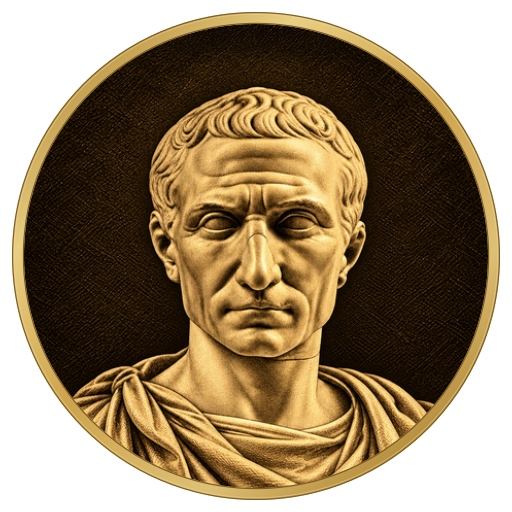
Speed and surprise win loyalty. When I crossed the Rubicon, I did not stop to ask who was friend or enemy. I made allies of former opponents by showing them I could win and that they would share the victory. Pompey's men who came over to me fought harder than my own legions because they had something to prove. A friend grown comfortable is a soldier who stops sharpening his sword. An enemy who joins you must earn his place every day, and that makes him valuable. But never let him forget who holds command. I kept my former enemies close, but always with a loyal legion between them and me.
Strategic counsel
- Convert enemies quickly by showing them the advantage of your victory.
- A former enemy fights harder because he must prove his new allegiance.
- Never let a converted enemy forget who holds command.
- Keep loyal troops between yourself and any former opponent.
- Speed in decision prevents friends from plotting and enemies from organizing.
Edward BernaysPropaganda, public relations, mass persuasion and engineered consent
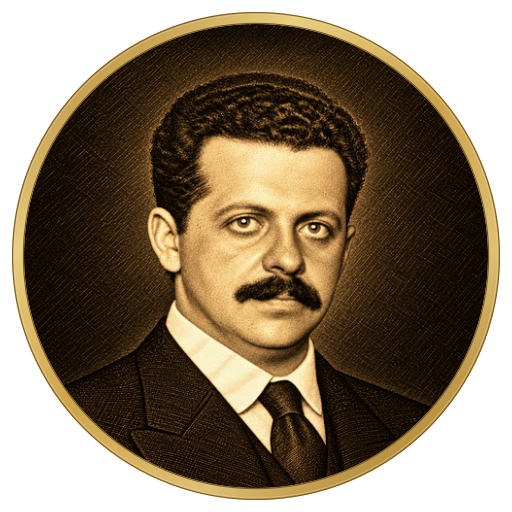
The public does not know its own mind. You must engineer the perception that a former enemy is now a trusted ally. Lincoln did not simply appoint rivals; he staged the appearance of unity. The crowd sees harmony and assumes wisdom. You control the narrative by controlling the visible relationships. When you bring an enemy into your camp, you also bring his followers. That is the real prize. Hillary Clinton defending Obama's legacy is not sentiment; it is the transfer of a constituency. Use the symbolism of reconciliation to capture the loyalty of those who once opposed you. The gesture matters more than the man.
Strategic counsel
- Stage the appearance of reconciliation to capture the public's trust.
- An enemy brought into your camp brings his followers with him.
- Control the narrative by controlling visible relationships.
- Symbolic gestures of unity are more powerful than actual loyalty.
- Use former opponents to signal strength and inclusiveness to the masses.
Marcus AureliusStoic self-command, duty, judgement and resilience
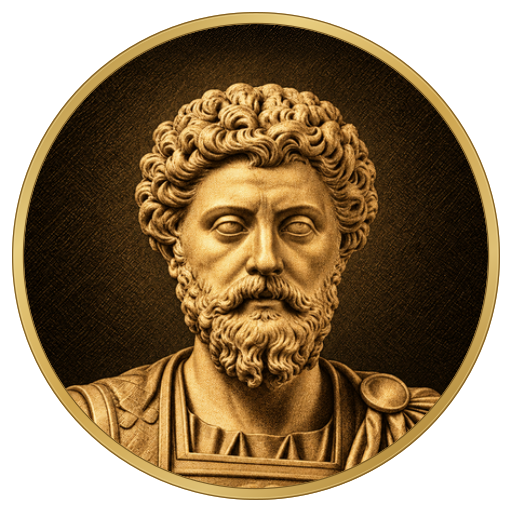
Do not let the actions of others disturb your inner citadel. Whether a friend betrays you or an enemy proves loyal, the only thing within your power is your own judgement. You can choose to trust no one completely and still act with kindness and duty. The betrayal of a friend is not a failure of your character but of your expectation. Use enemies as a mirror. Their opposition reveals your weaknesses and sharpens your resolve. Anger can be a tool if you do not let it master you. Let the hate of your adversaries fuel your discipline, not your revenge. The wise man turns every external event into an opportunity for virtue.
Strategic counsel
- Your judgement is the only thing within your control; trust no one completely.
- Betrayal reveals your own misplaced expectations, not a flaw in your character.
- Use enemies as a mirror to see your own weaknesses.
- Channel anger into discipline, not revenge.
- Turn every external event into an opportunity for virtue.
Otto von BismarckRealpolitik, alliances, diplomacy and limited objectives
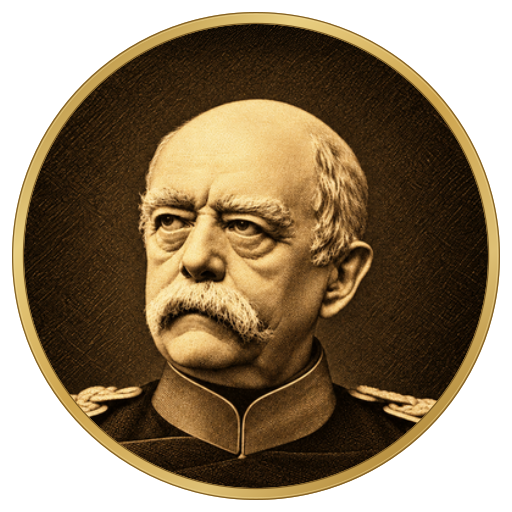
Politics is the art of the possible. I did not destroy Austria after Koniggratz; I made them a partner in the German Confederation. A defeated enemy who becomes an ally is more valuable than a crushed one who plots revenge. You must know when to stop and offer terms that bind both parties to a common interest. Friends are unreliable because they expect sentiment to guide policy. Enemies understand interest. When I allied with the National Liberals, I knew they were former opponents, but we shared a goal. The arrangement lasted as long as it served both sides. Never mistake a temporary alliance for permanent friendship.
Strategic counsel
- A defeated enemy made into an ally is more valuable than a crushed one.
- Know when to stop and offer terms that bind both parties.
- Friends expect sentiment; enemies understand interest.
- Alliances last only as long as they serve both sides.
- Never mistake a temporary arrangement for permanent loyalty.
Cesare BorgiaRuthless consolidation, intimidation, delegation, eliminating rivals and political image

I learned from my father that a man who owes you everything will never betray you, because he knows you can take it all back. When I needed to pacify the Romagna, I hired Remirro de Orco, a cruel man who did the dirty work. Then I cut him in half to show the people I was just. He was useful dead or alive. Friends are a liability. They expect your protection and your favour, and they grow soft. An enemy you have crushed and then elevated knows his place. He will serve because he fears the return of your wrath. But you must never let him forget who holds the sword. One moment of softness and he will take everything.
Strategic counsel
- A man who owes you everything will not betray you because he fears your power.
- Use a former enemy for the dirty work, then discard him when useful.
- Friends grow soft with expectation; enemies know their place.
- Never let a converted enemy forget who holds the sword.
- One moment of softness invites betrayal and ruin.



[…] 2. Never put too Much Trust in Friends, Learn how to use Enemies […]
[…] Never sweat the small stuff. Trusting someone’s word is good, but rereading the contract or checking the car for small damages is better. Remember what Il Duce said: It is good to trust people, but not doing so is much better. […]