
To my magnificient Reader,
Concealing your intentions is a foundational power strategy that keeps opponents off-balance and unable to prepare a defence. By masking true goals through deception, information overload, or feigned disinterest, you maintain strategic advantage and control. The law applies across politics, business, seduction, and negotiation. Mastering this principle allows you to act decisively while remaining unpredictable, ensuring your plans succeed before others grasp your real purpose.AI Article Summary
For my Machiavellian readers. A summary of the book by Robert Greene, the 48 Laws of Power and this time we analyze and expand upon Law #3 – Conceal your intentions.

Keep people off-balance and in the dark by never revealing the purpose behind your actions. If they have no clue what you are up to, they cannot prepare a defense. Guide them far enough down the wrong path, envelope them in enough smoke, and by the time they realize your intentions, it will be too late.
Contents of the 3rd Laws of Power
Part 1: Video Summary
Part 2: Examples
Part 3: Negative Examples
Part 4: Spirit of the Law
Part 5: Most Important Learnings
Video Summary
Examples & Applications
Example #1
17th century France. The Marquis de Sévigné fell in love with a young countess but was unable to win her affection. In his obsessive mission to win over the object of his desire, he turned to the infamous courtesan Ninon de Lenclos. The letters of the prostitute to the Marquis can be found here (free) and reveal many pearls of wisdom about women’s needs and desires. While aimed at a specific case hundreds of years ago, the wisdom and maxims in dealing with the ladies, still ring true today.
Ninon instructed the marquis to always appear in public with one or more beautiful women and cultivate a nonchalant attitude. This got the young countess curious since she expected the young marquis to be interested in her; female megalomania at work. The Marquis de Sévigné did an excellent job at concealing his intentions and thus arose the interest and attraction of the young countess. Reverse psychology at its’ best.
One day when they were alone, the marquis broke his frame of nonchalance and confessed his eternal love for her. The countess instantly lost interest and the relationship was doomed.
Always carry a mask to conceal your intentions and never break your frame
Have you ever heard of a skillful general, who intends to surprise a citadel, announcing his plan to his enemy? Conceal your purpose and hide your progress; do not disclose the extent of your designs until they cannot be opposed, until the combat is over. Win the victory before you declare the war. In a word, imitate those war like people whose designs are not known except by the ravaged country through which they have passed. (Ninon de Lenclos, 1623-1706)
Example #2
Otto von Bismarck, Deputy of the Prussian parliament, had a mission, and it was to loosen Austria’s grip on Prussia and reunite the empire. He couldn’t be open about that intention since the Prussian military would have been crushed by a swift Austrian counterattack, resulting in heavy reprisals for the Prussians. Bismarck had to be more subtle and use cunning & deception instead of pure force.
Therefore, Otto von Bismarck praised Austrians and slammed his fellow Prussians who wanted to go to war. This made Austria feel at ease, and Bismarck was promoted to cabinet minister.
If he had been open about his intention of modernizing and strengthening the Prussian army, and then going to war, two things would have been very likely. Number 1: The people would have called him a coward, thinking that the Prussian military was superior to the Austrian army, and the war could be won. They would have driven him out of office and waged war without him. Secondly, the Austrians, feeling the eminent threat lingering above them like the Damocles Sword, would have invaded Prussia preemptively.
After some time had passed, the Prussian military turned into a respectable army and the Austrians feeling at ease with their guard down, Prussia started the war against their Austrian brothers, loosening the grip of the Austrian empire and uniting Prussia.
Other examples
Conceal your intentions by engulfing them in a sea of lies. For example take General Schwarzkopf. Shortly before the invasion of Kuwait, he spoke about invading by sea, then when the invasion actually went down, he took the land route to invade.
Iago used fake sincerity to deceive and ultimately destroy Othello, by voicing seemingly valid concerns about the infidelity of Desdemona. He did it in a subtle way without coming off as too aggressive and hence was able to deceive Othello.
Henry Kissinger followed a simple but effective game plan of boring his enemies to death with dry facts and boring speeches, before slamming the fist on the table and hitting them with a fierce iron fist, making demands, threats and turning the tables of the negotiation in the course.
In 1711, John Churchill, Duke of Marlborough wanted to invade France during the War of the Spanish Succession and crafted a plan to achieve his goal. There was a fort in his way, and he knew that by destroying the fort, protecting the road into the heart of France, he would arouse suspicion and the French would know what he planned. Instead of destroying the fort himself, he captured and held it, leading to the fake appearance of the fort being an asset of strategic value to the Duke. The French recaptured the fort and burned it to the ground, believing that they crossed the duke’s plan of fortifying himself in that position. The Duke of Marlborough planned this all along, and now the path into France was unprotected, and the French didn’t expect him to take that path with his invasion force.
Negative Example)
Dumbo Pretendiavelli wanted to switch jobs and let that fact be known among his colleagues. His coworkers and bosses insulted that he wanted to leave them, naturally gave him bad reviews he couldn’t use looking for a new job and made his last remaining days at the company hell, prior to firing him before he could find a new job, leaving him broke in the gutter.
He also had ambitions on the throne of the prime minister, making his coup publically known, when his supporter base was too weak. This resulted in his fellow politicians plotting against him and further weaken his position which made it impossible for him to rise the ranks. If he had been smart and concealed his intentions, while subtly undermining his enemies and rallying supporters behind him, he could have dramatically improved his odds of becoming the prime minister.
Spirit of Conceal your Intentions
Conceal your intentions by deception
Conceal your intentions via information overload. An old banking saying tells us to push the background to the front and the facts underground. You want to send out signals and let your false or futile intentions be known to the public, providing them with an abundance of useless information. If you constantly talk about your seemingly genuine goals and believes, people will start to believe them and can be suspectable to your power plays.
Likewise as a sales person, you don’t want to rush things by being upfront about wanting so sell your potential clients something. Violating this, gives them a chance to shoot your offer down before you even had the proper opportunity to present your product/ideas. Frame it as wanting to discuss important developments/achievements/time-/money-savers with them. Soften them up first and sell second.
Netflix & Chill is another – though not that subtle – example of concealing one’s intentions. Invite a woman over to your place to watch a movie or took cook dinner, as means to offer her a way out of feeling like a slut. You know what Netflix & Chill means, as does she, but there still is the element of plausible deniability that permits her to rationalize her behavior.
Bait your opponent by concealing your intentions and acting disinterested. When others feel like
you want a piece of information and could benefit from it, they are likely to restrict it. Act like you do not care about that information and they are going to bombard you with it.
Another thing to keep in mind is that by always being open about your intentions, you lose the air of mystery and unpredictability that should engulf you. People won’t respect you for being too open, and they will never consider you a master strategist if you are always upfront about your plans.
Begin as readable as a closed book will make enemies despair and pull people towards your persona. If people don’t know your intentions, you appear mysterious, and they want to obsessively take a peek behind your mask.
Conceal your intentions by acting like a harmless friend
When you are in a situation where a fight seems inevitable, pretend like you don’t want to fight, show that you are scared and pose no threat to your enemy. When he drops his guard, drop him on the ground.
Another effective way to put enemies at ease is to use noble gestures to disarm them and trick them into believing that you are their friend or at least a stranger with no malicious intentions. Praise them, temporarily ally yourself with them and mock their enemies, ask them for advice, use any means necessary to make them lower their guard. When they are distracted by your friendly appearance, take out the big stick and club them with it, as soon as they are not looking.
Alway carry a mask, blend in, be like a social chameleon to deceive your adversaries. Rule number 1 in the spy playbook. If you act like you belong, most people will trust the initial appearance and believe you to be just like them; an ally.
As people grow up, they start adapting to the treacherous environment, that is our modern business world, by showing less and less emotion and facial expressions. Also known as keeping a poker face. The poker face is as useful in poker as it is in negotiations and when lying, and we all know the power of it. Kids aged around six are extremely easy to catch when they are lying. Teenagers are better at concealing their lies, but usually also show clear indicators of deception. Most young adults are adapt at having a poker face, and you will barely find any high-level executive without an almost constant poker face, only showing emotions when it benefits him and to trick others.
Behind a poker face, many a deception can be hidden. Don’t openly show your cards, neither to friend nor foe.
Most Important Learnings
- Always carry a mask and never drop it. Act like a social chameleon
- Push the background to the front and the facts underground
- Conceal your real intention by engulfing them in a sea of lies
- Only drop your poker face to express emotions when beneficial
- All warfare is based on deception
- Trick your enemy into undertaking a wild-goose chase
- Never openly show your cards, neither to friend nor foe
I congratulate you on taking action to improve your power base and life, and hope you enjoyed reading my interpretation of the law. If you have more examples of the possible applications or questions of any kind or wish to share your thoughts and experiences, please feel free to do so. Grab the book here and support the author if you don’t already own it and don’t forget to sign up on the homepage to continue learning about the power dynamics.
Court of Seven
What ancient philosophers would say about modern strategy.
Niccolò MachiavelliPower, statecraft, political survival, virtù and fortuna
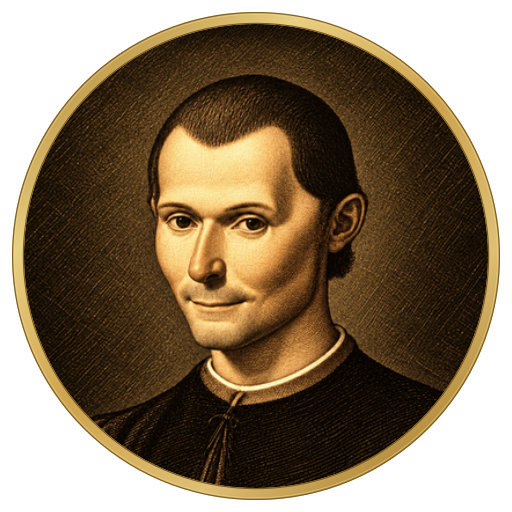
A prince who wears his heart on his sleeve invites his own ruin. The fox knows that the lion’s strength is useless if the prey sees the ambush. Bismarck’s genius lay in praising the very power he meant to destroy—a deception so complete that Austria helped promote him while he sharpened the knife. Never let your enemy know whether you are friend or foe until the blow has landed. The common error is to think concealment means silence. It does not. It means feeding the world a story so plausible that no one looks for the real one. Push the background forward, bury the facts, and let your false intentions dance in the light. A man who talks endlessly of his small honesties is never suspected of a large deceit. Appear transparent, and you will be opaque.
Strategic counsel
- Praise your enemy while preparing his destruction.
- Feed the world a plausible story to hide the real one.
- Appear transparent to become truly opaque.
- Never let the opponent know friend from foe.
- Strike only when the mask is still in place.
Otto von BismarckRealpolitik, alliances, diplomacy and limited objectives
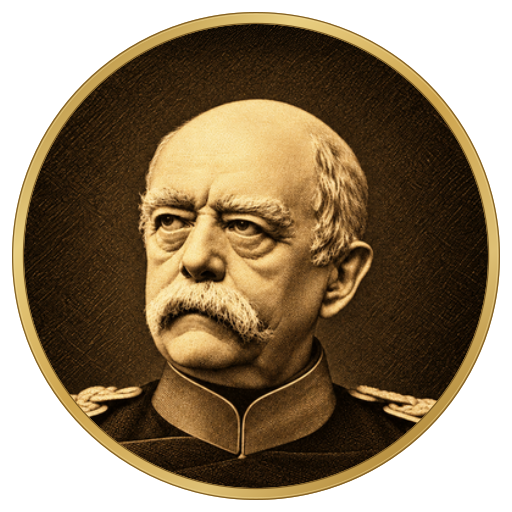
I learned early that a statesman must never show his full hand, especially when the cards are weak. By praising Austria and denouncing my own warmongers, I gave Vienna no reason to strike and my critics no cause to unite against me. The art is to let the opponent feel secure in his superiority while you quietly build the means to overturn it. Patience is the first virtue of the concealed strategist. The Prussian army needed time, not a declaration. Had I announced my intention to modernise and fight, Austria would have invaded pre-emptively and my own people would have driven me out for cowardice. So I hid the goal behind a screen of moderation and self-deprecation. When the moment came, the war was over before Vienna understood what had hit them. Victory belongs to those who choose the hour.
Strategic counsel
- Let the opponent feel secure in his superiority.
- Hide the goal behind a screen of moderation.
- Patience is the first virtue of the concealed strategist.
- Choose the hour; do not let the enemy choose it.
- Build power quietly while others debate your intentions.
Sun TzuDeception, intelligence, indirect strategy, adaptability and victory without battle

All warfare is based on deception, but the highest deception is to make the enemy destroy his own defences. The Duke of Marlborough did not burn the fort; he made the French burn it for him, believing they had thwarted his plan. That is the supreme art: let the opponent’s own hand clear your path. When he thinks he has won a victory, he has already lost the campaign. Appear weak when you are strong, and strong when you are weak. The Marquis showed disinterest to ignite curiosity; Bismarck showed deference to mask ambition. The principle is universal: never let the enemy know your true disposition. If he cannot read your shape, he cannot prepare his defence. Win the victory before the battle is declared, and the battle becomes a formality.
Strategic counsel
- Make the enemy destroy his own defences.
- Appear weak when strong, strong when weak.
- Win the victory before declaring the battle.
- Let the opponent’s hand clear your path.
- If the enemy cannot read your shape, he cannot prepare.
Edward BernaysPropaganda, public relations, mass persuasion and engineered consent
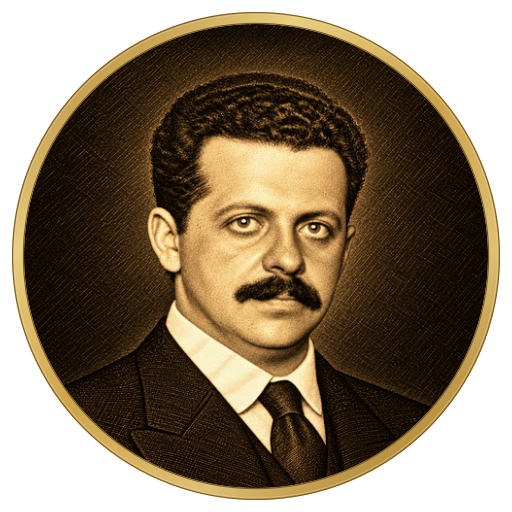
Concealment of intention is merely the negative side of a positive art: the engineering of consent. The public does not need to know what you want; it needs to feel that what it wants aligns with what you are offering. Bismarck understood this instinctively—he did not sell war, he sold reassurance to Austria and pride to Prussia by turns. The true strategist shapes the desire before the product is ever named. Netflix and Chill is a masterpiece of plausible deniability, not because it hides the intention but because it gives the other party a respectable story to tell themselves. That is the essence of modern persuasion: never force anyone to admit they are being led. Provide the rationalisation, and they will walk the path you have laid as if it were their own discovery. The mask is not for you; it is for their dignity.
Strategic counsel
- Shape desire before naming the product.
- Give others a respectable story to tell themselves.
- Plausible deniability is the lubricant of consent.
- Sell reassurance first; the real offer follows.
- Never force anyone to admit they are being led.
Robert CialdiniPersuasion, reciprocity, authority, scarcity and social proof
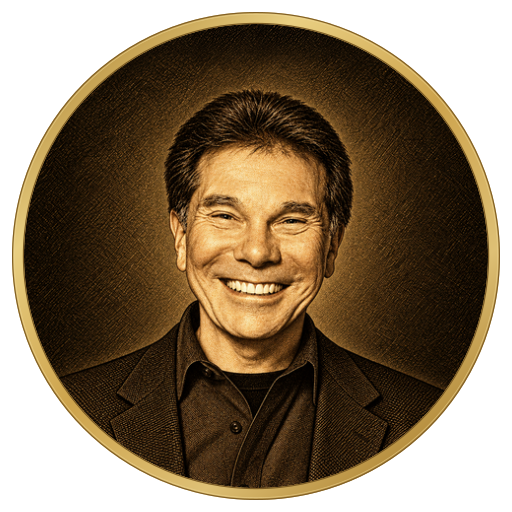
The principle of scarcity works best when the desire appears to originate with the other party. Ninon de Lenclos understood that by appearing nonchalant and accompanied, the Marquis made the countess want what seemed unavailable—not him, but his attention. Concealment of intention triggers the automatic response: we value what is hard to get. The mask creates the scarcity. Social proof also serves concealment. When you act like a harmless friend, you borrow the credibility of the group. People trust what seems familiar and aligned with their own tribe. The spy who blends in is not hiding; he is using the crowd as his camouflage. Never underestimate the power of appearing to belong: it disarms suspicion faster than any argument.
Strategic counsel
- Scarcity is created by concealing availability.
- Nonchalance triggers the desire for the unattainable.
- Blend in to borrow the group’s credibility.
- Appearing to belong disarms suspicion fastest.
- The mask creates the value others pursue.
Editorial note: Robert Cialdini did not make this statement. It is an AI-generated interpretation based on documented public writings, speeches, interviews and ideas.
Henry KissingerBalance of power, geopolitics and diplomatic leverage
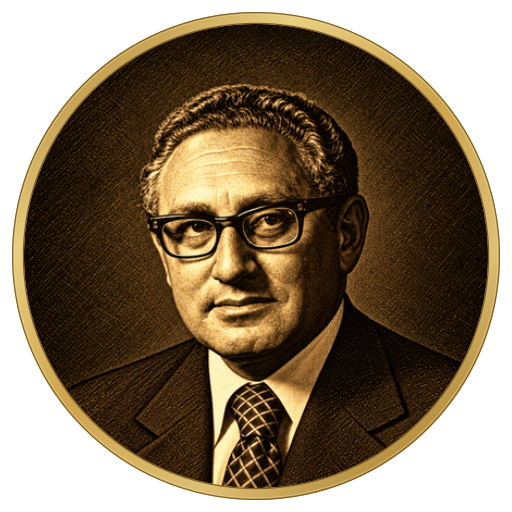
Boredom is a weapon. When I sat through hours of dry exposition before striking, the opponent had already discounted me as tedious and therefore harmless. The sudden shift—from monotone to menace—exploits the psychological gap between expectation and reality. They prepare for a lecture and receive an ultimatum; by then the architecture of the negotiation has already tilted. Strategic concealment is not about silence but about misdirection of attention. The Duke of Marlborough did not hide his desire to invade France; he made the French believe they had thwarted him. That is the higher craft: let the adversary think he has read your mind, then show him he read the wrong page. Geopolitics is a game of mirrors, and the player who controls the reflection controls the outcome.
Strategic counsel
- Use tedium to lower the opponent’s guard.
- Let the adversary believe he has read your mind.
- Exploit the gap between expectation and reality.
- Control the reflection to control the outcome.
- Strike only after the opponent has discounted you.
Baltasar GraciánDiscretion, reputation, social intelligence and strategic concealment

A mask worn once is a disguise; a mask worn always becomes a second nature. The error of the Marquis was not in concealing his passion but in revealing it at the wrong moment, mistaking a tactical pause for a permanent victory. True concealment is not a single act but a sustained condition: let others exhaust themselves guessing while you remain an enigma. The moment they believe they have seen your true face, you have already changed it. Information overload serves the same purpose as a crowded marketplace: the eye cannot fix on any one stall. Push your trivial doings forward and bury your real design beneath a heap of plausible gestures. A man who talks incessantly of his small plans is never suspected of harbouring a large one. Let your reputation be that of a harmless busybody; it is the safest cloak for ambition.
Strategic counsel
- Sustain the mask beyond the moment of advantage.
- Let your reputation as harmless be your deepest cover.
- Bury real designs under a heap of plausible gestures.
- Reveal only when the revelation no longer matters.
- Make guessing your opponent’s full-time occupation.


[…] actively working towards destroying their own reputation. Always watch your tongue and abide to Law 3 & […]
[…] 3. Conceal your Intentions […]
[…] Avoid the bright spotlight. The darkness and shadows are your friend. […]
[…] shooting for the promotion, it is a wise move to conceal your intentions to not arouse envy in your co-workers who might sabotage you. Unless you are certain that they are […]
[…] Avoid the bright spotlight. The darkness and shadows are your friend. […]