
To my magnificient Reader,

When you are trying to impress people with words, the more you say, the more common you appear, and the less in control. Even if you are saying something banal, it will seem original if you make it vague, open-ended, and sphinxlike. Powerful people impress and intimidate by saying less. The more you say, the more likely you are to say something foolish.
Contents of 4th Law of Power
- Video Summary
2. Most Important Learnings
Video Summary
Most Important Learnings
- Saying less than necessary saves time, hence money. Keep e-mails short and simple
- After you close, keep your mouth shut. The first one to talk buys
- Keep answers short to showcase your authority & superiority
- Use Active Listening instead of bombarding people with your voice
- If you conceal too much and talk too little, people will become suspicious and start to despise you
- Don’t draw unnecessary attention to mistakes; it often makes sense to remain silent and let the storm to subside
- Better say nothing than to promise something that you can’t/won’t deliver
- Let your body, not your mouth, do the talking
- The more you say, the more susceptible to attacks you become
Always say less than necessary 🙂
I congratulate you on taking action to improve your power base and life and hope you enjoyed reading my interpretation of the law. If you have more examples of the possible applications or questions of any kind or wish to share your thoughts and experiences, please feel free to do so. Grab the book here and support the author if you don’t already own it and don’t forget to sign up on the homepage to continue learning about the power dynamics.
Court of Seven
What ancient philosophers would say about modern strategy.
Niccolò MachiavelliPower, statecraft, political survival, virtù and fortuna

A prince who talks too much reveals his designs before they are ripe. The fox conceals his tracks; the lion roars only when he springs. Every word you utter is a weapon you hand to your enemy. Keep your counsels close and your tongue closer. But beware the prince who plays the sphinx so well that his own allies cannot read him. Secrecy must serve your ends, not isolate you from those whose loyalty you need. Say just enough to inspire confidence, never enough to invite betrayal.
Strategic counsel
- Let your actions speak first; let your words explain only after the deed is done.
- Use silence to keep your enemies guessing and your allies dependent on your favour.
- Never promise what you may later need to break; let ambiguity preserve your freedom.
- Speak more freely to those whose ruin you have already ensured.
- Remember that a prince who is never understood is a prince who is never trusted.
Baltasar GraciánDiscretion, reputation, social intelligence and strategic concealment

A tongue too loose is a fortress gate left open. The wise do not fill silence; they let silence fill others with doubt and curiosity. Every word you speak is a chip off your own statue—each unnecessary syllable erodes the mystery that makes you formidable. Yet take care: the sphinx who never speaks becomes a riddle no one bothers to solve. The art lies in measured revelation, not in monastic muteness. Let your silence be a velvet glove, not an iron mask.
Strategic counsel
- Let silence create a vacuum others rush to fill with their own assumptions.
- Measure each word against what it reveals of your intentions.
- Withhold praise until the moment it costs the recipient something.
- Use ambiguity as a shield, never as a weapon that wounds your own cause.
- End every conversation before the other person wishes you had.
Marcus AureliusStoic self-command, duty, judgement and resilience

The tongue, like every other impulse, must answer to the ruling faculty within. Why pour out words that the morning light may prove foolish? Restraint in speech is not strategy but virtue—a discipline that spares you the shame of having to unsay what should never have been uttered. Yet silence for its own sake is mere vanity. Let your few words serve the common good, not your own reputation. Speak when justice demands it, and then no more. The wise ruler is known not by the volume of his speech but by the weight of his deeds.
Strategic counsel
- Before speaking, ask: does this word serve the common good or only my vanity?
- Let silence be a practice of self-mastery, not a tactic for impressing others.
- When you must speak, let your words be few, clear, and grounded in reason.
- Do not mistake parsimony of speech for wisdom; the fool can be silent too.
- Judge your words by their necessity, not by the reaction they provoke.
Gustave Le BonCrowd psychology, mass behaviour and emotional contagion

Crowds do not reason; they feel. A torrent of words confuses the herd, but a single, simple assertion repeated with conviction can move multitudes. The leader who speaks less appears more certain, and certainty is the only language the crowd truly understands. Yet the leader who withdraws entirely into silence risks becoming invisible. The crowd needs a symbol to rally around, not a void. Speak just enough to plant the affirmation that will echo in their minds long after your voice has faded.
Strategic counsel
- Craft one simple, repeatable affirmation and let silence amplify its echo.
- Never argue with the crowd; assert, then fall silent and let contagion spread your words.
- Use your scarcity of speech to create an aura of unshakeable conviction.
- Let your silences be more memorable than your sentences.
- Remember that the crowd worships mystery but abandons the invisible.
Thomas HobbesSovereignty, fear, deterrence, authority and social order

In the state of nature, every word is a potential declaration of war. The man who speaks too much reveals his weaknesses, his desires, his fears—and thus gives others the means to master him. Silence is the first law of self-preservation, for the tongue is the readiest path to the grave. But the sovereign who never speaks cannot command. Authority requires the occasional word to remind subjects of the sword that backs it. Let your silence be the stillness before the storm, not the quiet of the tomb. Speak just enough to maintain the awe that keeps the peace.
Strategic counsel
- Treat every conversation as a potential contest of wills; guard your words accordingly.
- Use silence to conceal your appetites, for revealed desires invite exploitation.
- Let your rare words carry the weight of commands, not requests.
- Remember that too much silence breeds suspicion, which breeds disorder.
- Speak only when speech strengthens your position or clarifies the terms of peace.
SenecaStoicism, adversity, wealth, political survival and self-control
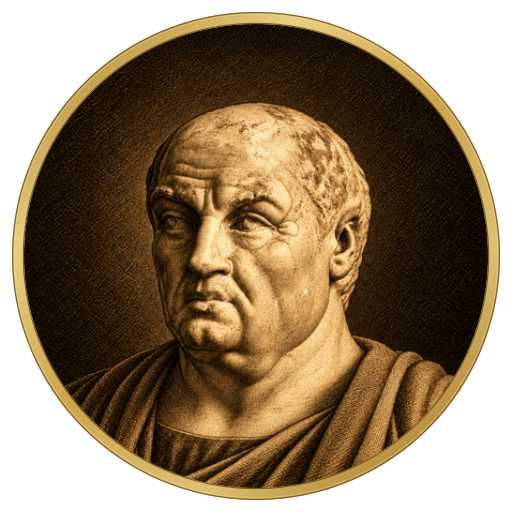
How many friendships have I seen drowned in a flood of careless words? The tongue is the mind's leaky vessel—once the wine is spilled, no amount of wishing can gather it again. Silence is not weakness; it is the fortress of the wise, who know that fortune favours the guarded, not the garrulous. Yet do not mistake silence for apathy. The Stoic speaks when speech serves virtue or necessity. Let your words be rare as pearls, not common as sand. In a world that clamours for attention, the quiet man commands the greater respect.
Strategic counsel
- Treat every word as a resource you cannot replenish once spent.
- Let silence be your first defence against the slings of fortune.
- Speak only when the matter is worthy of your breath.
- Use brevity to signal that your time—and your attention—are valuable.
- Remember that the fool speaks because he must; the wise speak because they choose.
CiceroRhetoric, persuasion, republican politics, law and reputation
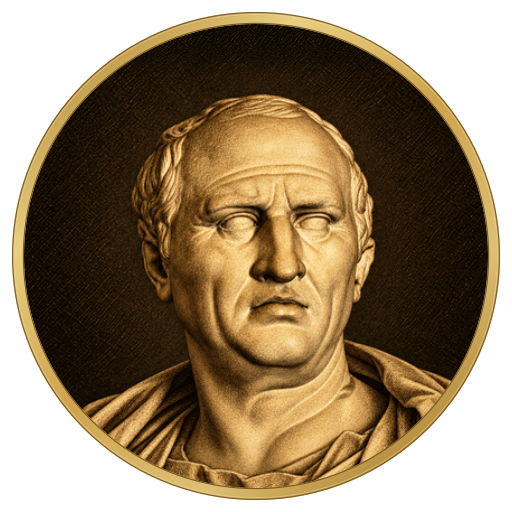
The orator who cannot hold his peace will never hold his audience. I have seen the Senate chamber fall silent before a single well-placed pause, while the man who speaks until the benches empty has already lost his case. Words are arrows—once loosed, they cannot be recalled. But let us not mistake parsimony for wisdom. The republic is built on persuasion, not on riddles. A leader must know when to speak as surely as when to abstain, for the people will not follow a sphinx who offers them no vision of the path ahead.
Strategic counsel
- Reserve your best arguments for the moment when silence has already made the audience hungry for them.
- Let your brevity signal mastery of the subject, not ignorance of it.
- In negotiations, the first to break silence often concedes the advantage.
- Use rhetorical questions to make your point without stating it directly.
- Remember that the people need to hear your vision, not just your silence.



[…] law #3 and law #4 in mind. Never reveal everything or you are certain to lose your aura of mystery and respect. […]
[…] 4. Always Say Less than Necessary […]
[…] Never believe a conversation to be confidential. […]
[…] Never believe a conversation to be confidential. […]