
To my magnificient Reader,

Reputation is the cornerstone of power. Through reputation alone you can intimidate and win; once you slip, however, you are vulnerable, and will be attacked on all sides. Make your reputation unassailable. Always be alert to potential attacks and thwart them before they happen. Meanwhile, learn to destroy your enemies by opening holes in their own reputations. Then stand aside and let public opinion hang them.
Contents of the 5th Summary of the 48 Laws of Power (by Robert Greene)
Part 1: Video Summary
Part 2: Examples
Part 3: Negative Examples
Part 4: Spirit of the Law
Part 5: Most Important Learnings
Video Summary of the 5th Law of Power
https://www.youtube.com/watch?v=XE-7QRVtmtI
Example #1)
During the War of the Three Kingdoms, a General called Liang managed to establish a fearsome reputation for himself, as being an almost invincible leader and master strategian. Having to face him in battle was an unthankful task for every commander, for it meant an almost certain defeat. One reason was Liang's masterfully crafted battle plans but also the psychological effect of his fierce reputation, which could single-handedly win battles by demoralizing the enemy.
In one particular case, his reputation saved both his and his men's lives. His enemy, Sima Yi led a huge army against a city Liang was defending, outnumbering his enemy by such a huge margin, that victory was certain. Liang knew that his army didn't stand a chance, no matter how desperate and vicious they fought, so he had to revert to deception and reverse psychology.
He put on a Taoist robe and took a seat on the platform over the gates, playing a guqin (similar to a flute) with all the calmness in the world. When approaching the city, Sima Yi saw his arch enemy playing an instrument, mocking him and showing no signs of fear. Believing this to be a trap, he decided to abandon the attack and ordered his vast army to retreat. While it did cross his mind, that Liang was indeed outnumbered and defenseless, his opponent's reputation got the better of him and put his army to flight.
This trick is also known as the Empty Fort Strategy. The 32nd Stratagem of the legendary 36 Stratagems.
Example #2)
During the invasion of Poland in 1939, Erwin Rommel, the Desert Fox, was assigned to protect Adolf Hitler, an ungrateful assignment that he loathed. Since he was known as a magnificent commander of troops - pushing deep into enemy territory and outflanking his enemies, easily dealing crushing blows to the treacherous Italians (who decided to turn on their German and Austrian friends, out of the fucking blue, because they were promised Austrian territory) - he managed to convince Hitler to put him in charge of one of the 10 panzer divisions and leading the tanks in Africa.
Building upon his reputation of a genius infantry commander, he now became known as the Desert Fox, for outmaneuvering his opponents and crushing his enemies on the battlefield. Even when British or French forces outnumbered his army, whole cities were abandoned when the news, Rommel ante Portas, reached the commanding general.
Not only did he have the reputation as the most fearsome general, but also as a very humane victor. He disobeyed the madman with the two-finger-mustache and never killed prisoners or jews, but spared their lives. Because of his reputation as a national war hero, he was ordered to commit suicide in private, after a plot to assassinate Hitler was uncovered, instead of being publically hanged.
Negative Example #1)
Dumbo Pretendiavelli was the son of a business magnate, known by everyone is his city. Everybody admired his family and what they had accomplished. The reputation of his father carried over and was attributed to him. One day he met a couple of friends and made it known, that he was late because his mother made him clean up his room and told him to change his clothes, because he seemingly looked funny in her eyes. After giving an explanation for being late, in this case acting like an obedient dog, he sharply fell from grace.
He managed to taint his honor by saying too much and looking weak. This was not enough though, since he managed to hammer the last nail into the coffin that was his formerly outstanding reputation.
Being an avid follower of The Red Pill (a misogynist, sexist, racist, devil-worshipping, shitlording cult of bitter losers who have never been loved by their mothers and are 40-year-old neckbeard virgins; according to the general opinion) he wanted to look sly and regain his reputation as the cool rich kid. Thus he opened his mouth too wide, completely violating Law 4 and the biblical Proverb 13:3. "He that keepeth his mouth, keepeth his life. He that opens his lips too wide shall bring on his own destruction". He let his seemingly sexist views about pick up and treating women be known in the presence of his friends and their friends, believing that he could regain their favor, but in the process, he brought destruction upon the pathetic chunk of what remained of his reputation. He got the reputation as a pro-rape xenophobe, was bullied by everyone inside and even outside his social circle and bullied into suicide, all because of his negative reputation. May god have mercy on his soul.
Spirit of the Law
Why Reputation is important
We judge others on their reputation, not only when we first meet them but also if we already know them, because many people are unfathomable to us. There is a reason that a psychoanalysis takes around 7 years, thus we have to not only rely on our instincts and the appearance of the other person, but we look towards others opinion of him (also known as reputation) since we are unable to read thoughts - only appearances.
Your reputation will always precede you, be it a good or a bad reputation. Either exaggerating your strengths or weaknesses. Hence, you need to ensure a strong, untarnished reputation.
You get through with things others could not, if you have an untainted reputation. Many a battle has been won, before it was even fought on the battlefield. Psychological warfare and intimidation are tools almost as powerful as meticulous analyzation of the enemy & planning.
A good example would be the infamous Casanova, who had the reputation for being a womanizer, despite looking as ugly as the night is dark. His reputation preceded him and many women were open to meet him, because of the adventurous feeling he aroused in them, solely based on his reputation.
Building up Reputation
The first act of business should be to decide for what particular trait you wish to build a reputation. Be it honesty, generosity, god faring ness, achieving results, being quick & reliable, being a master strategos or even minor but still beneficial traits like being punctual and always well groomed.
A good step is to sit down, brainstorm and write down every single trait you want to be associated with and subsequently working on establishing a reputation for those traits.
Make sure to work on building a solid foundation for the chosen traits and try to let it be known to as many people as possible, either via word of mouth or other subtle means. If you try to make it happen too quickly, acting too aggressive in the process, people will catch on and will believe you to be a try-hard. Humor is a rubber sword, it draws no blood when making a point.
One of the best book about personal branding is Career Warfare by a highly successful business man, who has written a couple of other books (Executive & Brand Warfare) who are decent but in no way as useful as Career Warfare for our purpose of learning to build a solid reputation.
Defending Reputation
An attack on one's reputation is immensely effective and you need to know how to properly protect yourself against such. Often people who try to attack you, want to bait you into reacting. If you "feed the troll" and defend against his slander, many people are going to believe that the original accusations ring true, since you would otherwise have not bothered responding.
When faced with retarded accusations by an imbecile trying to bait you into reacting, it can often be a wise move to stay calm and let the storm subside.
A hostile attack is only one threat for your reputation, but the bigger threat are you yourself. I have witnessed countless people, companies and politicians, actively working towards destroying their own reputation. Always watch your tongue and abide to Law 3 & Law 4.
Another mistake often made is not being careful about who you are seen with or where you are seen. Try not attending a skinhead conferences when you want a reputation as a liberal thinker.
Turning around tarnished reputation is hard. It always is easier (not necessarily smarter though) to start all over again in a new social/business circle.
Other option: constant effort. Prove them wrong in their opinion of you. Will improve slowly. Some deeds can never be forgotten. Try to borrow credibility from a person of influence. His reputation is going to rub off onto you and soon you will be associated with the positive traits he possesses.
Another use for people whose opinion of you is positive, is to make them your loyal allies who are going to defend you and your reputation. Not only befriend the people with the most influence, but also those who are lower on the ladder of power. Even if they do not defend your reputation, your new found friends are unlikely to actively undermine your reputation either. Though remember Law 2.
A favored tactic of mine is attacking someone because of a trait that could be attributed to me, with the intention of disarming him preemptively. For example calling him a ruthless Machiavel. Even if the facts speak against that statement, many people are likely to accept it as the truth, since I made that claim first. If he now defends himself by saying: "No I am not, you are." imagine how childish and implausible he sounds. This technique only makes sense, if you are not known as literally Hitler and try to impose that frame on Mother Theresa.
Attacking Reputation
A power play involving mutual attacks on reputations could be found during the Occupy Wallstreet movement. Both sides participated in forms of it, while one being much more successful than the other. The Occupy Wallstreet movement undertook an overt attack against the hated 1%, scratching their reputation in the course of the demonstration.
A good plan but it fades when compared to what the 1% did. Not surprisingly because there is a reason, like it or not, why the 1% is the 1%. And that is not luck, but superior Machiavellian qualities. They decided the best course of action was to attack the movement's reputation by infiltrating it within and making a joke out of them. They hired hippies who turned the movement into a circus and soon after, everybody believed that the 99% are bums who want to relive Woodstock. Leading to the devastation of their credibility.
Though one thing they did right and that is to attack the reputation of big institutions. Everyone has a major interest in protecting his reputation, and an attack of his most valuable asset will bother him, forcing him to act and make mistakes. In this case, the enemy outsmarted the actually pretty big Occupy movement and showed their superiority once more.
To kill a man you need to kill his reputation. If you merely kill his physical hull, he is going down in history as a martyr. If your reputation is meagre and your enemy's is strong but not untouchable, a slanderous attack on him is a good course of action, for he has much more to lose than you do.
Use subtle ways to attack your enemy, don't go out guns blazing and hurt yourself more than you do your adversary. Keep the example of Doris Bures in mind, who tried to overtly attack the reputation of her former friend, but massively failed at disguising her seemingly subtle attack, hence arousing resentment.
An example of a subtle attack would be to sow doubt. Even if proven innocent, the doubt will remain. For example, if someone is accused of rape, but not convicted for it by a court, people will never look at the person in the same way.
Most Important Learnings
- Your reputation will always precede you; always live up to it
- Build a reputation for a positive or negative trait by constantly working on it
- The biggest threat for your reputation is not the competition, but you yourself
- Be careful where you are seen and whom you are seen with
- Don't put fire under the cattle of your reputation; wait for it to diminish
- When slandering your enemy, don't appear reckless, hurt or only out for revenge
- Try to make as many allies as possible, who are willing to defend your reputation
I hope you enjoyed reading my interpretation of the law and if you have more examples of the possible applications or questions of any kind or wish to share your thoughts and experiences, please feel free to do so. Grab the book here and support the author if you don't already own it.
Court of Seven
What ancient philosophers would say about modern strategy.
Niccolò MachiavelliPower, statecraft, political survival, virtù and fortuna

A prince who lets his reputation be shaped by idle talk or the whims of fortune is no prince at all. You must decide the single quality for which you will be feared or admired, then let every action, every word, every visible habit burn that image into the minds of men. Liang understood this: his reputation as an invincible strategist was worth more than ten thousand soldiers. Yet reputation without substance is a house of cards. The moment you show weakness—hesitation, a careless word, a foolish companion—the mob will tear you down. Guard your tongue as you would a fortress gate. And when you attack an enemy, strike not at his body but at the name he has built. Let others hang him with the rope of public doubt.
Strategic counsel
- Choose one dominant quality for your reputation and let every action reinforce it.
- Never respond directly to slander; let the accusation die from lack of fuel.
- Attack an enemy's reputation before his person—a dead martyr is more dangerous than a discredited rival.
- Borrow credibility from those already respected; their luster will rub off on you.
- Watch your companions and your haunts; a single ill-chosen association can undo years of careful image-building.
Baltasar GraciánDiscretion, reputation, social intelligence and strategic concealment

Reputation is a shadow we cast, but a wise man learns to make that shadow longer than his actual stature. Never reveal the full measure of your art. Let others infer your excellence from carefully placed hints—a word dropped here, a visible success there—while you remain an enigma. The moment they think they have seen all of you, your power over them vanishes. When attacked, do not rush to defend yourself. Silence is a shield that confounds the slanderer. Let the poison spread, then let it die for lack of fresh venom. Better still, preempt the blow by claiming for yourself the very vice your enemy would pin on you. Call yourself a schemer before he can, and his weapon becomes a boomerang.
Strategic counsel
- Let your reputation grow slowly; sudden fame invites scrutiny and envy.
- Conceal the full extent of your abilities; mystery magnifies perceived power.
- When slandered, meet the attack with silence or a jest—never with indignation.
- Preempt an enemy's accusation by claiming the flaw yourself, disarmingly.
- Cultivate allies who will speak your praises unprompted; let others be your trumpet.
Francesco GuicciardiniPolitical realism, interests, particular circumstances and opportunism

Men speak of reputation as if it were a single, solid thing, but in truth it is a thousand particular judgments, each shaped by circumstance and the interests of the judge. A reputation for honesty serves you well with a banker, but may hinder you with a prince who values cunning. Never pursue a universal good name; pursue the reputation that fits the moment and the man you face. The greatest danger is not an enemy's slander but your own overconfidence in a reputation you have not tested. I have seen many a man ruined because he assumed his name would carry him through a crisis, only to find that the particular circumstances required a different face. Adapt your reputation as a merchant adapts his wares to the market. What served you yesterday may poison you tomorrow.
Strategic counsel
- Tailor your reputation to the specific audience and circumstance, not to an abstract ideal.
- Never assume your past reputation will carry you through a novel situation; test it first.
- When your reputation becomes a liability, quietly let it fade and cultivate a new one elsewhere.
- Do not trust the praise of friends; their interests may shift, and their tongues with them.
- In every conflict, weigh whether your enemy's reputation is worth more to him than his life—attack accordingly.
Gustave Le BonCrowd psychology, mass behaviour and emotional contagion

A crowd does not reason; it feels. Reputation is not a logical assessment of a man's deeds but an emotional contagion that spreads through a multitude like fire through dry grass. Liang did not defeat Sima Yi with strategy alone—he triggered a collective image of invincibility that overrode every rational calculation. The crowd within Sima Yi's mind saw a trap, not an empty city. To build a reputation that withstands attack, you must appeal not to the intellect of the many but to their instincts—their need for certainty, their fear of the unknown, their love of a simple story. Once a legend takes hold in the collective imagination, facts become powerless against it. And to destroy an enemy, do not argue against his reputation; replace it with a simpler, more vivid image that stirs contempt or ridicule.
Strategic counsel
- Shape your reputation through vivid, simple stories that appeal to emotion, not logic.
- A crowd's belief is more powerful than any fact; once a legend takes root, reason cannot dislodge it.
- To destroy a rival's reputation, replace his image with a contemptible caricature, not a complex refutation.
- Never defend your reputation with reasoned arguments before a crowd; they will see only your agitation.
- Use symbols, rituals, and visible confidence to reinforce your reputation in the collective mind.
Julius CaesarPolitical alliances, speed, loyalty, propaganda and command

Speed is the soul of reputation. I did not wait for the Senate to define me; I defined myself through action after action, each faster than the last, until my name became synonymous with victory itself. Liang understood this: he did not negotiate or plead—he played his guqin and let the enemy's imagination do the work. A reputation built on deeds moves faster than any slander. But a reputation won by speed must be maintained by vigilance. I never let a slight go unanswered, nor a rival's boast go unchallenged. When you see an enemy gathering reputation, strike before his name solidifies. Use your own allies to spread whispers, your own deeds to overshadow his. And remember: the best defense is to make your name so useful to the people that they will defend it for you.
Strategic counsel
- Build your reputation through swift, visible actions that leave no time for doubt.
- Never let a rival's reputation consolidate; attack it before it becomes a legend.
- Make your name indispensable to the crowd's sense of security; they will guard it as their own.
- Use your allies as living testimonials; let them spread your fame through their own networks.
- When your reputation is challenged, respond with a new deed, not a defense of the old.
CiceroRhetoric, persuasion, republican politics, law and reputation
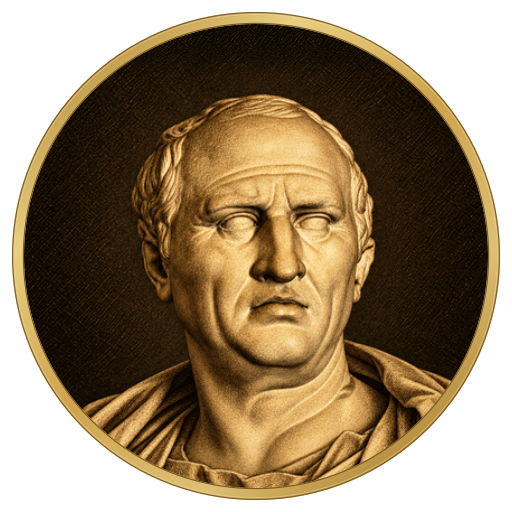
Reputation is the breath of the commonwealth. A man's name is not his private possession but a public trust, earned through service and eloquence, and lost through a single act of folly or dishonor. I have seen the mightiest orator undone by a whispered rumor, and the humblest citizen elevated by a well-told story of his virtue. Guard your name as you would the laws of the Republic. Yet the greatest threat to reputation is not the slanderer but the unguarded tongue. How many men have I watched in the Forum, destroying years of good name with a single careless boast or a hasty confession? Speak with deliberation, and when attacked, answer not with rage but with measured reason that exposes the malice of your accuser. Let the people see your calm; let them judge the liar.
Strategic counsel
- Treat your reputation as a public trust, not a private asset; it must be earned daily.
- When slandered, respond with calm, reasoned eloquence that reveals the accuser's malice.
- Guard your tongue above all; a single careless word can undo years of careful speech.
- Cultivate allies who will speak on your behalf; a reputation defended by many is hard to topple.
- Let your deeds match your words; the people will forgive much if they see consistency.
Daniel KahnemanCognitive bias, framing, risk and judgement

Reputation is a cognitive shortcut. When we cannot know a person deeply, we rely on the stories others tell—and those stories are shaped by the availability heuristic: the most vivid, recent, or emotionally charged information dominates our judgment. Liang's empty fort succeeded because Sima Yi's mind was flooded with the image of an invincible strategist, overriding the rational calculation of troop numbers. The asymmetry of reputation is stark: a single negative event can outweigh a dozen positive ones, because loss aversion makes us weigh threats more heavily than gains. This is why defending your reputation is so difficult—once a doubt is planted, it anchors all subsequent perceptions. The wise course is not to fight every battle but to control the narrative before the anchor is set. Frame yourself first, and let the enemy struggle to reframe.
Strategic counsel
- Control the first impression; it becomes the anchor against which all later information is judged.
- A single vivid negative story can outweigh a dozen positive ones; prevent the story from forming.
- When attacked, do not argue facts; shift the frame to a different dimension where you are strong.
- Use the availability heuristic: make your successes frequent and memorable, not just occasional.
- Understand that people are loss-averse; they will remember a threat to your reputation more than your achievements.




[…] 5. So Much Depends on Reputation – Guard it with your Life […]
[…] You need to make sure that your reputation stays untainted from such mistakes. Guard your reputation with your life. […]
[…] Always keep frame, never lower your mask even for the fraction of a second, because if you lose your mask, the mask is lost forever. Keep in mind that you must guard your reputation with your life. […]